Chinese architect Ma Yansong is on a mission to transform urban living by making cities more green and human-centred
- Ma Yansong of MAD Architects’ design for the Cloudscape of Haikou library in Hainan was prompted by Albert Einstein’s theory of wormholes
- He says design should stimulate the imagination, and sides with critics of grandiose modern architecture in China such as the CCTV headquarters in Beijing

It may be called the Cloudscape of Haikou, but let your imagination dive into the waters around it and the new library in Hainan’s capital could be a creature in repose from 20,000 leagues under the sea.
Like wormholes that cut through space and time to connect two points in the universe, libraries and the books they house are conduits through which readers are transported to a new world, according to Ma. “The concept of the wormhole brings thoughts of the yonder. People should travel to faraway places when they are reading a book,” he says.
Being able to capture views via different “lenses” enhances the building’s appeal. “I asked myself whether the structure could be like a viewfinder that allowed people to see the sky and sea through the library,” Ma says.
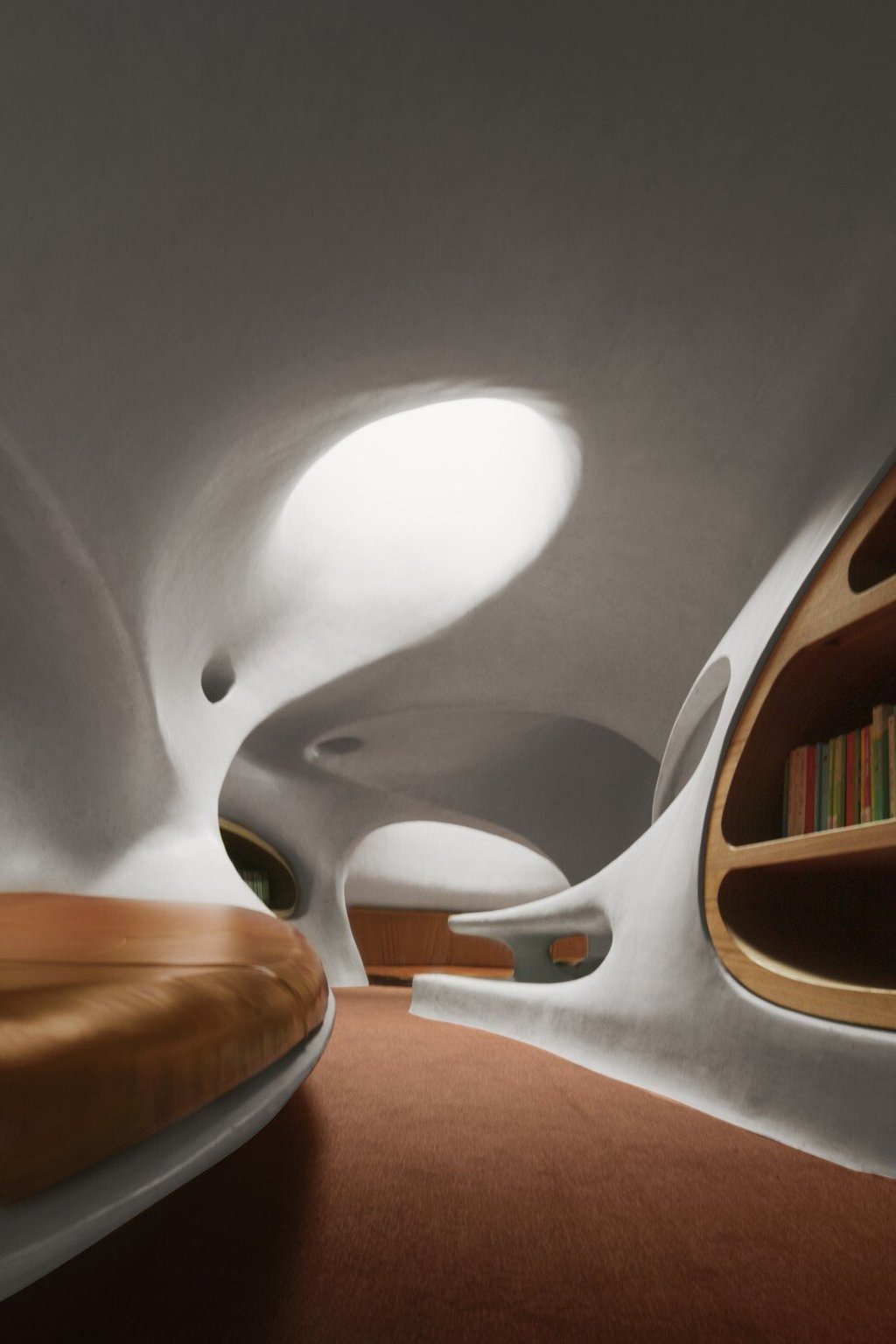
For the library, Ma, who has designed buildings all over the world, created an exterior with biomorphic curves made of concrete. “Concrete is the most down-to-earth [construction material],” he says, and is suited to streamlined designs.