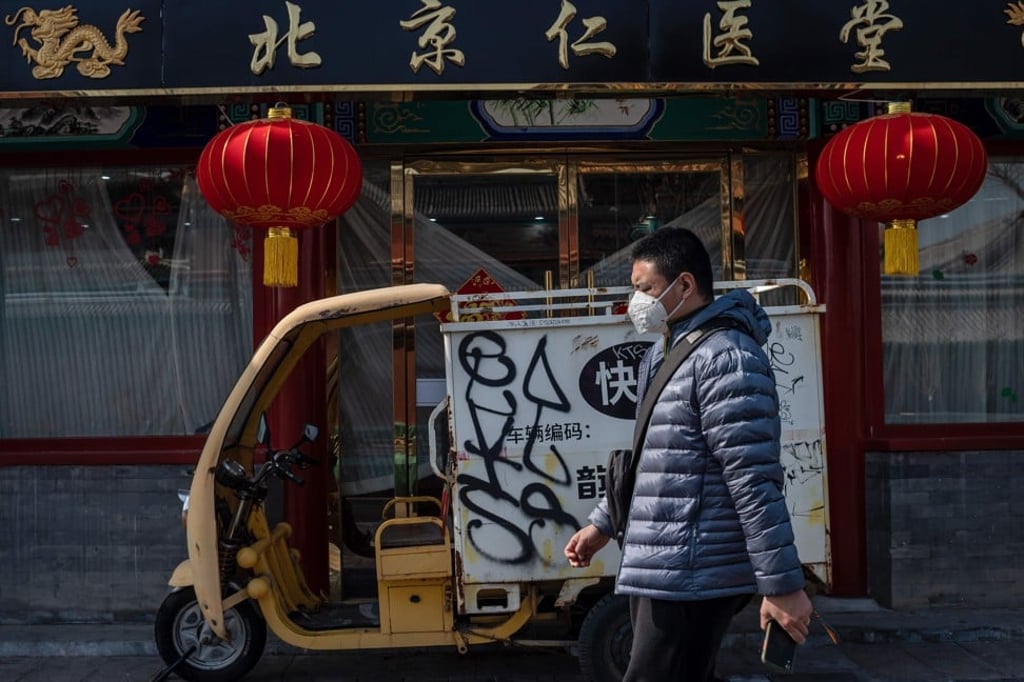
How restaurants and chains in Beijing are coping with the virus, closures and lockdown
- Many restaurants in Beijing stocked up to prepare for a Chinese New Year rush that never happened because of the virus
- Now they are coming up with novel and innovative ways to stay in business and keep their staff employed

With every one of its nine restaurants in Beijing closed due to the coronavirus outbreak, April Puffer, which specialises in puffer fish dishes, was forced to take extraordinary measures to survive.
The high-end restaurant, where dishes normally cost about 100 yuan (US$14), started making takeaway set meals that cost 18 yuan to 48 yuan. The restaurant chain recently established a delivery fleet made up of its own chefs, waiters and other workers who cannot perform their original duties due to the restaurant closures. It also started providing group meal takeaway service for companies whose staff resumed work after the extended holiday ended on February 17.
April Puffer manager Yang Zisu said they did not cut any staff or salaries since the outbreak started, in spite of the drastic drop in business. “Our business revenue has dropped by at least 90 per cent,” she says.
April Puffer’s story of doing what it can to survive amid the virus pandemic is unfolding across China’s dining sector.