Why tofu is terrific: dishes and health benefits revealed in a taste journey through Hong Kong, from mapo tofu to tofu pudding
- Tofu comes in many different textures, is a very good source of low-calorie protein and a great vehicle for creativity and flavour
- It’s the perfect summer ingredient, one chef says, while also being a key fixture of winter hotpots

I’m not proud of the fact but, before moving to Hong Kong in 2005, I’d probably eaten tofu fewer than 10 times in total. It’s fair to say that it initially had something of an image problem in the UK, and in the 1980s, while I was growing up, it would have been difficult to find it outside specialist health food stores.
I have, however, happily morphed from a tofu sceptic into a tofu evangelist, arriving belatedly to the party but making up for lost time ever since. Being married to a vegetarian helps, both when cooking it at home and ordering it when out, and few cities can match Hong Kong for the varieties of ways in which it is served.
Stories of tofu’s provenance and history abound, but one popular legend has it that around two millennia ago, a Chinese cook accidentally curdled soy milk by mixing it with seaweed. What we can be sure of, however, is that the English word tofu comes from Japanese, which itself borrowed it from the Chinese, doufu.
Vicky Lau is one of Hong Kong’s most progressive and acclaimed Chinese chefs and her latest menu at the one-Michelin-starred Tate Dining Room celebrates it at every stage of a seven-course menu. But to get a deeper understanding of the ingredient, we first head together to Kung Wo Beancurd Factory in Sham Shui Po, which has been in business since 1893 and in its current atmospheric shop for more than half a century.
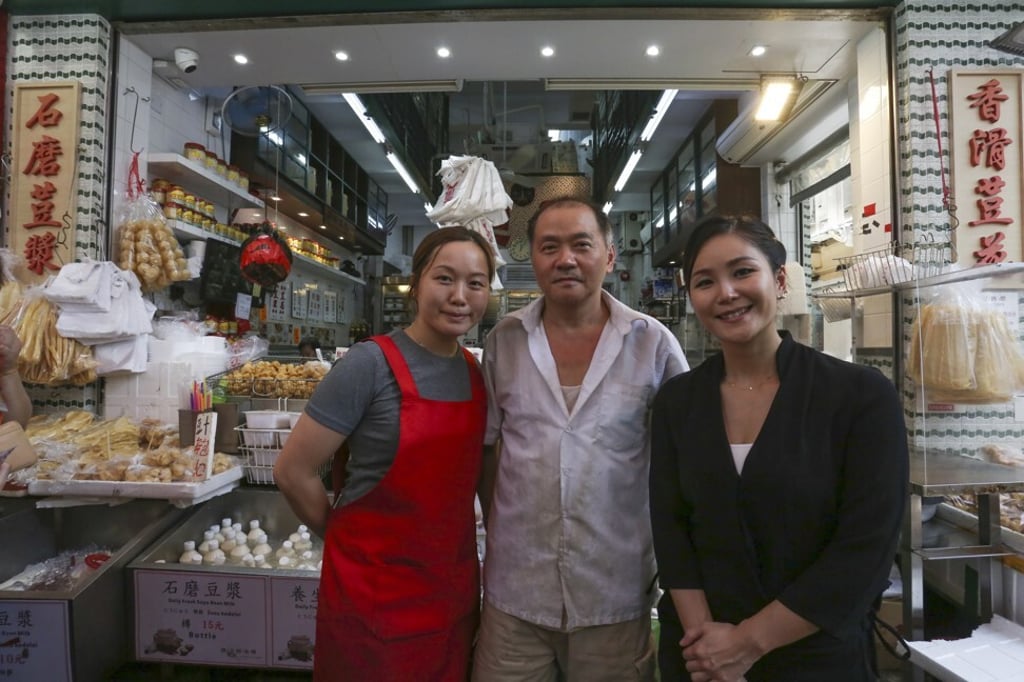
Its director Renee So explains that tofu is made on-site from Canadian and Chinese soybeans for 18 hours every day, served in multiple forms to customers when it opens at 6am. The factory still uses a 100-year-old hand-operated millstone to grind the beans. The fresh soy milk is then curdled, pressed into blocks and cooled.
“Chinese beans smell stronger and contain more oils, resulting in smoother tofu that Hong Kong people prefer,” So says. “We get through up to 500kg [1,100lb] of beans a day, all non-GMO [genetically modified organisms]. In summer people like tofu with winter melon as it’s cooling, but then in winter time we use even more beans [to produce even more tofu] as people like to buy it for hotpot.”