Typhoon shelter crab, Hong Kong seafood dish made with garlic, chilli and dab of nostalgia
Veteran Hong Kong chef shares how to enjoy the fried seafood dish as we look at its origin in floating villages and 5 restaurants serving it

Yeung Yan-chi knows his way around a crab. In his nearly 30 years as head chef of Bamboo Village restaurant, in Kowloon’s Jordan neighbourhood, he estimates he has prepared about 60,000 of them.
These days, the Hong Kong-born 64-year-old works in a front-of-house role at the restaurant, a position that is less demanding on his body. But the vast knowledge he accumulated over the years has stayed with him.
“I started as a chef at Bamboo Village in 1988 and the spicy crab has always been a favourite dish with diners,” Yeung says when we meet just before the dinner rush.
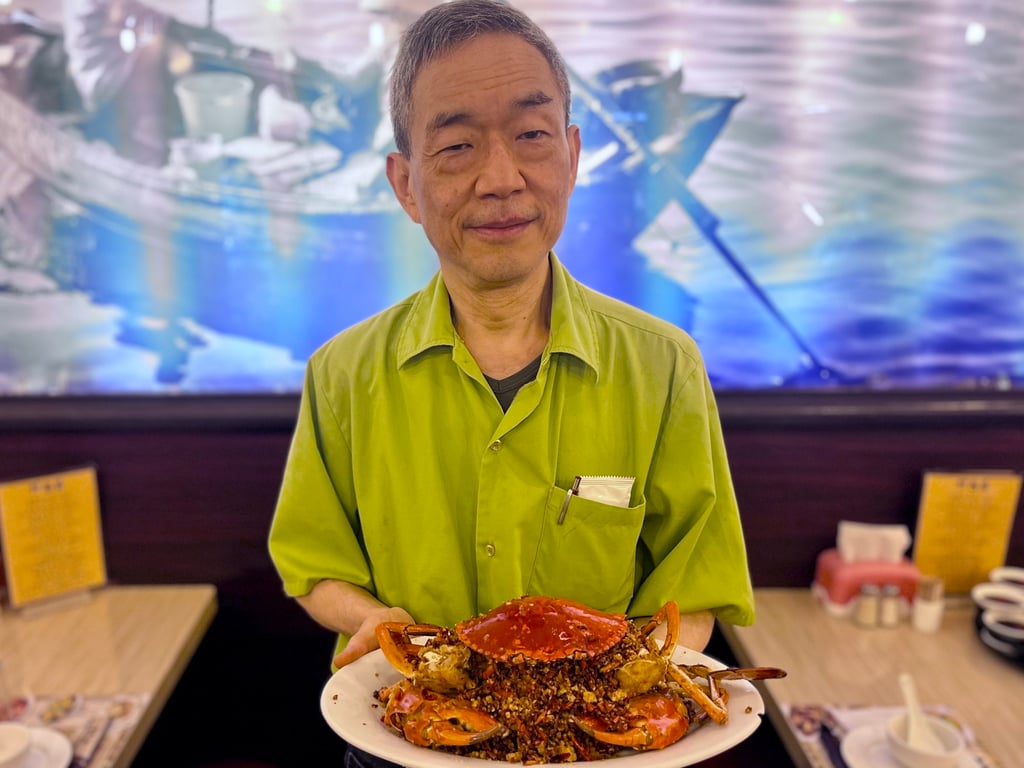
He says mud crabs from Vietnam are best suited to the dish, holding one up to reveal its mottled green armour that, when exposed to heat, turns a reddish orange.
Weighing about 1.5kg (3.3lbs) on average, the crabs are sourced from the mangrove forests of central Vietnam, where salty seawater meets fresh river water.