Advertisement
Food and Drinks
LifestyleFood & Drink

Instant ramen vs glass noodles – which is healthier if you are trying to lose weight?

Glass noodles contain less fat than ramyeon but are high in refined carbohydrates. For weight loss, focus on portion control and add vegetables and protein

2-MIN READ2-MIN
1
Listen
Budae jjigae (left) with instant ramen, and japchae, a savory and slightly sweet dish of stir-fried glass noodles. But which noodles are better for weight management? Photos: Getty Images, Shutterstock
The Korea Times

When enjoying a Korean stew or hotpot, many people find it hard to resist adding noodles. Whether it is instant ramen or chewy glass noodles, the choice often comes down to taste. But for those trying to lose weight, the question naturally arises: which is the less calorie-heavy option?

Despite appearances, the two differ in their nutritional profiles and health considerations.

Glass noodles, known as dangmyeon, are typically made from potato or sweet potato starch. A 100-gram (3.5 oz) serving of dried glass noodles contains roughly 340 to 370 calories, making them more calorie-dense than many people assume. They consist almost entirely of refined carbohydrates and contain relatively little protein or dietary fibre.

Although they expand significantly when cooked – making portions appear larger – the total calorie intake remains substantial. While glass noodles contain less fat than ramen or ramyeon, they can still cause blood sugar to rise quickly because they are primarily composed of refined starch.

If you choose glass noodles, nutrition experts recommend reducing your rice portion and pairing the meal with vegetables and lean protein to improve satiety and help stabilise blood sugar.
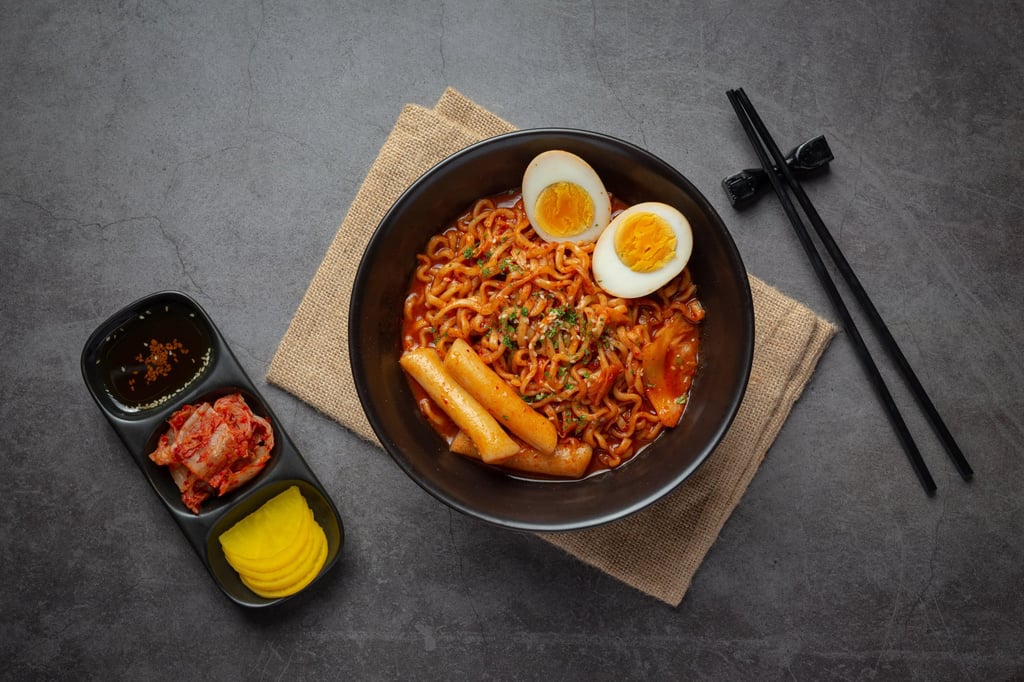
Korean instant noodles with tteokbokki (rice cakes). Photo: Shutterstock
A standard serving of ramen noodles contains about 300 to 350 calories, similar to glass noodles. However, because most instant ramen noodles are deep-fried during processing, they generally contain more fat, including saturated fat, while offering little dietary fibre.
Advertisement
Select Voice
Select Speed
1.00x