First aid tips for passers-by exposed to tear gas, petrol bombs or blue dye from water cannons
- What should you do if you are caught up in urban unrest and exposed to toxic chemicals? Experts offer advice
- If tear gas gets into your home, items trapping dust need to be cleaned thoroughly or disposed of, and surfaces washed with detergent or baking soda

Thomas Edmunds, who works in the technology sector, was leaving a physiotherapy appointment during his lunch break in Hong Kong’s Central district when he was caught up in a tear-gas attack during anti-government protests on November 11.
“Tear gas was everywhere and there was nowhere to go,” he recalls. “I had to get home, so I just ran through it. I literally had to step over a canister. My throat was sore and my eyes were killing me – it’s like when you get soap in your eyes in the shower, only that sensation doesn’t leave you for hours.”
With the unrest hitting Hong Kong, and recently other places such as Barcelona in Spain, Santiago in Chile, and cities across Iraq, here is what passers-by need to know about accidental exposure to tear gas, irritant dye, and petrol bomb residues.
Treating tear gas exposure
If you are affected by tear gas, leave the scene immediately to decontaminate and ease symptoms. “Pat the eyes down – never wipe them,” advises a first aider and Chinese University of Hong Kong (CUHK) medical student who goes by the initials JL. “Pour water or saline from the corner of the eye, so it flows across the whole surface, and blink a lot.” Continue for 10 to 20 minutes to reduce inflammation.
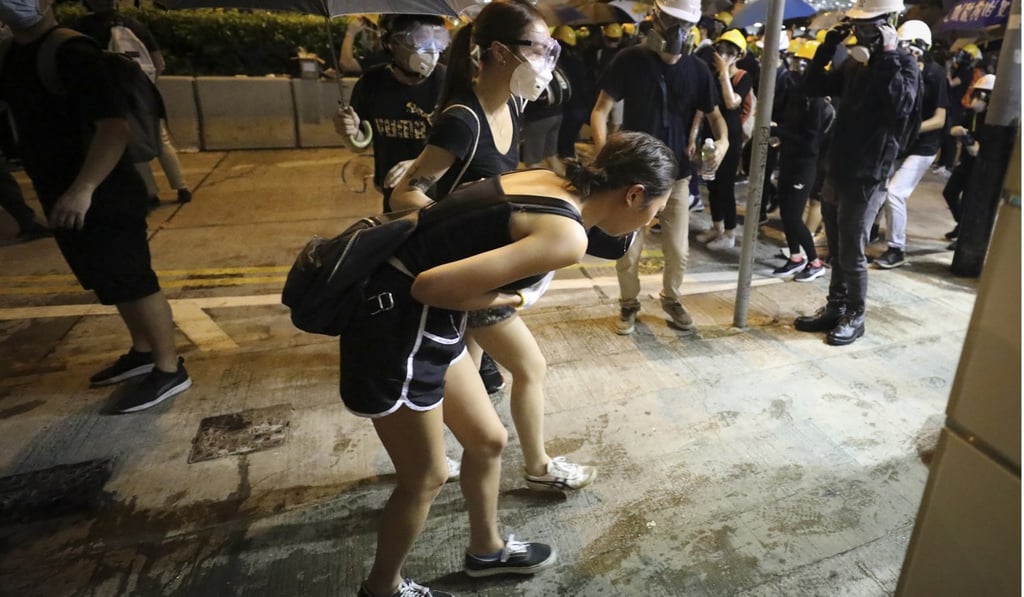
The most common form of tear gas contains chlorobenzylidene-malononitrile, or CS, a compound banned in warfare. When CS is sprayed in the air, it mainly affects two areas of the body: mucous membranes and pain receptors in nerve cells. This causes painful but largely temporary symptoms: coughing, a runny nose, skin inflammation, and burning sensations in the eyes and respiratory system.