Advertisement
Cancer, diabetes markers – the real value of DNA tests lie in knowing what’s potentially ahead, not what’s in your past
- A good time to take a DNA test is in your mid- to late 40s, the age at which predispositions to diseases such as diabetes will begin to show up
- DNA test results indicate risks, not outcomes – their value is in giving you a head start on managing your health better and averting possible ill health ahead
4-MIN READ4-MIN

DNA testing is well and truly mainstream, and is on offer from health clinics, wellness centres and gyms. You can even pick up a consumer test kit from food and drug retailers.
Go online and, for as little as US$99, you can get an astounding amount of information – from where your ancestors may have lived to lengthy personalised health reports. The wealth of data is incredible, but it can be overwhelming.
If you go it alone – as I did four years ago, sending off for a 23andMe test in Britain – you need to be prepared for an avalanche of information. And it doesn’t stop.
Advertisement
23andMe regularly updates you with new findings based on your DNA and new DNA matches. A few months after getting my results, I turned off the notifications because I really didn’t need to be distracted by the discovery of a new fourth cousin.
Advertisement
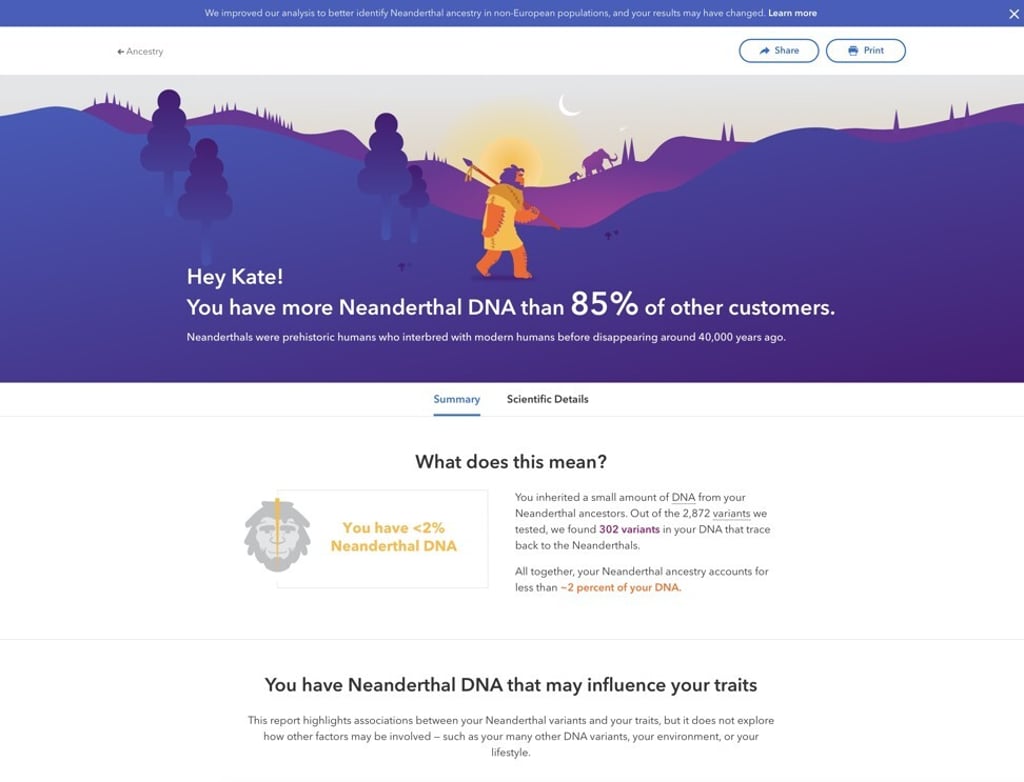
Last week, after a long abstinence, I logged onto my account and learned that I have more Neanderthal DNA than 85 per cent of other 23andMe customers.
Advertisement
Select Voice
Select Speed
1.00x