Philippines plastic pollution: why so much waste ends up in oceans
The Philippines is the world’s third-largest ocean polluter despite a waste management act coming into effect 18 years ago. The culprits? Corruption, lack of political will – and an addiction to single-use plastic sachets

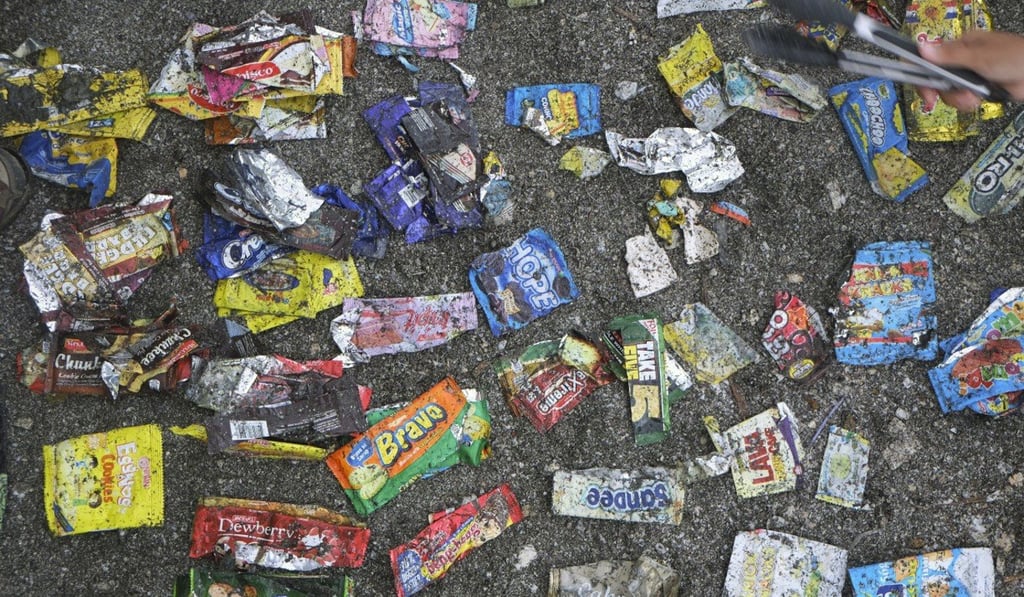
Masses of plastic trash swirling in waterways, garbage clogging drainage canals and huge stinking dump sites are among the most visible manifestations of the waste crisis in the Philippines.
A 2015 report on plastic pollution by the Ocean Conservancy charity and the McKinsey Centre for Business and Environment ranked the Philippines as the third-largest source of discarded plastic that ends up in the ocean, behind two other Asian nations: China and Indonesia.
The Philippines generates 2.7 million tonnes of plastic waste annually and 20 per cent – or half a million tonnes – of that leaks into the oceans, the report stated.
According to Froilan Grate, executive director of the Philippines branch of the Global Alliance for Incinerator Alternatives, an absence of garbage collection services in secondary cities and many of the country’s smaller islands is largely to blame for the overwhelming amount of marine plastic coming from the country.
In 2000 a solution was presented in the form of the Republic Act 9003, also known as the Ecological Solid Waste Management Act of 2000, but local governments in the Philippines have struggled to implement its directives, Grate says.
The law, considered landmark legislation on environmental management, mandated city and municipal governments to organise and sustainably manage the collection and disposal of solid waste. It also directed the closure of open dump sites and created the National Solid Waste Management Commission to oversee the law’s implementation.