As big as BTS: Squid Game director on why Netflix thriller’s global success is not a surprise – ‘the most Korean is the most universal’
- Hwang Dong-hyuk saw the potential in using old children’s games from South Korea as the premise for a series in 2008, but waited until now to make Squid Game
- The world was finally ready for such ‘peculiar, violent survival stories’, he felt, but making it was still a gamble and stressful. He hedges on a second season

Netflix Korean original drama series Squid Game has become the newest global hallyu, or Korean wave. A sensation worldwide, the series looks set to emulate the success of director Bong Joon-ho’s Oscar-winning film Parasite.
Since its release on September 17, Squid Game has dominated the global platform’s streaming charts around the world, including in the US, in a first for a Korean drama series.
Director Hwang Dong-hyuk, who both wrote and directed Squid Game, says the global success of the Netflix series came as no surprise to him, partly because he had the global market in mind from the start.
“The most Korean is the most universal,” he says. “BTS, Psy and director Bong Joon-ho have already proved that. Korea’s old children’s games, which were used in my series, are simple and old, but I saw the potential to make them appealing worldwide.”
The survival thriller series is about 456 people, including down-and-out Gi-hun (Lee Jung-jae), playing deadly rounds of children’s games to become the ultimate survivor and win 45.6 billion won (US$39.4 million).
Hwang, the director of drama Silenced and the period film The Fortress, says the success of Squid Game felt like a “roller coaster ride”.
“The production crew and I would joke about our series starting a Dalgona craze, like how Netflix’s Kingdom did with the gat – a traditional Korean hat – but I’m astounded that it actually happened,” he says.
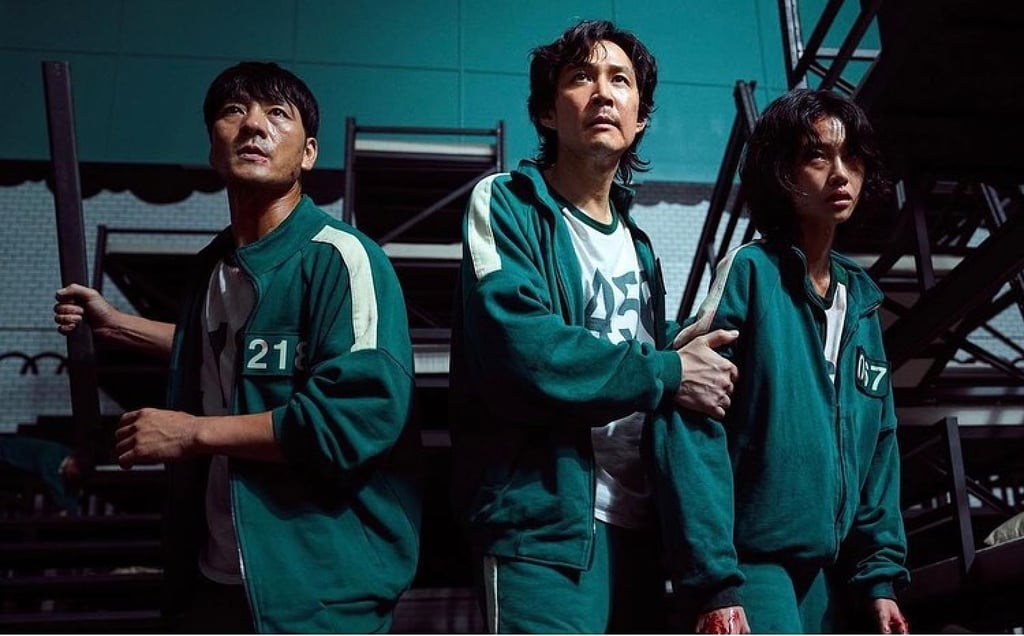
“Squid Game involves survival games, but it’s actually about people … So it doesn’t take long for audiences anywhere to understand the rules of the games, which gives more room for them to follow the emotions of the characters who are playing the games,” Hwang says.
“Other similar genre series or films follow one hero solving difficult puzzles to become a winner. But this series is a story of losers. There are no winners – no geniuses – but rather a person who takes each step forward with the help of others.”
Each night before filming, I would always think about ways to make the scenes better and revise the scripts. The level of stress that I was under was a full 100 per cent
The director came up with the plot in 2008 and had written the script a year later. But because of its bizarre concept, the series took more than a decade to see the light of day, he explains.
“But after about 12 years, the world has changed into a place where such peculiar, violent survival stories are actually welcomed,” he says. “People commented on how the series is relevant to real life. Sadly, the world has changed in that direction.