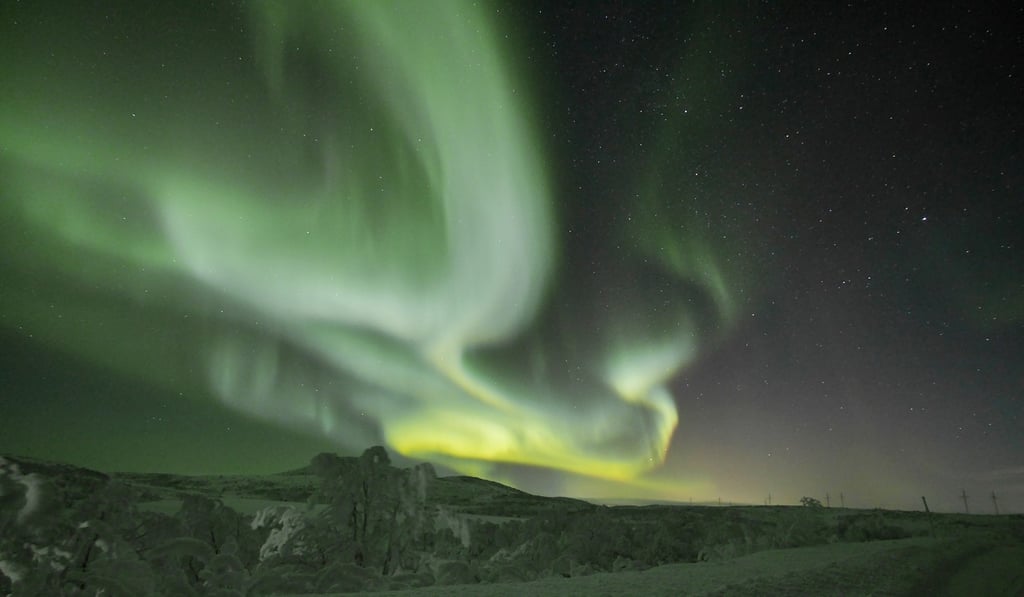
Five alternative places to see Northern Lights and Southern Lights
Most people go to Scandinavia or Alaska to see the dancing green lights of the aurora borealis – but there are plenty of other places in or just below the Arctic Circle to go. The Southern Lights may require a cruise

Seeing the Northern Lights, or aurora borealis, is justifiably high on many travellers’ bucket lists. The chance to see radiant shimmering green (and occasionally red, blue and yellow) lights in the night sky is enough to send tourists rushing to the planet’s far north.
The standard advice is to head to an area between 64 degrees and 70 degrees north latitude – the Arctic Circle – to maximise your chances of seeing them, although the auroral oval – which hangs over the dark side of the planet at night – often reaches farther south.
It is best to travel north between September and April when the nights are long, and to avoid full moons, bright city light and street lights.
That need to be within the Arctic Circle, or close to it, means those seeking the Northern Lights must visit one of the six Arctic nations – Canada, Finland, Iceland, Norway, Russia and Sweden – the autonomous Danish territory of Greenland or the American state of Alaska. With this much choice, why does everyone go to Alaska or Scandinavia?
Although they are less talked about, the Southern Lights, or aurora australis, are also worth considering. They occur in the Antarctic Circle and are best viewed between March and September, the southern hemisphere’s winter.
These are five of the best places to view the Northern and Southern Lights.