How to see ‘Santa’s Sleigh’ from Asia this Christmas (hint: it’s the International Space Station)
- The global orbiter will be visible in the skies above Asia for several minutes on Monday and Tuesday
- Orbiting 400km above Earth, and travelling at 27,600km/h, it will be impossible to mistake for anything else. What to tell your children? That’s up to you

Children in Hong Kong on Christmas Eve will get a special treat this year when “Santa” makes a particularly bright fly-past in his space-sleigh.
What they will see is something that looks like a bright, white star moving quickly from West to East. Visible over the skies of Hong Kong, Tokyo, Beijing and many other locations in Asia this Christmas, this is the International Space Station (ISS). Lacking flashing lights and moving at high speed, it will be impossible to confuse it with aircraft if you are expecting it.
Orbiting 400km above Earth, the ISS moves at 17,150 miles per hour (27,600km/h), about 10 times faster than a speeding bullet. However, if there are clear early-morning skies, on Christmas Eve and Christmas Day the ISS should be easy to see – it always appears in the West and sinks in the East, taking between three and six minutes to cross the sky over each country.
The ISS orbits Earth every 90 minutes, but is only visible close to sunrise and sunset in any one location, when the sun’s light reflects from its large solar panels.
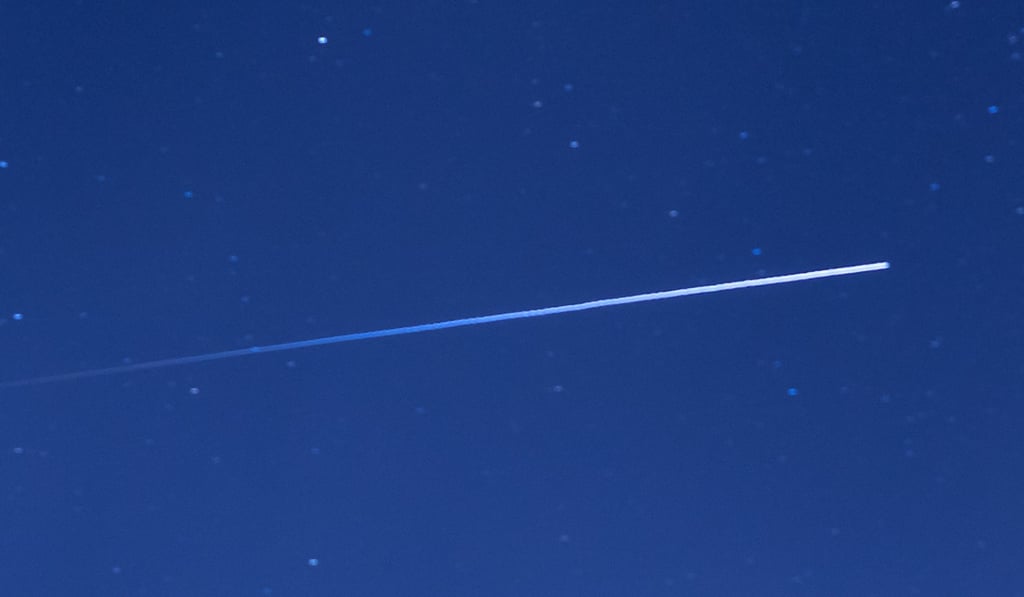
In Hong Kong, Shenzhen and Guangzhou, the easiest pass to see will begin at 6.05am on Christmas Eve, when the ISS will be in the sky for six minutes before disappearing.
However, it is South Korea and Japan that are in absolute prime position, with the longest, brightest passes predicted to occur directly over those countries.