What your choice of phone says about your holiday preferences, and how travel booking app responds
- Apple and Android phone users in China have such different behaviours, a hotel booking app is to rank its search results according to which handset they have
- Owners of high-end Huawei and Samsung phones are the ones choosing the priciest hotels, says Booking.com

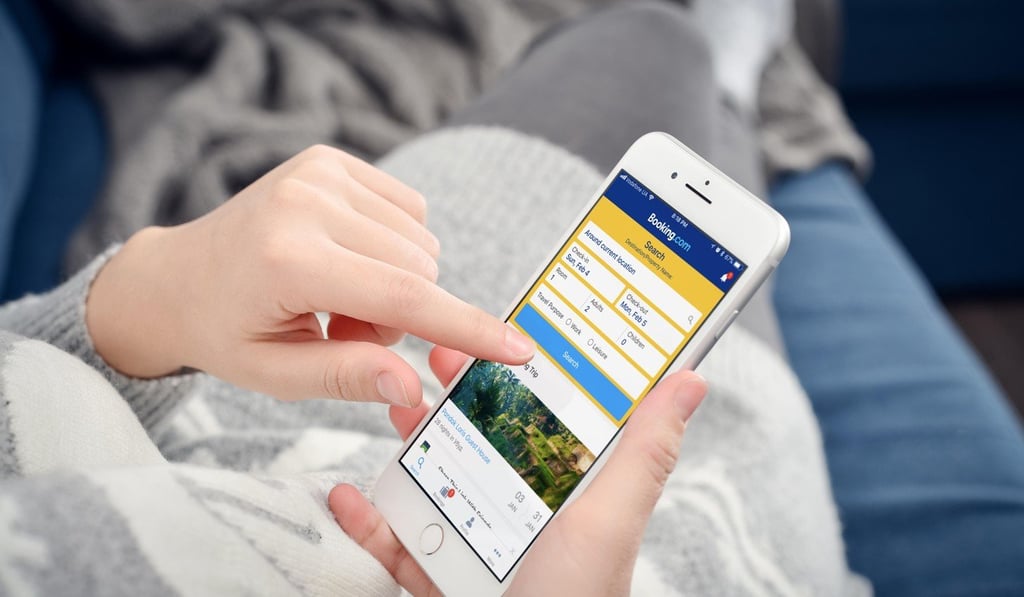
Which phone you have says a lot about what kind of traveller you are, according to Booking.com data, particularly in China, where the hotel booking platform will soon give different search results depending on what phone is being used.
“People using iPhone and Android have different behaviours and, generally speaking, people with Android phones tend to spend less and tend to book mostly domestic travel,” says Marsha Ma, managing director and China vice-president at Booking.com. “But it depends on the handset. There’s a much bigger price range for Android phones, and actually those with higher-end Android phones [choose] more expensive hotels than iPhone owners.”
From humble beginning as a start-up in Amsterdam over 20 years ago, Booking.com has grown a lot; every day, its website and app are used to make 1.5 million bookings at 27 million hotels in 229 countries. For many of its users, it’s all about convenience. An option for free cancellation of rooms makes it easy to plan long-term trips, and even monitor price drops and rebook closer to departure.
However, Chinese travellers aren’t using the service like that. In fact, so different is digital behaviour in China that the company has had to treat it like an entirely new part of its business.