Spa hotel converted from cave homes like those Mao Zedong hatched a revolution in
- The Chali Village Inn incorporates former cave homes and has been built to show the potential for dying villages in northern China to generate income
- The challenge for its architect was to retain original features such as the caves’ rammed earth walls and roofs while satisfying safety standards

Incorporating converted cave dwellings, or yaodong, the hotel taking shape on a verdant hill overlooking Sanmenxia in northern China is far removed from the rest of Chali village.
When completed – by October, according to the schedule – the Chali Village Inn will include hot springs, a restaurant, a coffee shop, a bar (built into a cave home) and other amenities. The conversion will have cost around 50 million yuan (US$7.7 million), raised from investors found by the local government.
Commissioned to help alleviate poverty in the village of 30 or so households in Henan province, the project could inspire other kong xin cun (“hollowed-out villages”) across northern China whose young people have left for the cities to find work and have cave homes standing empty.
“We want the project to serve as an example,” says Sun Huafeng, the Henan-born architect behind the hotel. He says 1,000-year-old Chali has many abandoned cave dwellings that have potential. “Converted cave homes can generate income for the whole village, where most old people have given up farming to rely on social security.”
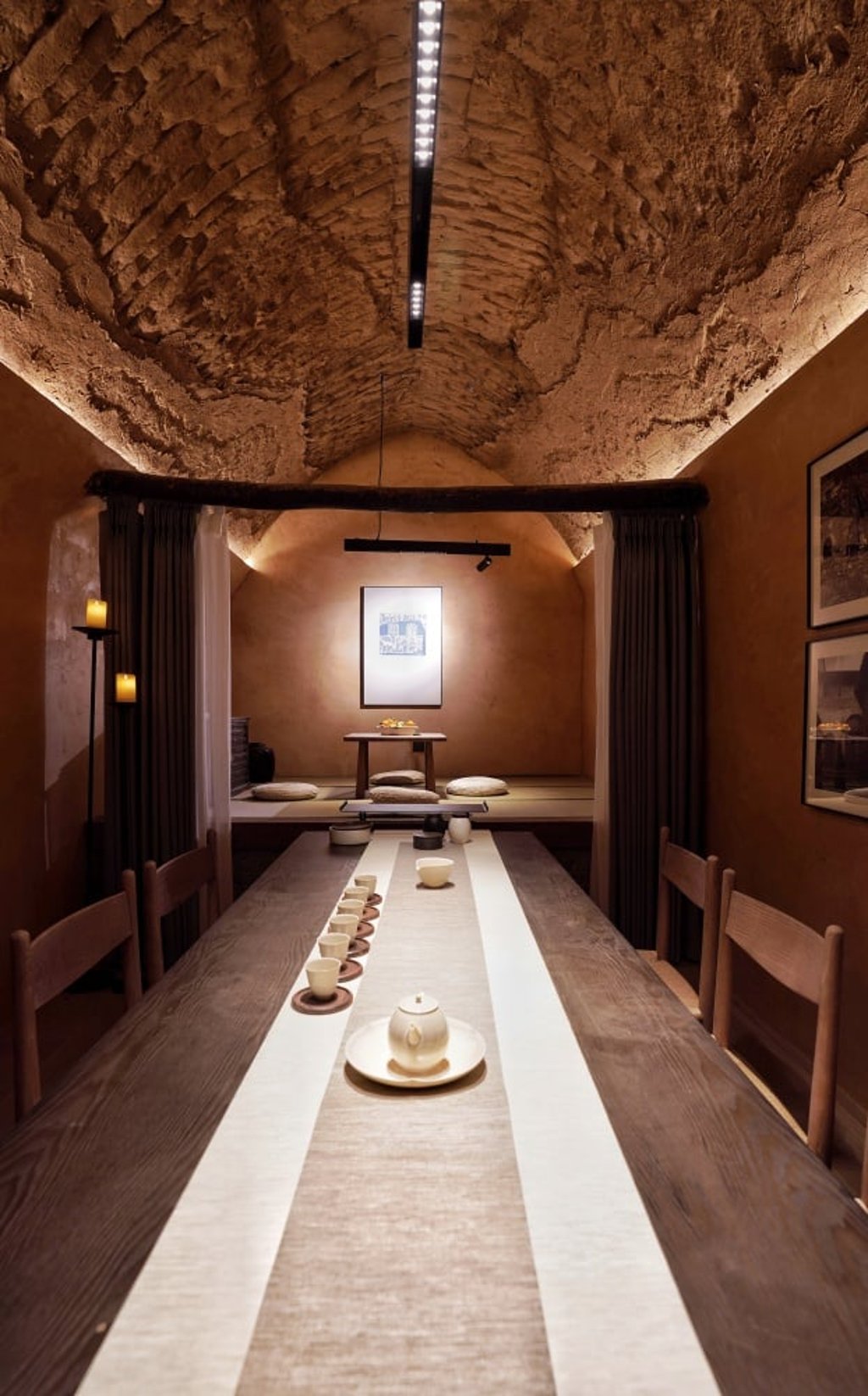
Such dwellings, with their arched roofs and rammed earth walls, are common across the Loess Plateau of northern China. Found in Shanxi, Shaanxi, Henan, Hebei, Gansu and Ningxia provinces, and in Inner Mongolia, most are carved into thick sediment. Others were dug horizontally around an interior courtyard formed by digging down from the surface, or built wholly or partially outdoors.