On a wing and a prayer
Cockfighting may be frowned upon elsewhere, but in the Philippines it is a legal national pastime. Kit Gillet gets a bird's eye view of the action. Pictures by Jeffrey Lau
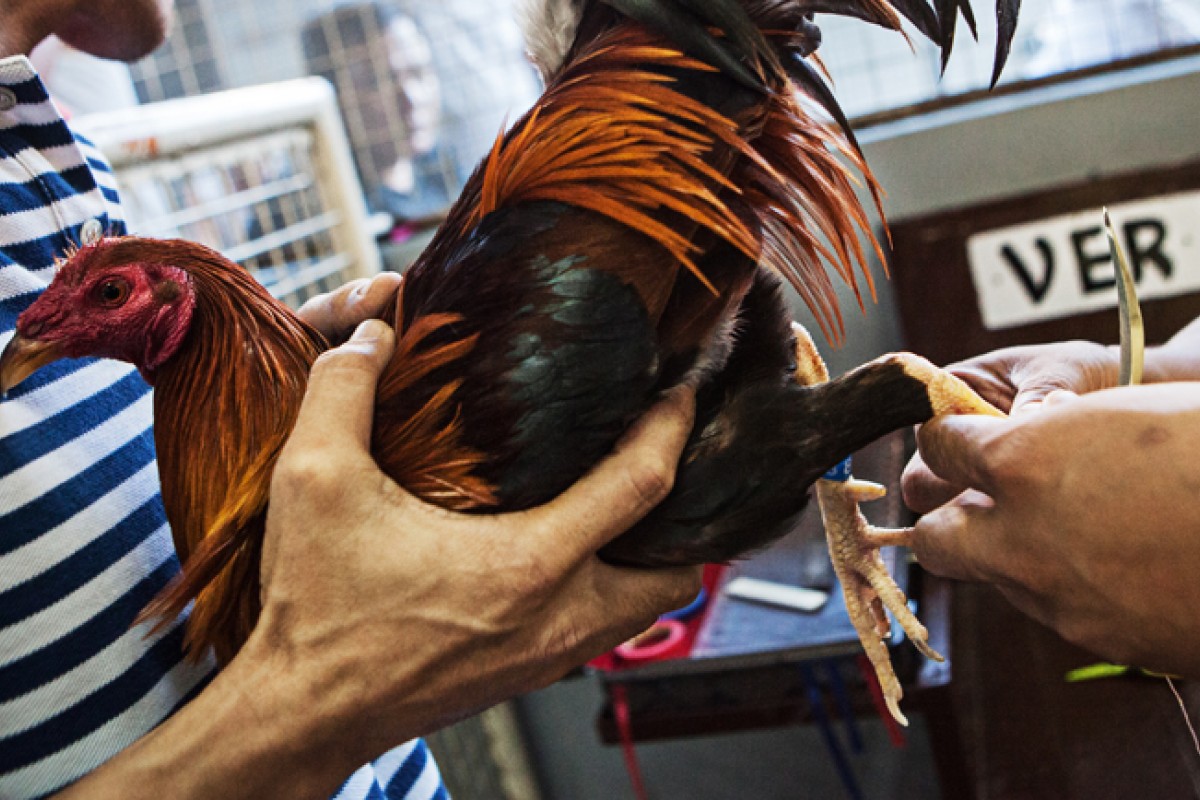
In a small lot hidden among the sprawl of urban Manila, 59-year-old Roque Reyes checks the condition of his fighting cocks. Dressed in a pair of white shorts and a plain white T-shirt, the father of four walks carefully around the basic, handmade cages, occasionally opening a door and looking inside at birds he is training to be killers.
"I've been doing this for 15 years," he says. "But it is just a hobby; some people do this as a career."
Down a cluttered side road in a poor neighbourhood of Quezon City, a satellite city of the Philippine capital, the patch of land is Reyes' cockfighting farm. Fenced on all sides with corrugated iron, the plot has enough room for a small wooden hut, put up by Reyes to store food and medicine for the birds, and a dozen or so cages. In the middle, a patch of grass has been worn down by roosters in training.
A dog guards the padlocked entrance.
Reyes, a retired junk-shop owner, has a dozen fighting cocks and 16 birds that are not yet fully grown or ready to fight.
"I breed them right from the eggs," he says, proudly. It usually takes about nine months after hatching for the roosters to be ready to fight, and even then, only some have what it takes.
"You have to be harsh - if a cock don't want to fight, you need to kill it and eat it."