Inside Kowloon Walled City: an artist offers a different perspective on life in the infamous enclave
- Artist Fiona Hawthorne spent three months of 1985 drawing, painting and photographing life inside the Kowloon Walled City
- ‘I just remember warmth and kindness and all the hard-working people I met there who were living under challenging conditions’

“When I first stepped into the Walled City, I suddenly felt I was in a different world,” Hawthorne says by phone from her home in London. “I was struck by the shafts of sunlight that pierced through the small gaps between the buildings.
“There were dripping pipes and bundles of cables, people making dim sum and noodles, woks frying, women folding laundry, children and rats running around, and all mixed among factories making plastic toys, a barbers shop, a dentist … I knew I was somewhere extraordinary.” She also knew she had to draw it.
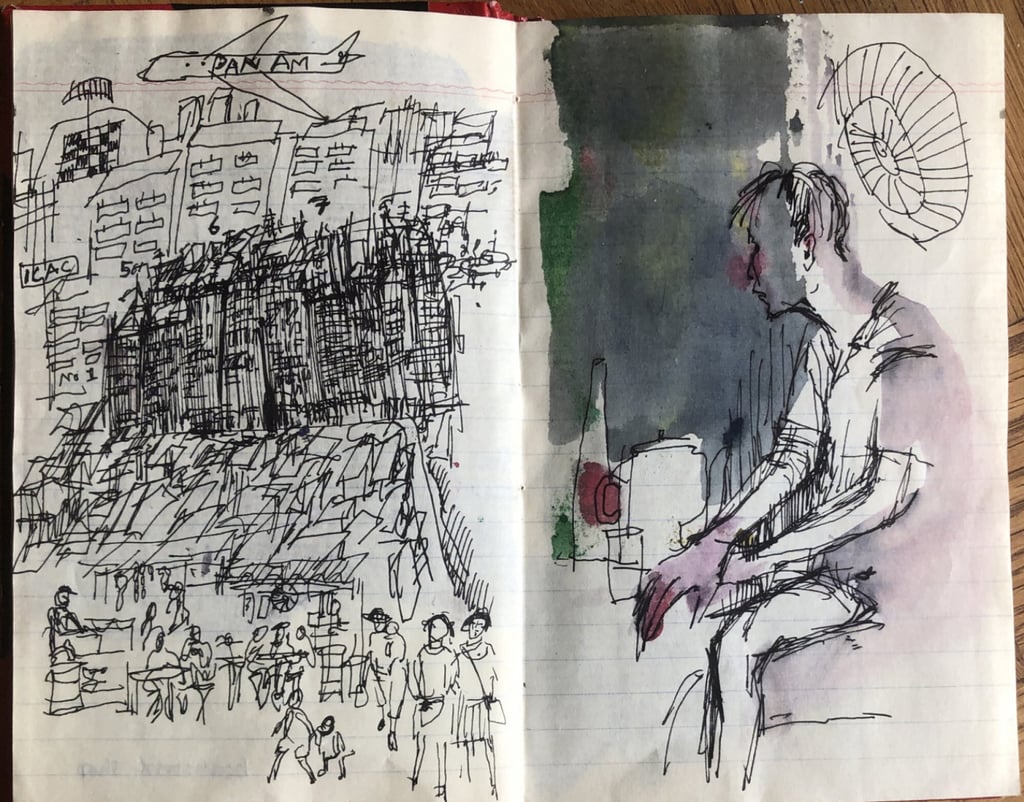
The following year while studying at London’s Chelsea School of Art, Hawthorne won a travel bursary that allowed her to return to Hong Kong. Stocked up on pens, brushes, watercolours, a camera and a portable VHS video recorder, Hawthorne immersed herself in Walled City life, spending three months inside its chaotic walls.
Her sketches and photos from that time now form Drawing on the Inside: Kowloon Walled City 1985, released this month by Blacksmith Books.
“I wanted to capture the sense of close community and intense industrious energy in some of the line drawings, and a feel of the humid dampness and muddled structure in the more free, inky pieces,” she writes in the book.
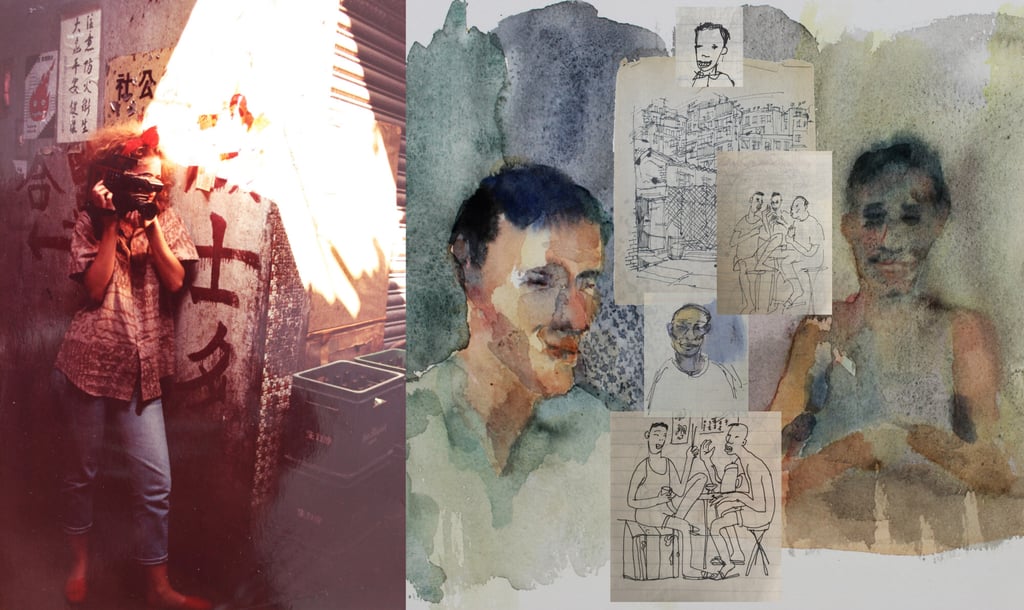
“I took each day as it came, mainly drawing people who were happy for me to perch in a doorway or who sat for me in the small tea house where I was always welcome. I was allowed to spread out at my favourite table, and was left alone by the clientele, many of whom were old Walled City men who soon became familiar faces.”