Haunted by Mongolia, land of earth and sky, Buddhists and shamans, stillness and modernity
Pico Iyer is blown away by the wind and the wilds of Mongolia – and by the photography of Frenchman Frédéric Lagrange that gets to the heart of a nation in many ways unchanged since Genghis Khan

I looked around me as I bumped and lurched along a rough, red-dirt track between shaman stones and Bronze Age burial mounds, and realised that I could see what looked to be 60-plus kilometres in every direction.
The day’s protagonist, at every moment, was the sky. In the distance there seemed to be great panels, as on a Rothko canvas, of green and gold and blue. A faraway droplet turned out to be a solitary ger – a domed felt tent – in front of which a leather-skinned woman was driving along 100 horses. Everywhere else was emptiness – vast enough for the mind to go anywhere (or nowhere) – and the sound of the wind, whipping in my ears.
I’d been travelling in Asia for more than 40 years by the time I set foot in Mongolia, and knew that nothing I had seen in Tibet or Ladakh, and nothing I’d known in China or Bhutan, could compare with this great, heart-clearing stillness.
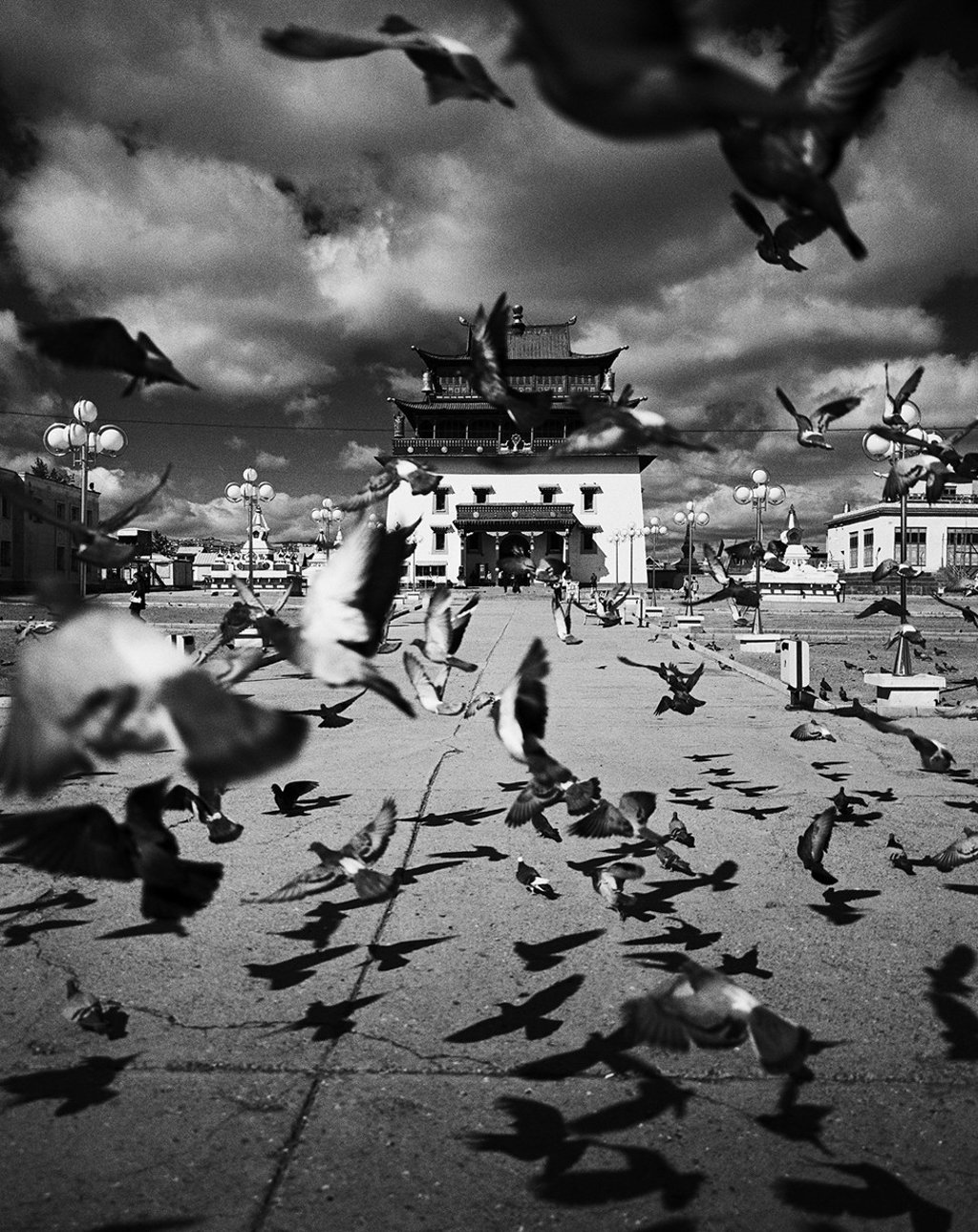
I’d watched the countries around me race into the 21st century, in a spirit of headlong excitement, and then lose their way and wonder where their past had gone. Not so in Mongolia. There are luxury-brand malls and giant screens projecting runway footage on the broad and trendy streets of the capital, Ulan Bator, but 30 minutes outside it, herders are living much as they would have done in the time of Genghis Khan.
“The mind is like the wind,” said my new Mongolian friend Baagi, calmly, as he led me around a museum in the capital. “You have to bring it back and focus. Otherwise, it will whirl around and around.”