As Jakarta sinks and the Indonesian government prepares to move, what does the future hold for the city’s poor?
Efforts to shore up defences include building sea walls and wells, clearing the waterways and greening urban areas. Yet its northern slums continue to be inundated

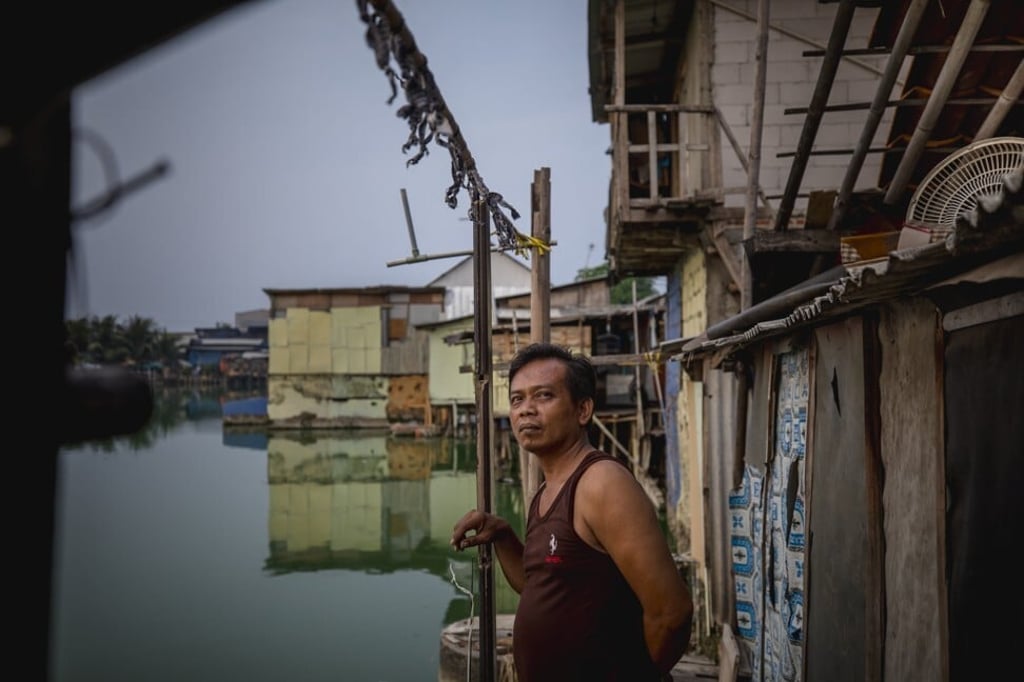
Yayan Suprianto surveys the floodwater surrounding his house of wooden planks and a corroded tin roof in Kampung Teko, “kampung” being a catchword for urban slums. He is part of a community of 300 people in what is considered the only “floating village” in Jakarta, the world’s second-most populous urban area after Tokyo.
Perched above what used to be lush paddy fields, Yayan’s shack spills over support poles driven deep into the mud. It is surrounded by algae and discarded plastic and the water is contaminated by industrial waste from nearby factories.
Yayan is a factory worker from western Java who, like millions of Indonesians, came to the capital in search of employment and a better life. But now he worries his house could soon become fully submerged. “We probably have to move back to our village,” he says.
The government has invested in pumps, but “the water rises every year”, Yayan says. “Before, we used to have floods only during the rainy season, but now they come more frequently.”
Jakarta is not the only coastal city in trouble. Also facing rising sea levels, more frequent rains and stronger storms are the likes of Bangkok, Dhaka, Houston, Lagos and Venice. But Jakarta is sinking fastest.