The US leads the race to mine space, an endeavour that could have universal consequences
As companies eye celestial riches, we could all be losers if countries fail to reach a consensus on space mining

When conspiracy theorists examine the first moon landing with a sceptical eye, they look at the flag and note that it appears to be flapping in the wind. “Ah ha!” they squawk. “But there is no wind on the moon, therefore the whole thing was a fake and was being filmed on a Hollywood set somewhere, presumably equipped with a wind machine.”
But, of course, the flag is behaving as all flags do, on the moon or anywhere else, when they are being manoeuvred into position. And the crucial point that the conspiracy theorists miss, which is staring them in the face, is that this is an American flag.
Neil Armstrong and Buzz Aldrin were doing exactly what Captain Cook did in Botany Bay and Christopher Columbus did before him: sticking a flag in the earth and thereby – implicitly in the case of Apollo 11 – laying claim to ownership of territory.
Except that in this case it wasn’t Earth. The scramble for outer space had begun. And it continues apace. It’s not Star Wars – not yet. But the carve-up of great chunks of extraterrestrial real estate is taking place right now.
Philosopher Jean-Jacques Rousseau noted that inequality originated the day someone drew a line around a patch of earth and said: “This is mine!” Now those lines are being drawn on other planets, and moons and asteroids. Dmitry Rogozin, head of the Russian space corporation Roscosmos, recently asserted: “Venus is a Russian planet.” Meanwhile, the United States is determined to brand its name into everything spinning around the solar system.
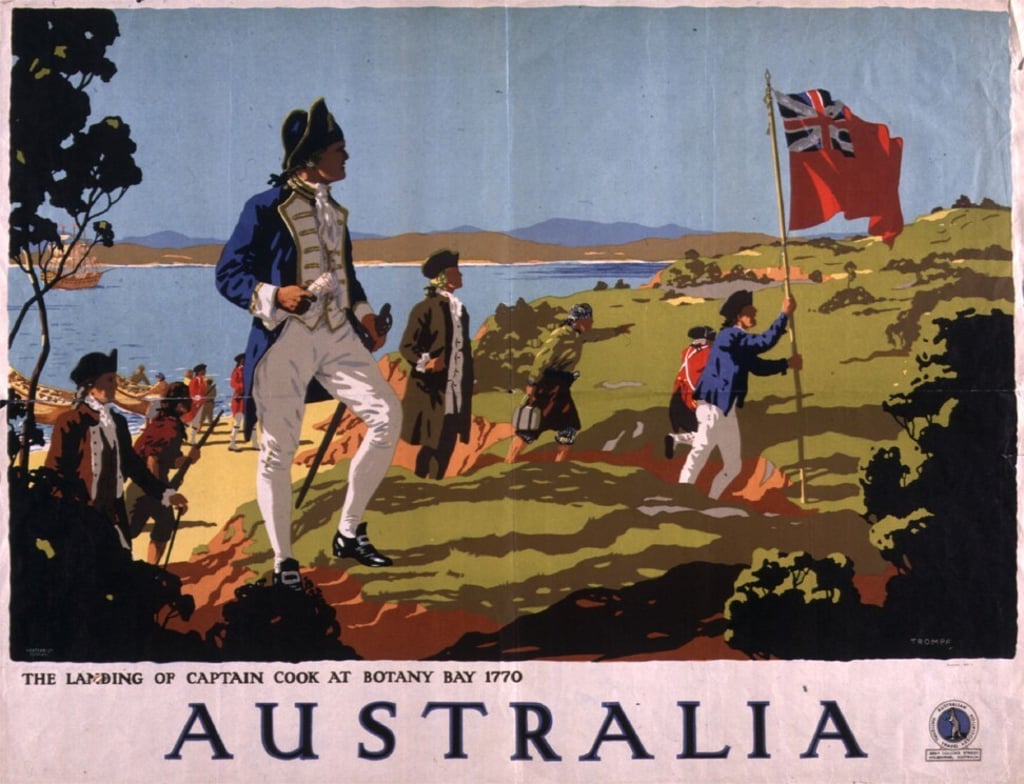
There is a fundamental principle at work here, best summed up in the infantile expression, “bags I!” If we can get our hands – or even remotely controlled robots – on it first, then it’s ours. The Latin version is: terra nullius – it’s nobody’s land. No one lives there. Which was the lie perpetrated about Australia and recycled again and again by rampant imperialists the world over.