Ethnic minorities in China’s rich clothing and adornment traditions come alive in new book
- ‘China Adorned: Ritual and Custom of Ancient Cultures’ boasts almost 700 images that document and demystify the customs of more than 30 minority peoples
- In Yunnan province, Hani Aini young men impress female suitors with rare scarab beetles which, if the woman is keen, she will string into her headdress
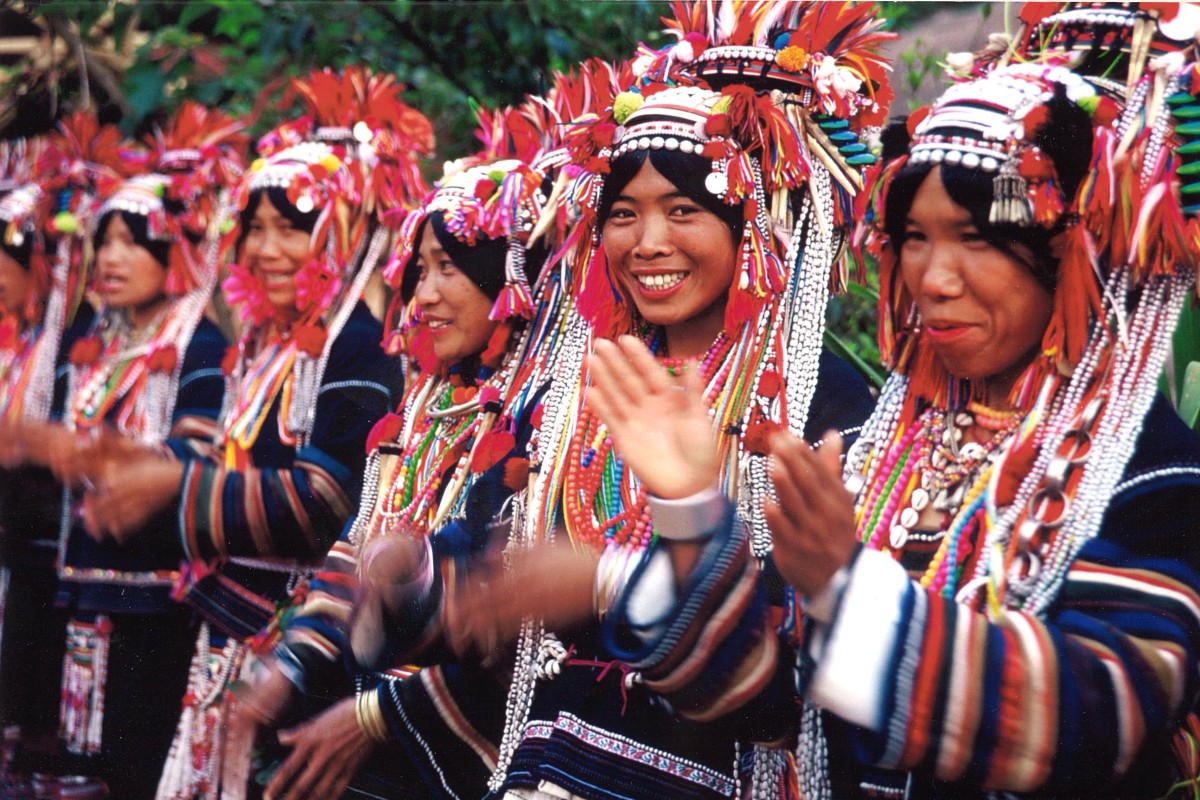
For many, fashion serves a practical purpose: a woolly jumper to stay warm, a summer dress to keep cool. But for China’s ethnic minorities, clothes and jewellery carry deeper symbolism, communicating information about a person’s heritage, age, ethnicity and social status.
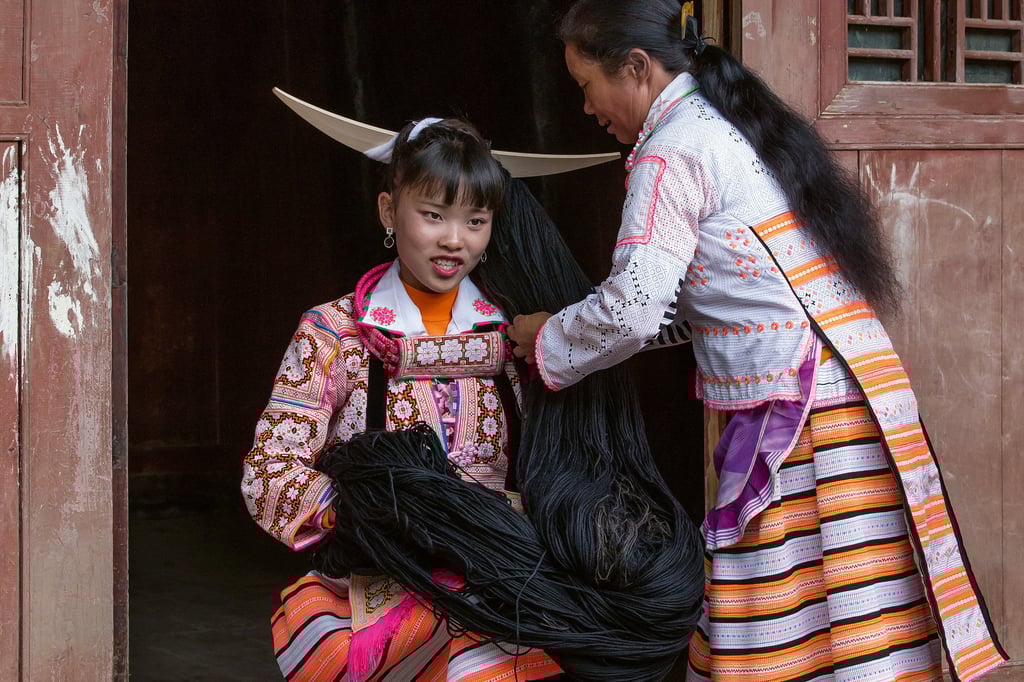
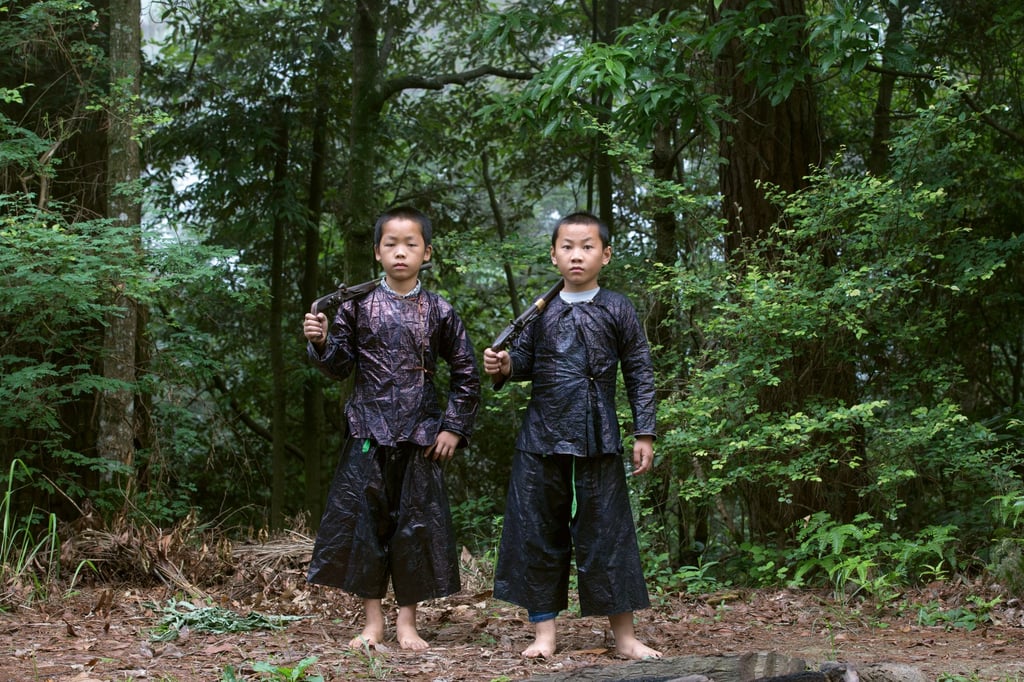
Nowhere is this better captured than in China Adorned: Ritual and Custom of Ancient Cultures, a visually rich book boasting almost 700 images that documents and demystifies the customs of more than 30 minority peoples.
The book combines commissioned photos by Cat Vinton with hundreds taken by Chinese photographers and cultural anthropologist Deng Qiyao, who spent 30 years researching China’s ethnic groups. Deng’s never-before-published black-and-white images provide a glimpse into the lives of remote communities.
In the foreword, Deng talks about how, as a teenager at the beginning of the Cultural Revolution, he was blinkered to the world of clothing, which was restricted to drab Mao suits and army uniforms. That all changed when he was sent to the China-Myanmar border, home to many ethnic groups.
“The clothes they wore were a stark contrast to the boxy dull attire I was used to back home among my Han peers,” he says, referring to China’s majority ethnicity.
“The women of the Aini, a branch of the Hani ethnic group, wore dresses that revealed their midriff and legs, and on their heads they displayed a medley of ornaments made of feathers, bones, flowers and insects,” he writes.
“I could not believe what I was seeing. These women opened my eyes to the colour of the world and showed me that the desire to decorate ourselves in the name of beauty is part of human nature.”