The dream weavers of Sarawak, headhunters once, fight to save their art and their traditional way of life
Inside the disappearing world of Sarawak’s Iban tribal weavers, who literally dream up the intricate patterns of their pua kumbu, beautiful ceremonial cloths with a bloody past

It’s dawn and Bangie anak Embol has been up for an hour or so, washing clothes, reciting prayers and chatting with neighbours in Rumah Gareh, an Iban longhouse in central Sarawak, Malaysian Borneo.
In the day’s first rays, the septuagenarian heads for the well-tended garden in front of the longhouse, knife in hand, ready to cut a few stems of tarum, the indigo plant she’ll use to dye cotton yarn for the pua kumbu ceremonial cloth she is weaving.
Mixed with hot water, lime juice and a spoonful of ground snail shells, to help fix the dye, the threads quickly acquire the green of the indigo plant before gradually turning blue. The longer the soaking, the deeper the shade.
We are guests at the longhouse thanks to Welyne Jeffrey Jehom, professor of anthropology at the University of Malaya, in Kuala Lumpur. Jehom has been researching Sarawak’s weaving traditions for years, and since 2012 has focused on pua kumbu, the ceremonial cloth woven by Iban women. Jehom has initiated conservation and commercial projects aimed at preserving the pua kumbu tradition and now visits Bangie and her fellow weavers on a regular basis.
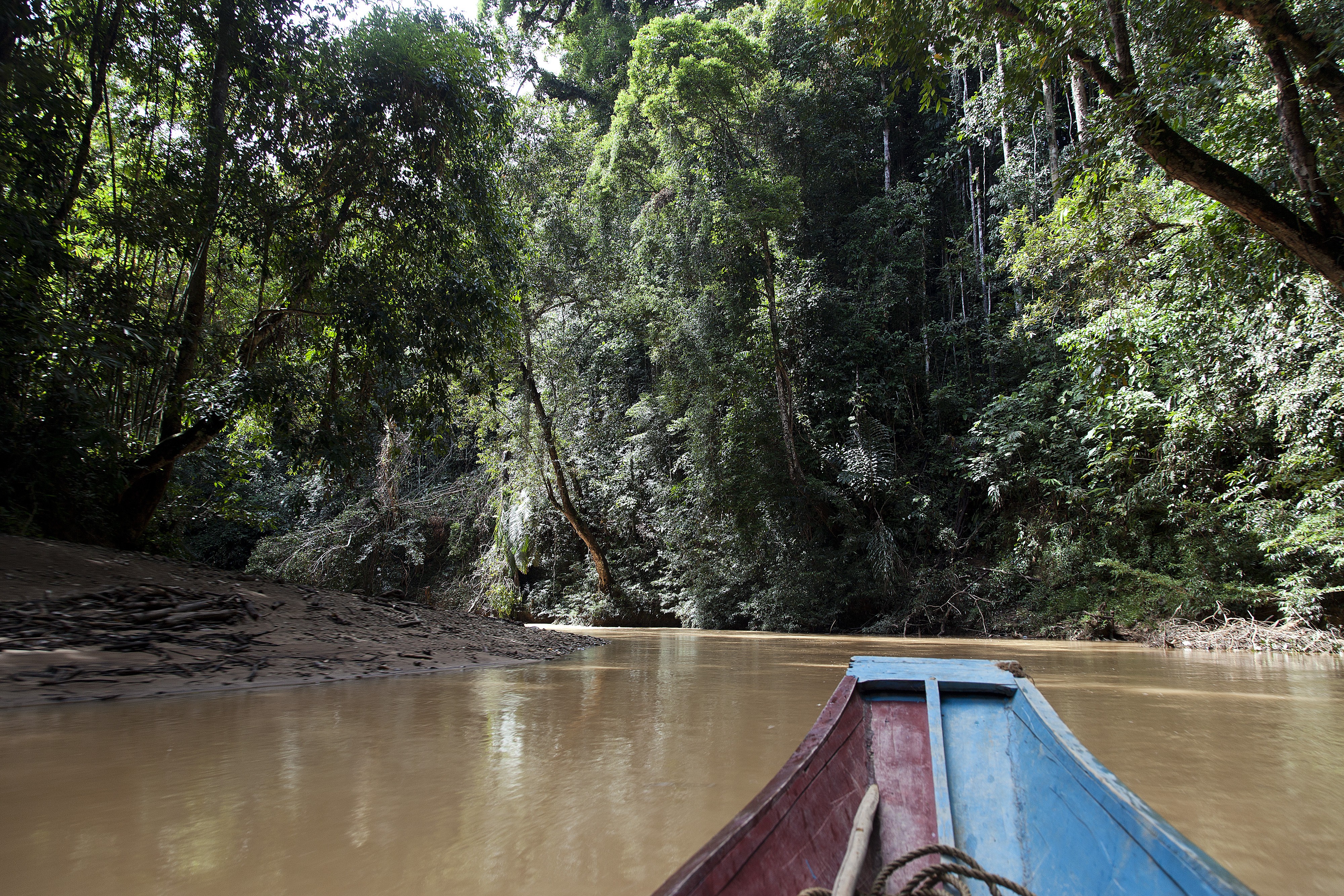
Getting to Rumah Gareh – or “Gareh’s longhouse”; Gareh being the current headman, Bangie’s son – is no mean feat. An express boat takes us from Sibu, a nondescript town near the Rajang River’s swampy delta, to bustling Kapit, where connections can be arranged to all the longhouses – villages under one roof that are typical of Borneo’s indigenous communities – on the upper Rajang and its tributaries.