Forget Tokyo, a stay in Japan’s kominka homes shows another side to the Land of the Rising Sun
Across Japan, kominka houses – some dating back more than 300 years – are being converted into holiday homes, complete with paper partitions, tatami rooms and a full Japanese breakfast

What’s a kominka then? A hotel? A ryokan? A homestay? That’s an interesting question, because it actually feels like a mix of all three. These are old family houses – now in more than 150 locations around Japan, according to those overseeing the Uchiko project – that have been preserved and renovated into beautiful, contemporary places in which to stay. Guests have the whole property to themselves.
What’s special about this one? Japan’s Setouchi region, which incorporates the coastal areas of Honshu, Shikoku and Kyushu and includes the Seto Inland Sea, is home to this particular kominka, which stands in the small mountain town of Uchiko. At Uchiko’s heart lies a conservation area, and it is here that you will find the town’s fourkominkas that have been renovated to date. Hisa sits on a quiet, quaint, heritage-listed street.
How old are we talking? Some date back more than 300 years, although Hisa is a relatively sprightly 150. With typical Japanese attention to detail and aesthetics, every element is the result of traditional techniques. That means lovely wood, slate, ceramics and paper at every turn. The beauty is that no two kominkas are the same.
What about eats? Every kominka has a compact kitchen, complete with well-stocked pantry, and the market and food shops have whatever else you might need, including local produce such as corn, okra and sweet potatoes.
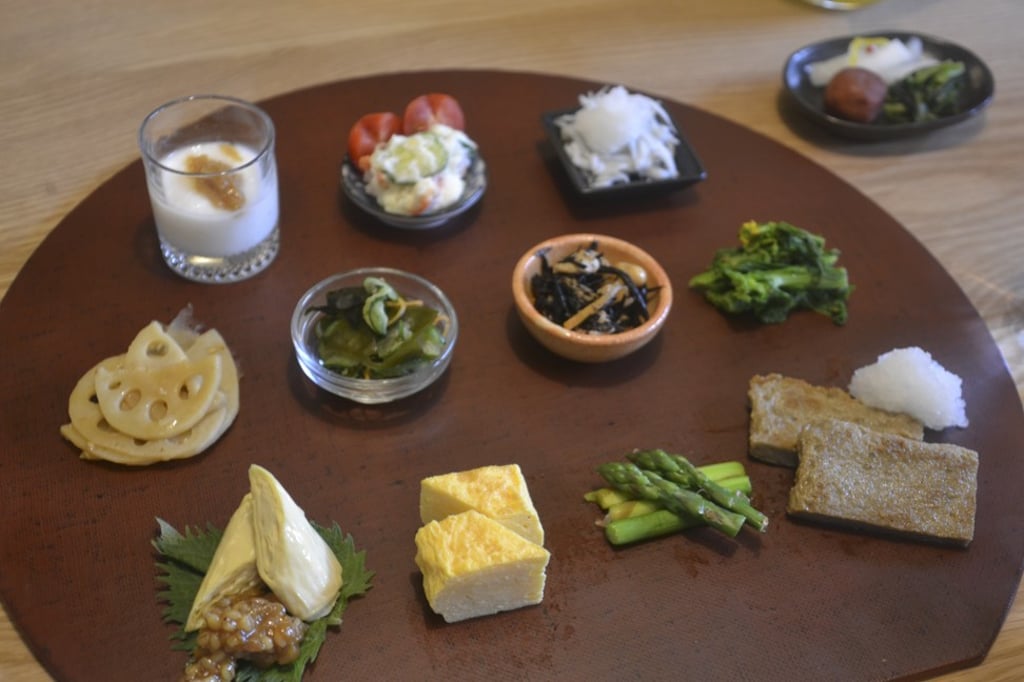
Breakfast is an optional add-on at 1,000 yen (US$9), and totally delicious, beautifully presented and ridiculously healthy. Think lotus root, steamed asparagus tips, pickles, ginkgo nuts, miso soup, sheets of tofu skin, rice and a slightly random potato salad.
Blimey, the full Japanese, then? You could say that. Although a Western breakfast, with ham, eggs, salad, fruit, juice and more, can be ordered instead. If you don’t fancy preparing your other meals, Uchiko is well-served with restaurants that feature local specialities such as jakoten, a fried fish cake, while locally brewed sake wets the whistle.