What is a mole? Unpacking Mexico’s hottest dish of the moment

Complexly spiced and intricately prepared sauces offer a taste of local ingredients and reveal the regional variances in Mexican cuisine
There’s little that rattles the intrepid home cooks of 2018. Well-versed in world flavours and armed with the knowledge of 1,001 digital voices, today’s kitchen warriors don’t stop at Julia Child’s famously laborious beef Bourguignon. “Give me a real challenge,” one imagines them saying. Give me towers of croquembouche wrapped in spindly sugar webbing; day-long smoked pork butt lovingly basted every hour on the hour; and boulangerie-worthy bread baked with flour milled in my very own kitchen. The more steps, the better.
And yet, when it comes to one of the most challenging of Mexican dishes – mole, the complexly spiced and intricately prepared family of sauces dating from pre-Hispanic times – many voices go silent.
“Most people still don’t know what it is,” says Lesley Tellez, author of the Eat Mexico cookbook (Kyle Books, 2015) and owner of a Mexico City-based culinary tour business of the same name. North of the border, she says, well-meaning cooks often have the misperception that mole is a too-sweet chocolate sauce or a single dish with an inalterable recipe. Both couldn’t be farther from the truth.
![“If you go to any [Mexican] city or even better, any rural town, [the] mole will be different from the mole two towns over,” says Eat Mexico author Lesley Tellez. Photo: Ilene Squires](https://cdn4.i-scmp.com/sites/default/files/images/methode/2018/03/02/e345528a-1dd4-11e8-804d-87987865af94_image_hires_164713.jpg "“If you go to any [Mexican] city or even better, any rural town, [the] mole will be different from the mole two towns over,” says Eat Mexico author Lesley Tellez. Photo: Ilene Squires")
Everybody thinks the best mole is their grandmother’s mole, and that’s the only way to make mole. People have very strong feelings
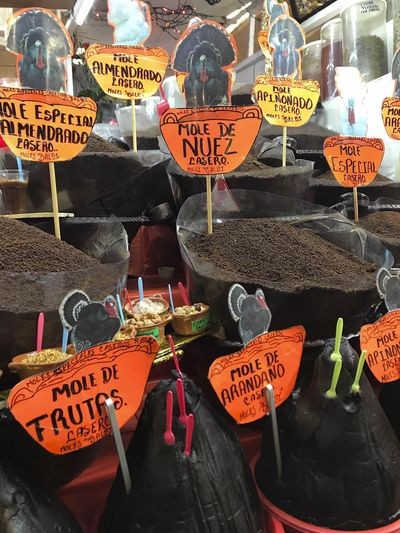
“We’re talking about a whole universe of mole that exists in Mexico,” she explains as we tour the famous Mercado La Merced. “If you go to any city or even better, any rural town, [the] mole will be different from the mole two towns over.” Mexican cuisine is highly regional, she continues, influenced by the ingredients and traditions local to each place. Two moles that look identical may taste completely different, perhaps the result of a small tweak.
“People often talk about the seven moles of Oaxaca, but even in Oaxaca there’s more than seven,” Tellez says. “Anyone from Oaxaca could tell you that!”
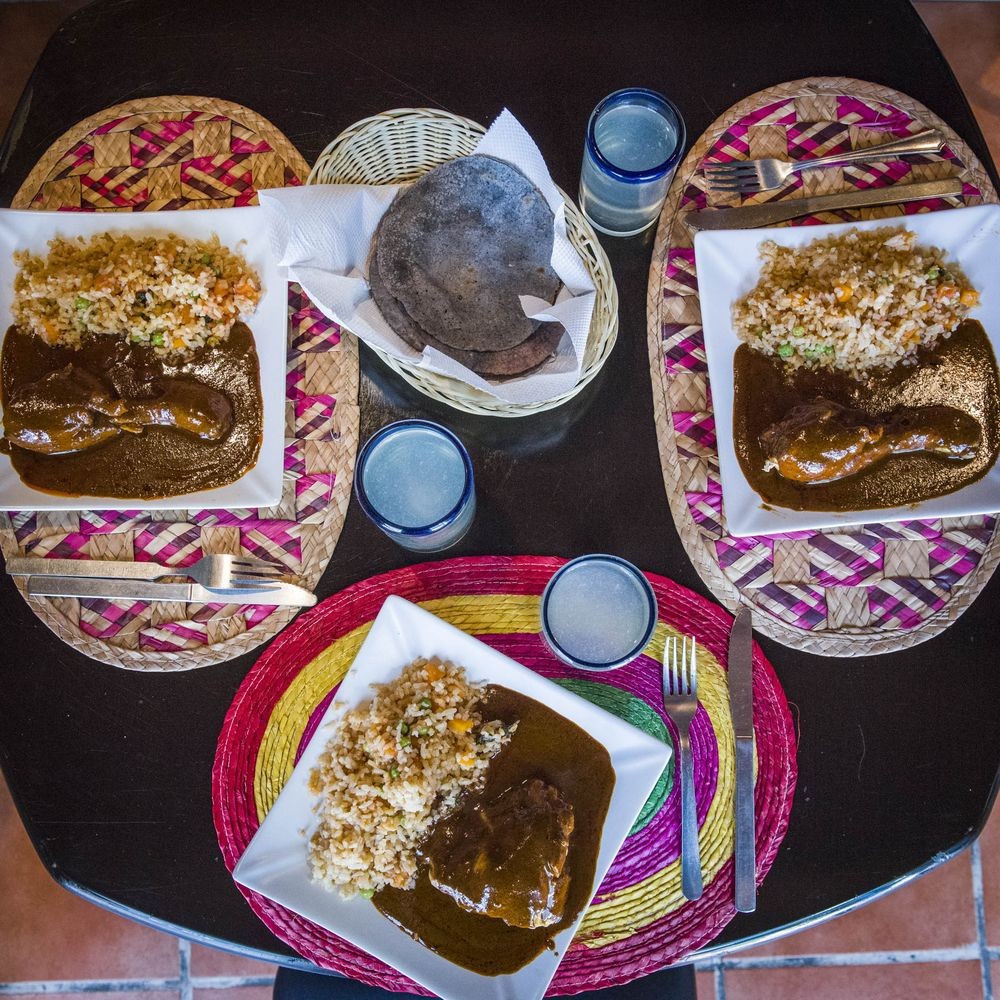
What nearly all moles have in common is this: a base of dried chillies ground with spices to form a paste or powder. That base is then blended with water or stock to create a velvety sauce, perfect for draping over meat, enchiladas, or some other conveyance. Despite its variations – the type of chilli, whether that chilli and its seeds are roasted or not, any additional spices, and the texture and thickness of the resulting sauce – the mole always remains the star of the dish, rather than whatever is stashed underneath.