How much fat and sugar do we eat each day — and how much should we eat?

A new HSBC report stacks up what we consume daily against what actually should be on our plates – more plant-based whole foods. The findings make for disturbing reading
We are definitely getting enough to eat overall – it’s just not the right stuff.
Americans today consume about 400 more calories per day than they did in the 1970s, a 20 per cent increase. Farmers and food manufacturers have ramped things up, too. Around the world, the number of calories available to each person has gone up nearly a third – 28 per cent – in the past 50 years.
In particular, the world's appetite for meat has soared: global per capita meat consumption has risen to nearly 100 pounds per year, a dramatic uptick from the 67 pounds of meat people ate in the mid-1980s.

But we've slowly been replacing fruits, vegetables, and good fats like olive oil, butter and fish with cheap, mass-produced alternatives. And that's having an effect on our waistlines and long-term health.
“Access to convenient and inexpensive foods has changed global eating patterns and made it possible for many middle-income countries, especially in the Middle East and North Africa, to face a double burden of malnutrition and overweight or obesity,” a new HSBC report warns.
The report is based on data from 45 wealthy and middle-income countries around the world, and it compares what the average person eats on a daily basis to the ideal recommended by doctors and nutritionists. Here's how it stacks up:
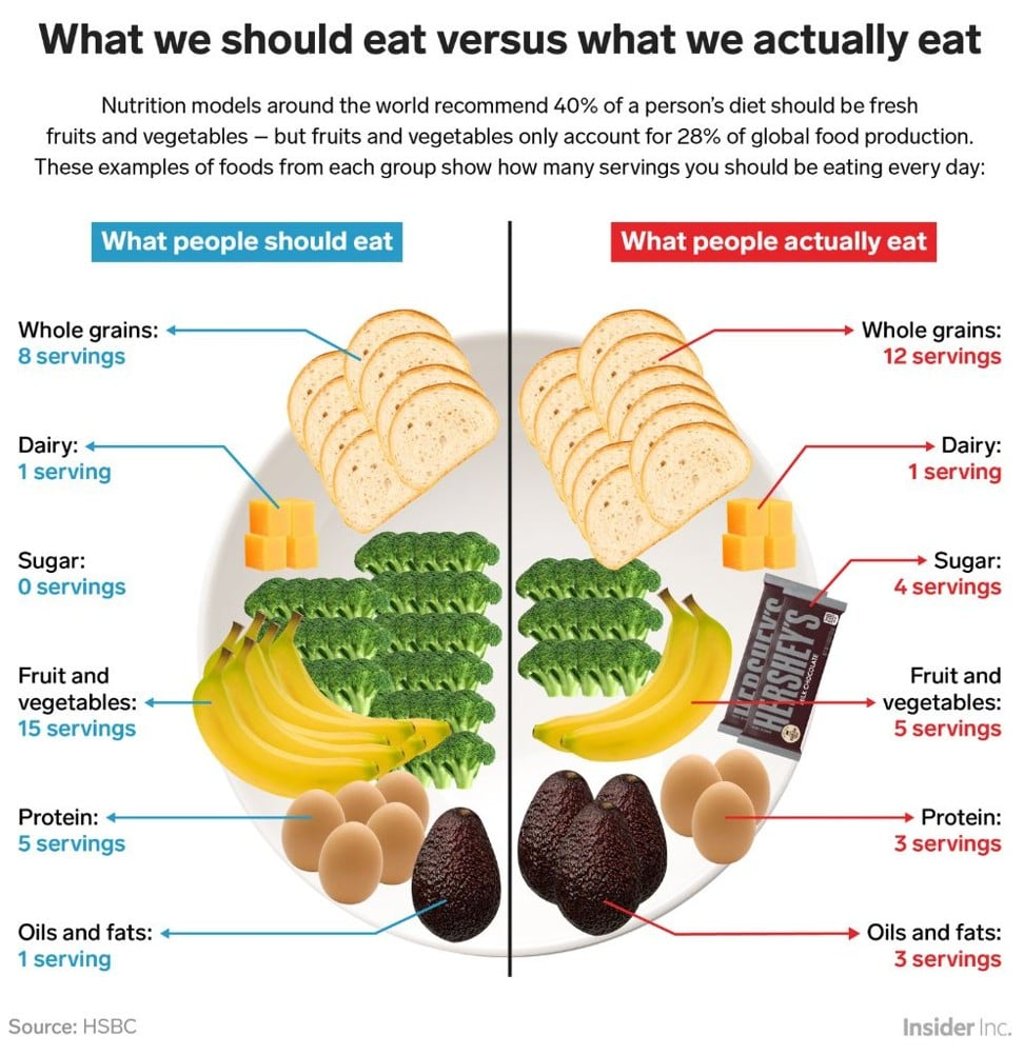
Of course, the example items on the plate above are symbolic – nutrition experts would never suggest that you need to eat an entire avocado or five eggs each day to be healthy. The picture is meant as a visual representation of what your body generally needs: the amount of fat in one avocado is about how much your body needs to power through a given day, for example. And you need no sugar at all.