Why are brands like Starbucks and Coca-Cola obsessed with recreating the cherry blossom flavour?

But what flavour is sakura? It is subtle, and there is a distinction between the flower and the leaf
Every year, in March and April, one of the most anticipated events on the planet happens throughout Japan – the blooming of sakura, or cherry blossoms. Cherry blossoms are not only native to Japan, they all have festivals and events associated with them to celebrate the glorious explosion of pink.
No country can match Japan for tradition in this regard, nor for making the event such a money spinner. Every year, the trees bloom across the Land of Rising Sun and the shelves of retail outlets turn pink in celebration of the beauty of the blossoms, accompanied by a phenomenal selection of food.
Coca-Cola and Asahi celebrate cherry blossom season with seasonal packaging, Häagen-Dazs releases cherry blossom-flavoured ice cream and Starbucks’ Sakura selection has turned into a merchandising line with thermoses, mugs and all sort of products in an explosion of pink.
But what flavour is sakura? You will be pleased to learn there is an authentic cherry blossom flavour. The beautiful little flower, along with its leaves, are traditionally pickled in salt and vinegar. It’s not uncommon to find these pickled flowers on pastries and desserts while the leaf is almost exclusively used as a wrap for mochi or glutinous rice dessert during spring.
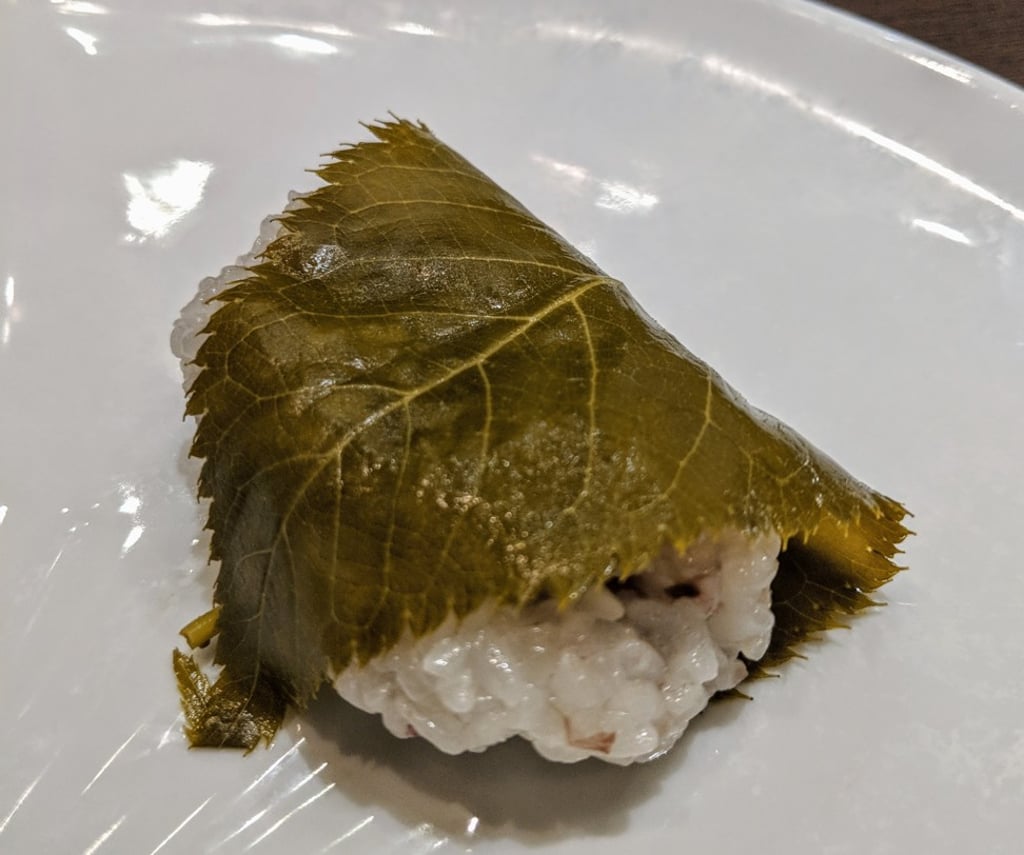
The question is, whether the ingredient has any flavour after being pickled and the answer is – yes. First, we must make a distinction between the flower and the leaf. The leaf has a stronger flavour. Acclaimed sushi chef Akira Umehara from Sushidokoro MAN in Kyoto brought over pickled cherry blossom leaves to serve as dessert for his four-day guest chef stint at Shikigiku in Tsim Sha Tsui. The leaves are usually paired with glutinous rice and red bean paste and balanced by brine to bring out a floral cherry flavour, similar to the aroma of cherry-flavoured confectionery.