Opinion / How Miky Lee backed the making of Bong Joon-ho’s Oscar-winning Parasite – and gave South Korea’s chaebols an image boost

Mi-kyung, the Samsung founder’s granddaughter, threw her power and influence behind Bong Joon-ho’s project, and gave him the freedom to create his award-winning film
In the outpouring of praise for the South Korean blockbuster Parasite after its dazzling success at the Academy Awards ceremony in Hollywood, one side of the production was largely ignored: the film had the enthusiastic backing of an heiress to one of Korea’s biggest commercial dynasties.
The fact that Lee Mi-kyung, widely known as Miky, vice chairwoman of the CJ Group and in charge of its entertainment division, threw her power and influence behind this project is a remarkable reflection on two aspects of an incredible undertaking.
Miky was born to riches but left unspoilt by the fortune that was hers as the granddaughter of Lee Byung-chul, the Samsung founder, who probably never envisioned any of his sprawling holdings morphing into mass culture on stage and screen.
The effervescent Miky, if she was going to invest in popular movies, might have been expected to prefer propaganda epics venerating great moments in Korean history or the lives and loves of Koreans in a dynamic, high-powered society. Violence is often a characteristic of such films, directed at audiences that revel in sometimes balletic deeds of derring-do; but critical bludgeoning of the established order, of the moneyed elite, is rare.
There is violence aplenty in Parasite, all to illuminate the biting social satire that claws into the very society that Miky might have chosen to uphold. No way, however, was she bound by her wealth and upbringing to throw her fortune behind a work that might in the end defend the status quo.
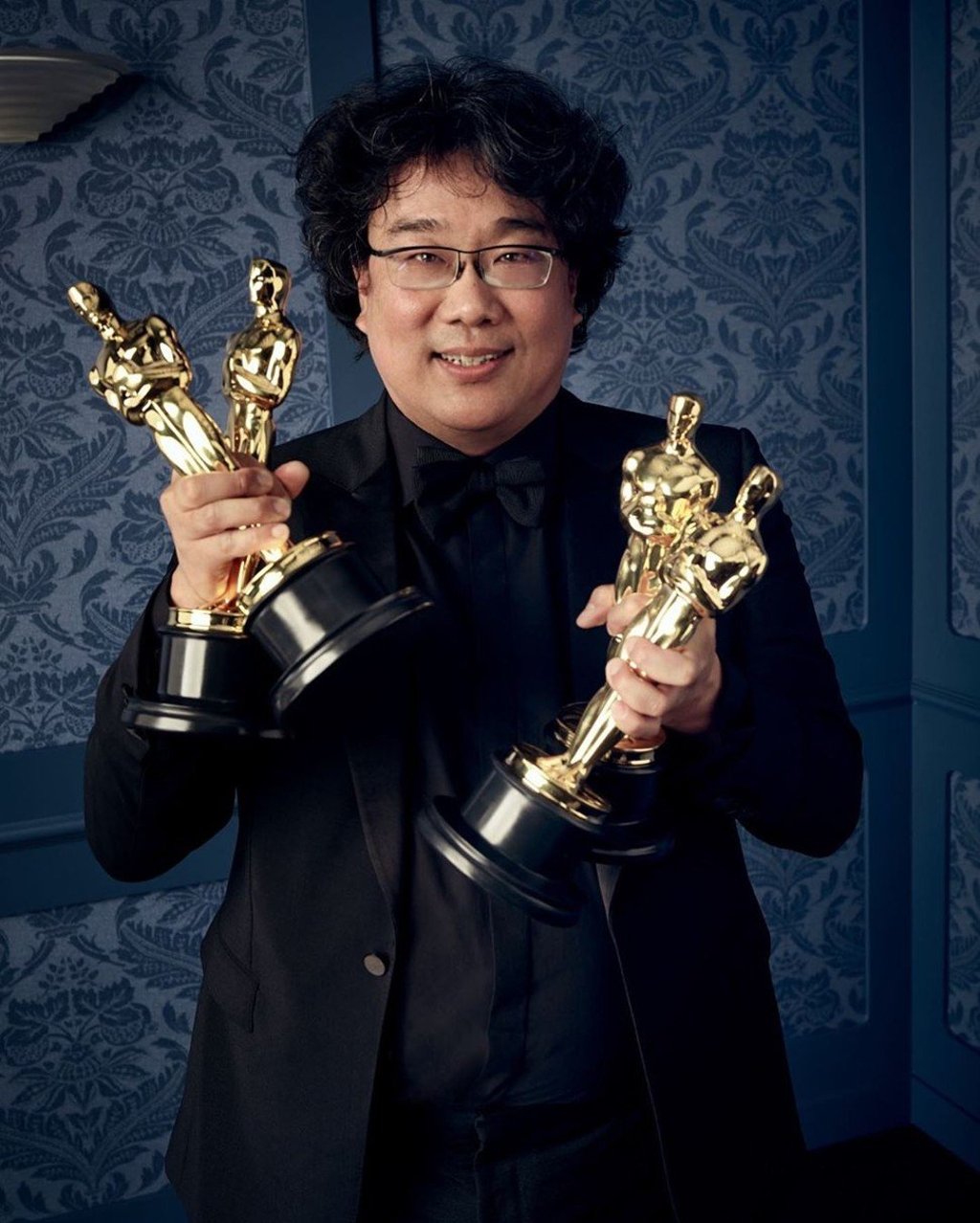
At the apex of a long career dedicated to building CJ into South Korea’s biggest entertainment complex, she was totally behind Bong Joon-ho, the brilliant director who picked up two individual awards, the first, with Han Jin-won, for best original screenplay, the second as best director. Those trophies were the prelude to the two top prizes, best international film and, the climatic finale to the four-hour programme, best film, period.
There is also another lesson here. Easy though it is to criticise the system in which South Korea’s great conglomerates, or chaebol, led by Samsung, Hyundai, SK and LG, dominate the economy, it’s hard to deny they also have the potential for encouraging, financing and defending the artistic freedom needed for a free, democratic society to thrive. It’s extremely difficult for directors to create and produce without the support of the likes of Miky Lee.
Bong is the most obvious example, in the starry aftermath of his triumph at the Academy Awards, of directors, artists and authors who’ve survived in this environment. There are no doubt innumerable instances in which creative figures and forces have been frustrated, inhibited, maybe repressed, but Bong’s success shows that it’s possible to innovate and create works that are mordantly critical of the system in which they exist.