Who is Luo Yonghao, China’s once-broke entrepreneur who sold US$15.5 million worth of goods on Douyin?

Luo managed to sell everything from Xiaomi smartphones to Gillette razors on Douyin to earn more than US$15.5 million, and now has more than 7.8 million followers on the social media platform
If you haven’t heard of Luo Yonghao before his Douyin live stream debut on April 1, you are probably not alone. Luo, however, has been a serial founder, speaker and controversial internet sensation in China for a while now.
Douyin live stream e-commerce

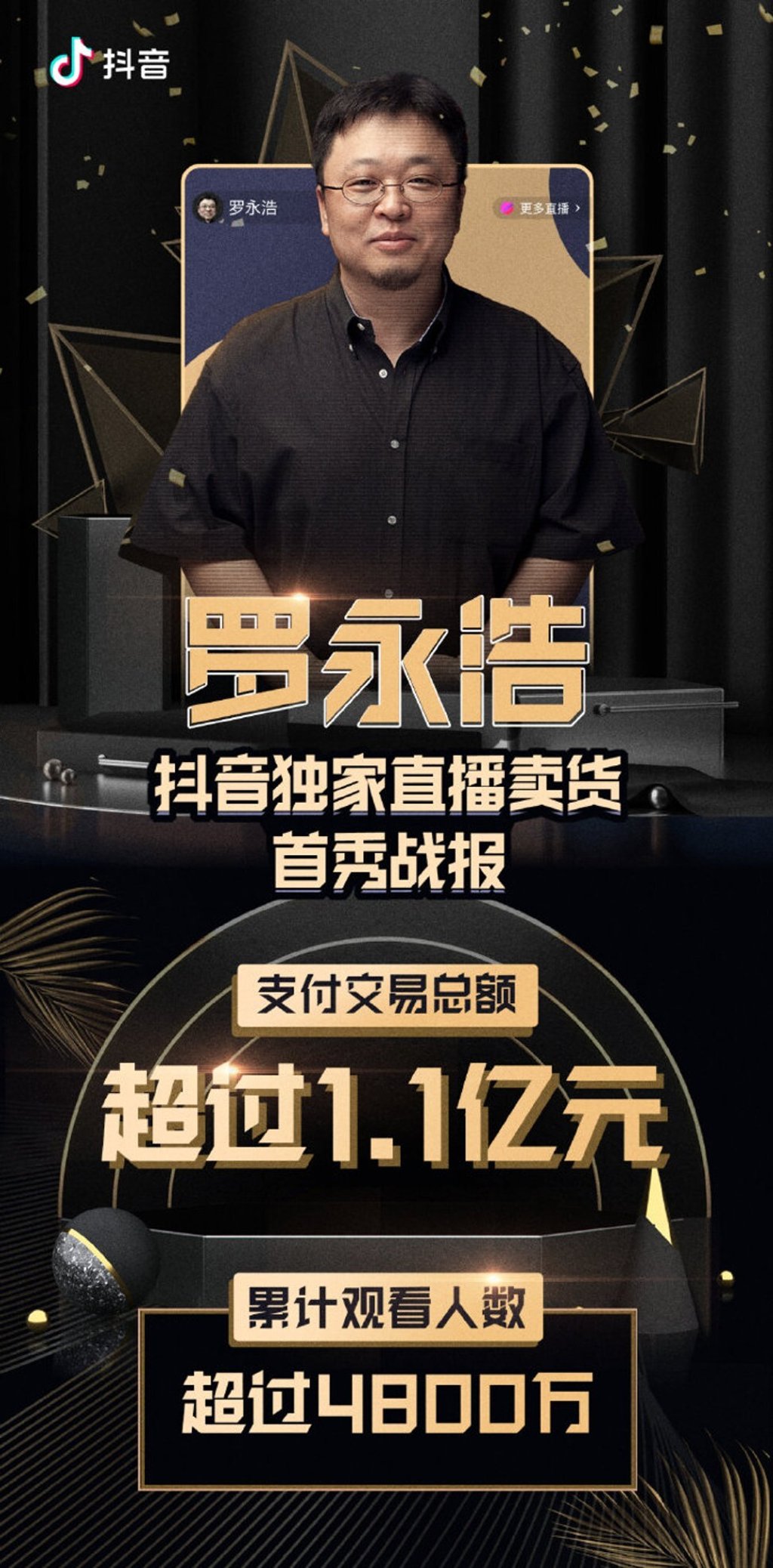
Luo has been making news headlines recently for the exponential result of his Douyin e-commerce live stream debut – for good reasons, too. During a three-hour live stream, Luo managed to sell a variety of goods from Xiaomi smartphones to Gillette shaving razors, snacks and more worth a total of more than 110 million yuan (USD$15.5 million). The live stream earned more than 48 million views, which set a record high on Douyin. China’s tech enterprise heavyweights – including Lu Weibing, Xiaomi’s president of China Region and general manager of Redmi brand, and Wang Xiaochuan, founder and CEO of Sogou – joined Luo and gave away virtual “red packets” worth 700,000 yuan to viewers during the live stream.
Registered on Douyin in March, Luo now counts more than 7.8 million followers on the short video-sharing social media platform.
Launch to internet stardom
Born in 1972 in Helong, China, Luo sought a job from education billionaire Yu Minhong and joined his New Oriental Education & Technology – China’s largest English education chain to start his career in 2001. His witty teaching style earned him a cult following and he quickly rose to stardom online. Even today, he is known for his eccentricity and snarky comments on trending topics, his public speeches – whether on product launches or book tours – often earn viral interest via social media.
Luo is a serial start-up founder
Before his live streamer career, Luo founded a series of tech enterprises. Luo quit New Oriental after five years and founded his own firm. His first tech start-up did not come until 2006 when he founded Bullog.cn – a blog aggregator known for its controversial content. It was shut down by the Chinese government in 2009.