Glass, steel, stones: How architect Frank Gehry bends it like Beckham – from the Louis Vuitton Seoul Maison to the Guggenheim Museum Bilbao

Glass is not the only material Gehry has managed to bend; the prize-winning 90-year-old has continuously surprised and delighted with buildings that defy the imagination
It is hard to quell the urge to rise and applaud when Frank Gehry walks into the room. Very few architects have continuously surprised and delighted the world as he has, over the past four decades, by creating buildings that have defied imagination – and physics, for that matter.
Today, he is holding court with about 20 journalists from around the world in another of these buildings, albeit on a more modest scale than his masterpieces such as the Walt Disney Concert Hall in downtown Los Angeles or the Dancing House in Prague.
Gehry has just collaborated with Peter Marino for the first time on the new Louis Vuitton Seoul Maison in Gangnam-gu’s Cheongdam-dong area. It is also a rare occasion that the famed architect has worked on developing an existing structure instead of building from scratch.
There is no missing the maison on the busy thoroughfare; its curving glass exterior and bright lights at night act like a beacon, beckoning excited shoppers.
In using glass, Gehry has taken a leaf out of his previous work for the luxury French brand, a glass structure for the non-profit art space Fondation Louis Vuitton in Paris.
“I normally start down a line of working with materials, like glass, which was very successful in Paris, and I want to keep exploring it. So this is a further exploration and hopefully we’ll have other ideas in glass for the future that we might be able to do,” he says.
“We partner with a lot of glass people, and we’re always experimenting. It is actually probably one of the largest materials in our world culture now. We’re using a lot of glass. So it’s a good time to experiment because there’s so much glass.”
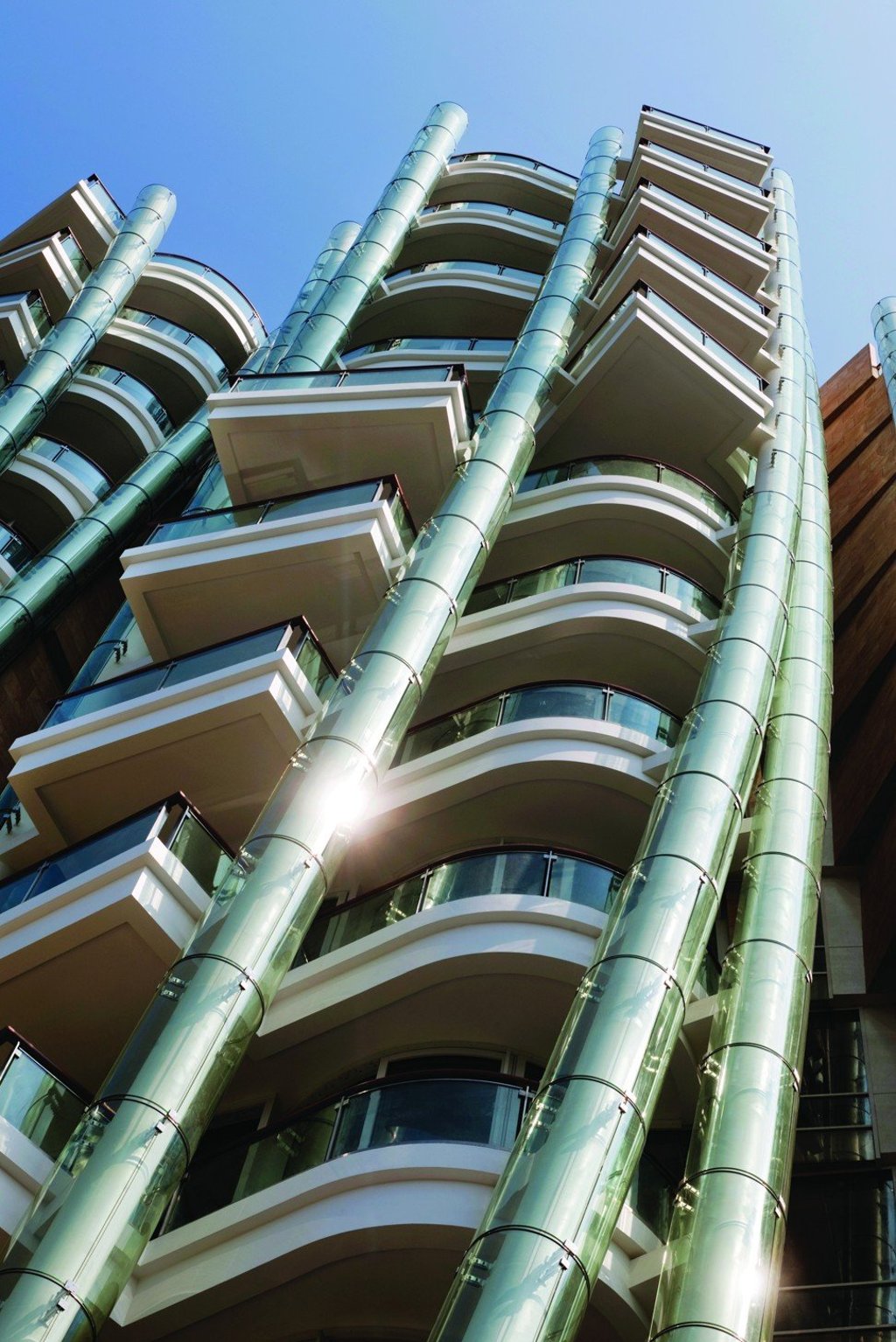
Glass is not the only material Gehry has managed to bend. Throughout his illustrious career, the sprightly 90-year-old has curved seemingly unyielding material such as corrugated steel, chain links and bricks and stones to his will. Gehry, who was born in Toronto, Canada in 1929, spent his early career working at other architect firms. He did not really hit his stride or taste true fame until he was almost 50, when he renovated his own home in Santa Monica.
Built in 1920 and bought in 1977, Gehry wrapped a metallic exterior around the original building, leaving many of the original details visible – offering a glimpse of what was to come.