How Korean documentary Meeting You allowed a mother to reunite with her deceased daughter

If you had the chance to see a deceased loved one again, would you do it? The documentary Meeting You uses virtual reality to reunite a mother with her deceased daughter
The question that prompted the making of the controversial television show Meeting You was: if a parent had the chance to see their deceased child through virtual reality, would they?
A tearful “reunion” between a mother and a virtual recreation of her daughter, who died at the age of seven in 2016, has brought an outpouring of emotional reactions since the documentary Meeting You was aired on February 6.
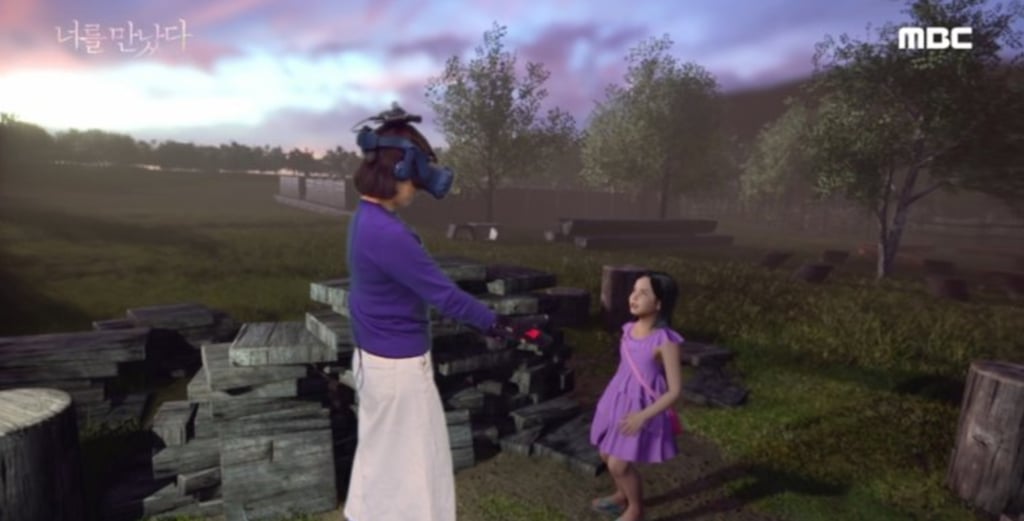
While some people praise the “creative” use of the new technology, others criticise it for being “emotionally manipulative”. In a recent interview with The Korea Times, Kim Jong-woo, producer of the documentary, said he was glad his show opened up such dialogue. He said he may be the first one to use the technology in such a way, but certainly not the last. Like photo technology did in the past, the technology will raise questions as to how people should use it and to what extent, he added.

The video clip of Jang Ji-sung meeting her deceased daughter Na-yeon in virtual reality garnered more than 19 million views online. Kim said virtual reality “was a step beyond a picture or a video in terms of remembering someone”.
“I believe, just like a picture or a video, virtual reality technology can be one way of remembering someone,” Kim said. “The project started with the idea of meeting a deceased person. At first, I did not know which method to use to make it possible, but then I came across the virtual reality technology.”
He pointed out that the reunion was just one aspect of the far bigger story about the mother, the daughter and the family. The show touches on each family member's different way of remembering Na-yeon, and builds up moments toward the reunion day. “I wanted to make the experience more real for viewers – the experience of spending the past year with this family,” Kim said.

Kim said there was something special about the family that motivated him to make the documentary on the family’s story. “The mother wasn't just sad, [she also] wanted to see the child again, because she died only a week after she was diagnosed [with a mysterious illness],” he said. “The mother wanted to do something for her but she couldn't do anything.”