5 things to watch out for if you want to immigrate to Ireland
- ‘Emerald Isle’ of 4.98 million people – home to rock group U2 and actors Colin Farrell and Liam Neeson – now attracts growing number of would-be residents
- High standard of living, health and education in European Union member state seen as advantages over some neighbouring countries on continent

Almost one in six people in Hong Kong are already preparing to emigrate, according to a study carried out by Hong Kong Institute of Asia-Pacific Studies at the Chinese University of Hong Kong.
The former British territory’s historical links with the United Kingdom and the special visa scheme for British National (Overseas) or BNO passport holders mean that Hongkongers often consider Britain as a top destination for immigration and investment. One survey shows 23.8 per cent of people chose to emigrate to Britain.
Yet its neighbour across the Irish Sea, Ireland, is gaining increasing attention from would-be immigrants. The nation – still a member of the European Union – is seen as having strategic advantages over the UK and many of its counterparts on the continent, following Britain’s decision to leave the political and economic union of member states, and other geopolitical uncertainties.
These people are considering joining Ireland’s 4.98 million population – 1.42 million of whom live in Dublin, the east-coast capital of the 70,273-square-km (27,133-square-mile) nation, which accounts for five-sixths of the island of Ireland; the rest is taken up by Northern Ireland, which is part of the United Kingdom. In contrast, Hong Kong, which covers only 1,106 sq km, is home to 7.49 million residents.
Home to 644,400 non-Irish nations …

Official statistics from April 2020 reveal an estimated 644,400 non-Irish nationals live in the country – 12.9 per cent of the total population. They also show 85,400 people immigrated to Ireland in the 12 months to April 2020 – up 2,000 on the year before – with 28,900 of them (33.8 per cent) Irish nationals and 30,400 (35.6 per cent) from nations outside the EU.
So what kind of place do they find when they get there? Here we take a look at some of the things that have made Ireland famous around the world, and also speak to Hong Kong-born Simon Scanlon Cheung, 46 – who immigrated to Ireland with his parents at the age of eight.
Cheung, who has been back working in Hong Kong as an English teacher for more than 10 years, shares his insights about the country and tips on five particular things that would-be immigrants should look out for.
Ireland, which is known for rugged cliffs, hills and mountains to the west and central lowlands, is often called “the Emerald Isle” because of its vast stretches of green countryside; agricultural land accounts for nearly 65 per cent of its total area, with only 10 per cent taken up by forests. Across Europe, forest land takes up an average of 33 per cent.
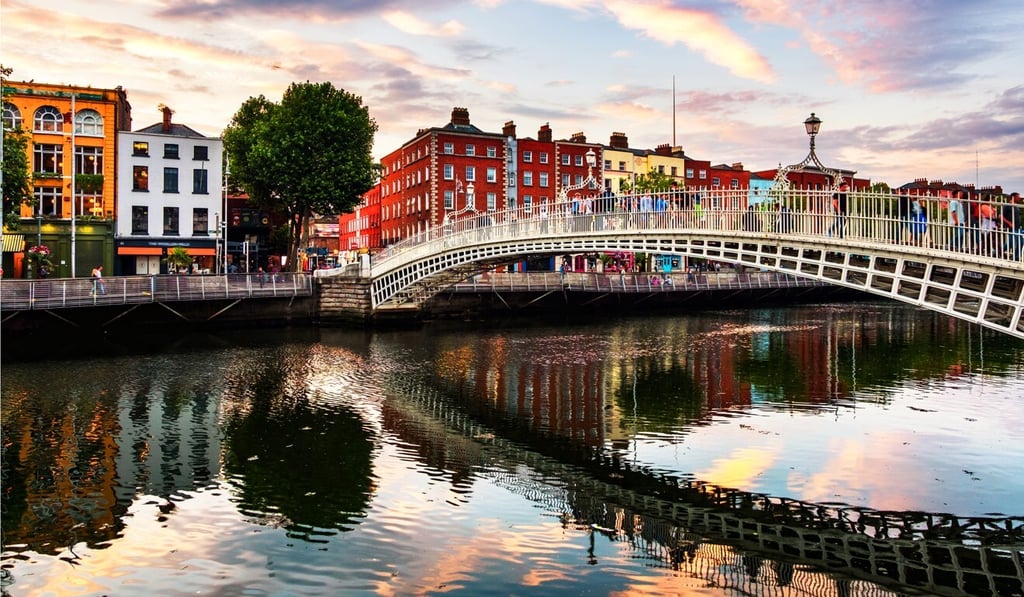
The nation, which adopted the euro as its currency in 2002, continues to make good use of its farmland to produce acclaimed dairy products such as butter and cheese, and rear livestock such as lamb, pork and beef – much of it to be sold abroad.
Its other exports include pharmaceutical agents, medical devices, software-related goods and financial services, while its leading companies include low-cost airline Ryanair, food company Kerry Group and the paper-packaging company, Smurfit Kappa.
… and Guinness, Liam Neeson and U2
Last year the nation was ranked the third most developed country in the world by the UN Development Programme’s Human Development Index, which looks at things such as health, education and standard of living. Today, its average life expectancy is 81.2 years – 78.9 per cent for men and 83.7 for women.
Apart from its dairy products, the nation is known for a range of distinctive food and dishes made from fish and meat, including Irish stew, made with lamb, mutton or beef, soda bread and boxty (potato pancakes), and alcoholic drinks such as whiskey, including the iconic brand, Jameson, beers such as the dark dry stout, Guinness, and Baileys’ Irish cream – a cream liqueur made from whiskey and cream.
The shamrock – a clover normally found with three-leaves – has been a national symbol since the 17th century, and is often worn on the annual public holiday of March 17, St Patrick’s Day, honouring the country’s patron saint. Finding a rare four-leaf clover is considered lucky. Popular folklore suggests the country is inhabited by leprechauns – tiny, emerald-green-suited supernatural beings.

Ireland is known for popular sports such as horse racing, golf, rugby union, soccer and Gaelic football, where teams both carry and kick the ball, and as the homeland of notable literary figures that include Jonathan Swift, author of Gulliver’s Travels, Bram Stoker, best-known for Dracula, W.B. Yeats, James Joyce, Roddy Doyle and Maeve Binchy, and the playwrights Oscar Wilde, George Bernard Shaw and Samuel Beckett.
Acclaimed actors with Irish connections include Peter O’Toole, Daniel Day-Lewis (who also holds British citizenship), Richard Harris, Pierce Brosnan, Liam Neeson and Colin Farrell and actresses Maureen O’Hara, Brenda Fricker and Saoirse Ronan (who also holds American citizenship). The nation is also home to the internationally successful rock group, U2.
Don’t forget to look out for …
1. Dublin, the multicultural capital
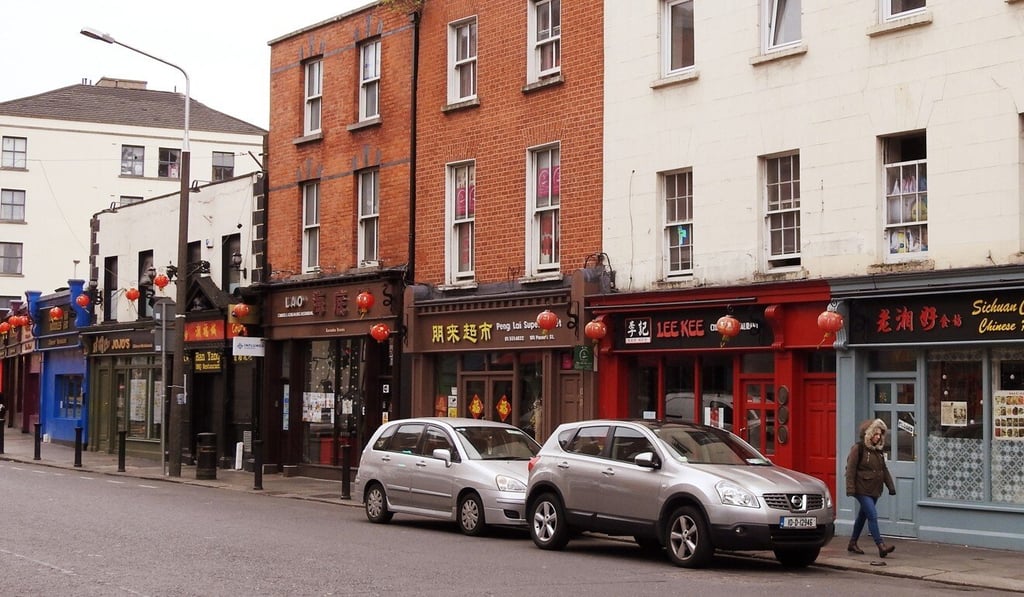
Both English and Irish are official languages in Ireland. It is compulsory to learn Irish at school, but Cheung says knowledge of Irish is not essential as English is widely spoken.
For the past 20 years, Dublin – in particular – has been increasingly embracing multiculturalism and has become very cosmopolitan, he says. “Walking on the street, you hear many different European languages: it is very diverse.”
The east end of Dublin’s Parnell Street, for example, is home to a thriving immigrant community, with Brazilian, South Asian, African and Chinese supermarkets, plus Indian, Vietnamese, Korean, Irish and Chinese restaurants and Romanian and African church congregations.
Ireland’s Department of Justice and Equality defines integration as the “ability to participate – to the extent that a person needs and wishes – in all of the major components of society without having to relinquish his or her own cultural identity”. It shows the nation embraces multiculturalism as a way to integrate immigrants into mainstream society.
2. The lifestyle, which ‘may not suit everyone’
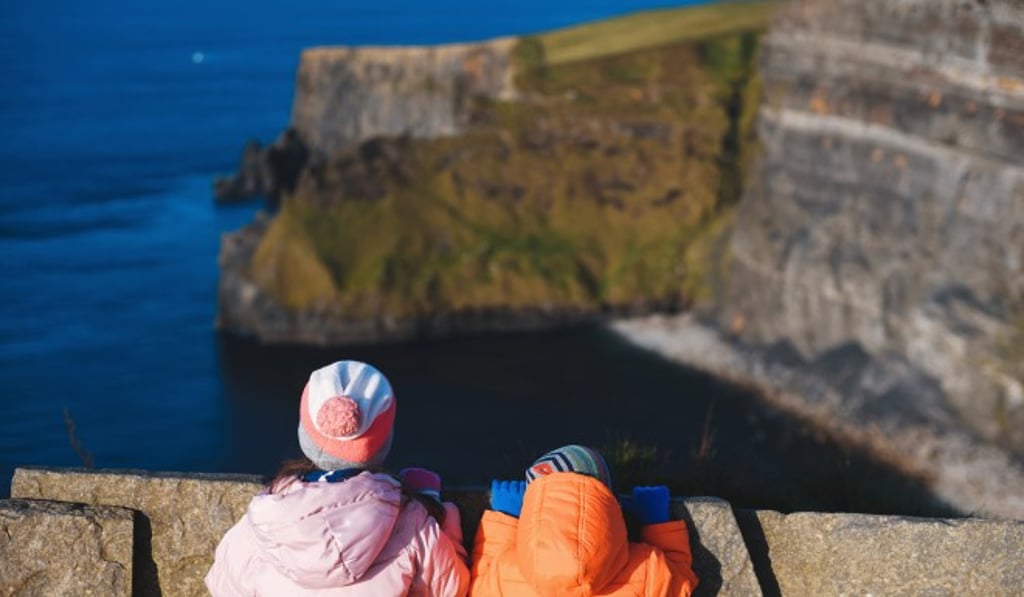
Like other major European countries, the general cost of living in Ireland is not low. But the cost compares favourably with that of Hong Kong – one of the world’s most expensive cities – where the price of property per square metre is 567.07 per cent higher than in Ireland.
The Organisation for Economic Co-operation and Development Better Life Index lists Ireland as a country that “performs well in many measures of well-being relative to most other countries”, and “ranks [it] above average in jobs and earnings, housing, personal security, health status, education and skills, social connections, subjective well-being, work-life balance and environmental quality”.
Cheung says a two-bedroom flat in the south of Dublin, for example, could cost only €300,000 (US$350,300).
If you could afford somewhere comfortable in terms of space in Hong Kong, you could probably get somewhere the same, but at a cheaper price in Ireland,” he says.
However, Cheung says the lifestyle is quite different in the two cities. “Hong Kong is a very fast-paced and intense city, while Dublin could be considered slow: the shops are usually closed by 8pm,” he says.
“The only thing left to do is go to a pub, which plays an important element in the Irish culture. If you don’t like drinking, there might not be many other things for you to do.”
3. Affordable quality education
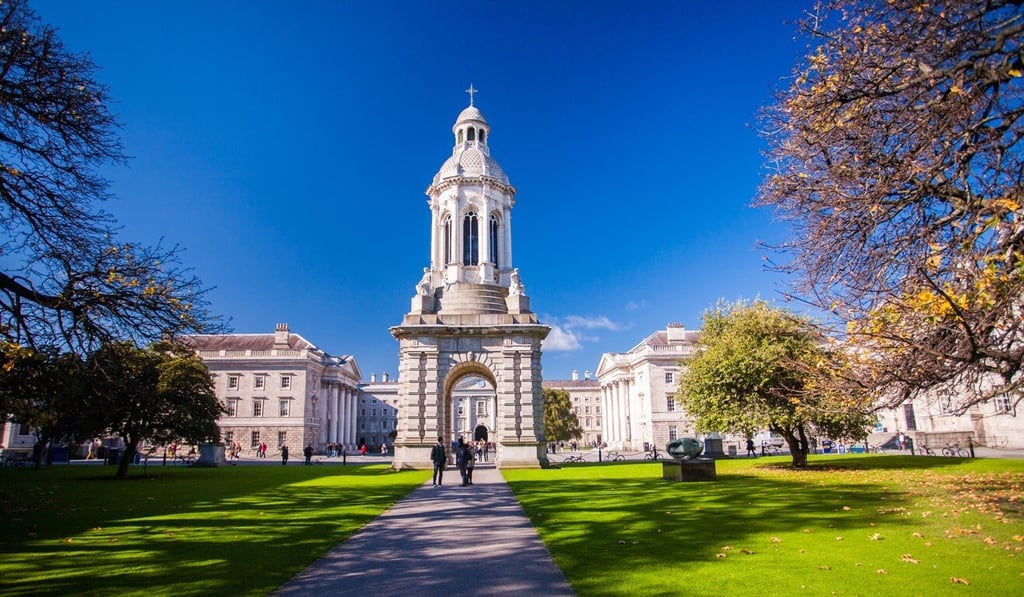
Ireland boasts a world-class education system that remains globally competitive. It is ranked 15th in the 2020 Global Innovation Index and an OECD report shows that Irish degree-holders earn more than their peers from other countries.
Cheung, who graduated from Trinity College Dublin, which is ranked No 1 in Ireland and 101st in the world, according to the QS World University Rankings 2021, describes his alma mater as “the flagship university of Ireland”.
One of the lesser known perks of citizenship is that Irish nationals will continue to receive support from the UK government post-Brexit if they study in the UK, and they are also entitled to some state-award grants to study in European countries.
4. Its ‘simple’ income tax system
Ireland has a simpler income tax system than that of the UK: it has only two tax brackets – 20 per cent and 40 per cent – while the UK has four income tax bands. An individual’s tax liability will depend on whether he or she is resident, ordinarily resident and/or domiciled in Ireland.
Before Cheung moved to Hong Kong in 2008, he was earning €32,000 before tax – just enough to live on in Dublin – in an administrative role at an interior design company.
After more than a decade away, Cheung still regards Ireland’s level of salary tax as quite high. It is one of the reasons he has no plans to go back. If he lived in Dublin while earning the salary he has now, he could not afford the same lifestyle he enjoys in Hong Kong, he says.
“I would definitely consider going back, but when I look at the numbers, such as salary, tax and cost of living, I realise how difficult it’s going to be,” Cheung says.
However, the audit, tax and advisory services industry says that with careful planning and different tax relief measures, the tax burden that people face in Dublin can be managed.
KPMG, a global financial services firm working in the industry, says there are domestic measures in Ireland that provide relief from international double taxation, and the Irish government has entered into double taxation treaties with 73 countries or jurisdictions, including Hong Kong.
5. A fast-changing EU immigration policy
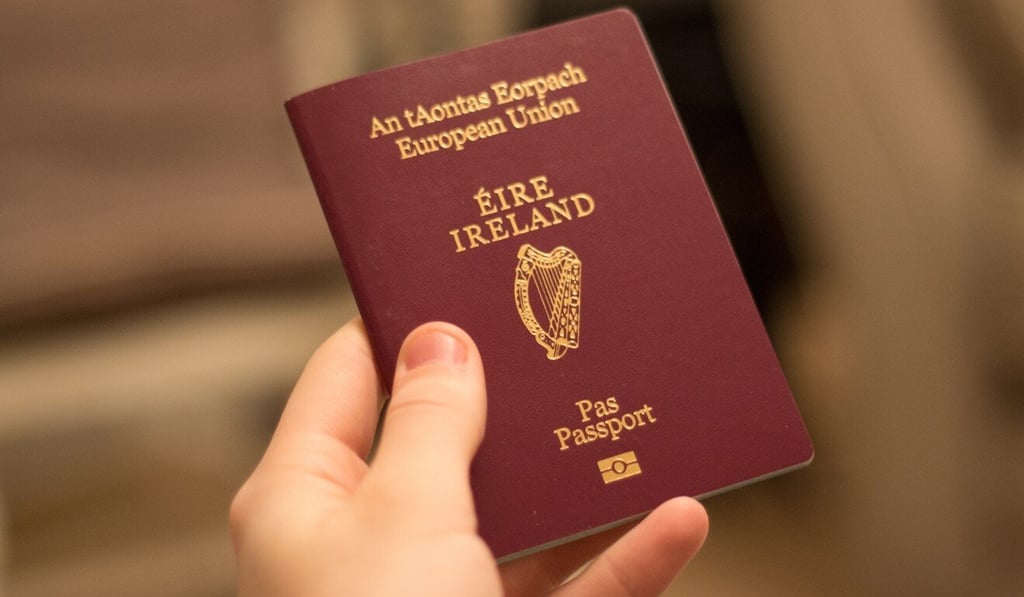
Ireland is one of 19 EU countries offering golden passports and visas, but the EU policy has been changing rapidly in recent years. The Portuguese parliament, for example, has passed a measure to limit the issuance of “golden passports” for real estate investments.
In essence, a golden passport offers wealthy people the chance to secure foreign citizenship or residency through investments.
The European Commission, the EU’s executive arm, said last month it is taking legal action against two member states, Cyprus and Malta, over their investor citizenship schemes, costing about €2 million and €1 million, respectively.
The Commission said there were concerns that nationality was being granted without requiring “a genuine link with the country” since passport holders did not have to live there.
However, the Irish scheme remains in force. Introduced in 2012 and enhanced in 2013, the Irish Immigrant Investor Programme (IIP) offers a pathway for qualified Hongkongers and their families to obtain residency status by making an approved investment.
In the face of Brexit, Irish nationals are still entitled to the full benefits of EU membership and partial benefits from the UK.
Cheung says: “We need to bear in mind that Ireland will be the only country with English as the official language after Brexit. If you prefer somewhere culturally that’s not very different from our colonial past, Ireland could be an option.”
Expert insights about immigrating to Ireland will be offered during the forthcoming webinar, “Rethinking Immigration: Spotlight on Ireland”, on November 20, from 4.30pm to 6.30pm. Check out the full overview of the programme and speakers.