Xi’s Xiongan mega city plan exposes China’s market charade
If market allocates resources, why is the state dreaming up new cities?

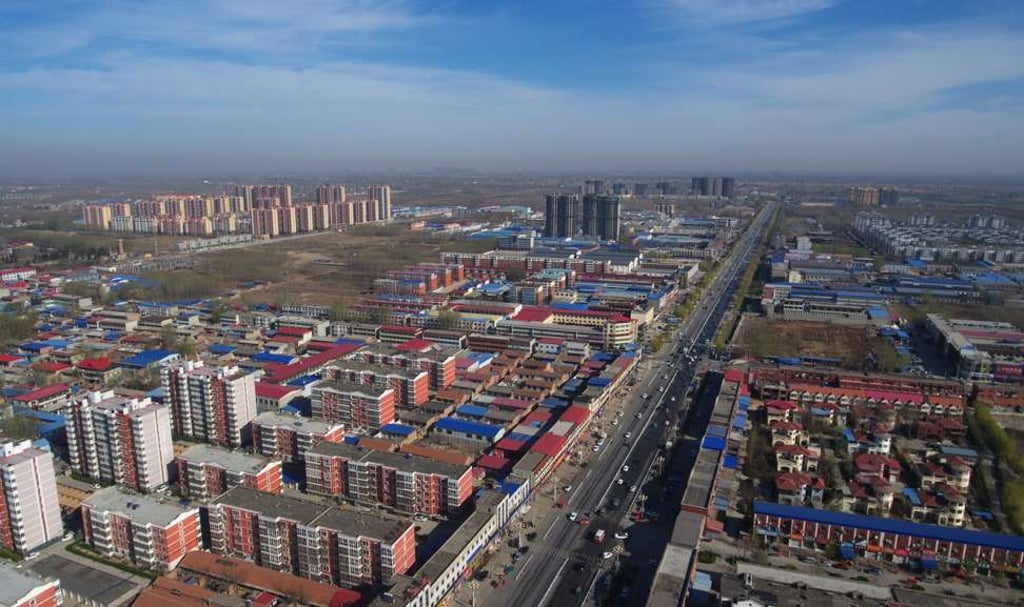
What magic could happen when a slice of backwater land is made the centre of President Xi Jinping’s (習近平) futuristic dream city?
The most immediate consequence of the April 1 announcement to create the Xiongan New Area, covering three counties of Xiongxian, Rongcheng and Anxin in Hebei province, is that the sleepy towns have become the paradises of speculation overnight, with prices of property or locally related stocks soaring.
Xi Jinping’s dream city Xiongan may turn out to be China’s biggest public works project, ever
The government said the new area, sitting in proximity to the three metropolises of Beijing, Tianjin and Shijiazhuang – the provincial capital – is of equal national significance to the Shenzhen Special Economic Zone in the 1980s or the Shanghai Pudong New Area in the 1990s.
Initially, the Xiongan project aims to deal with “urban ills” such as traffic congestion and air pollution in Beijing. The plan will help encourage the relocation of “non-capital functions” out of the city, which houses more than 20 million people.
But the government has a bigger vision, with a focus on building clusters of high-tech and innovative businesses, making it a new engine of growth following the booming Pearl River Delta and Yangtze River Delta, amid a persistent slowdown.
It is also designed to achieve a critical economic transformation, shifting away from a growth model based on export-manufacturing and state-led investment, to one mainly driven by private consumption and innovation.