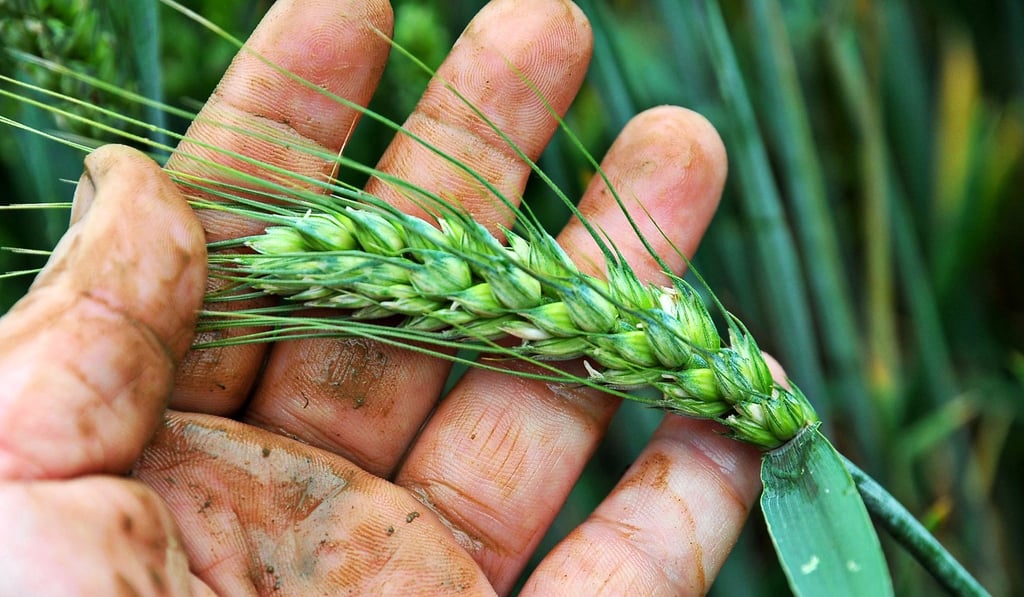
Scientists conquer the ‘Mount Everest of genetics’ after unlocking secrets of wheat genome
Researchers hope mapping Chinese Spring wheat’s genetic code – one of the most complex known to science – will allow them to develop new strains of the staple crop

An international team of scientists have cracked the genetic code of wheat, a staple food for a third of the world’s population, in a breakthrough that could pave the way for the development of new, higher-yielding varieties.
Researchers said the successful conclusion of the 13-year project to map the genome of Chinese Spring wheat would also help develop new strains that have a higher nutritional value and are better adapted to cope with climate change.
The study was conducted by the International Wheat Genome Sequencing Consortium, a collaboration among more than 2,000 scientists from over 20 countries, including Australia and China. The results were published in the journal Science on Thursday.
“Sequencing the wheat genome is like climbing Mount Everest,” said Rudi Appels, a genetics professor at the University of Melbourne and one of the six co-chairs of the consortium. “People thought we were mad.”
Appels said that deciphering the wheat genome had long been seen as mission impossible because the crop has one of the most complex genomes known to science.
The genome contains about 16 billion base pairs of DNA, compared with around 3.3 billion in human DNA.
“It’s a milestone for agriculture as the genome sequencing will speed up the process by which we cultivate wheat varieties with higher yields and nutritional value,” said Tian Aimei, a plant breeder at Xian University of Arts and Science in northwest China. “Everyone in the field is closely following the sequencing project.”