ExplainerHong Kong Science Museum’s dinosaur exhibition: what you need to know, from the ‘Big Eight’ skeletons to touching fossils and baby Toni
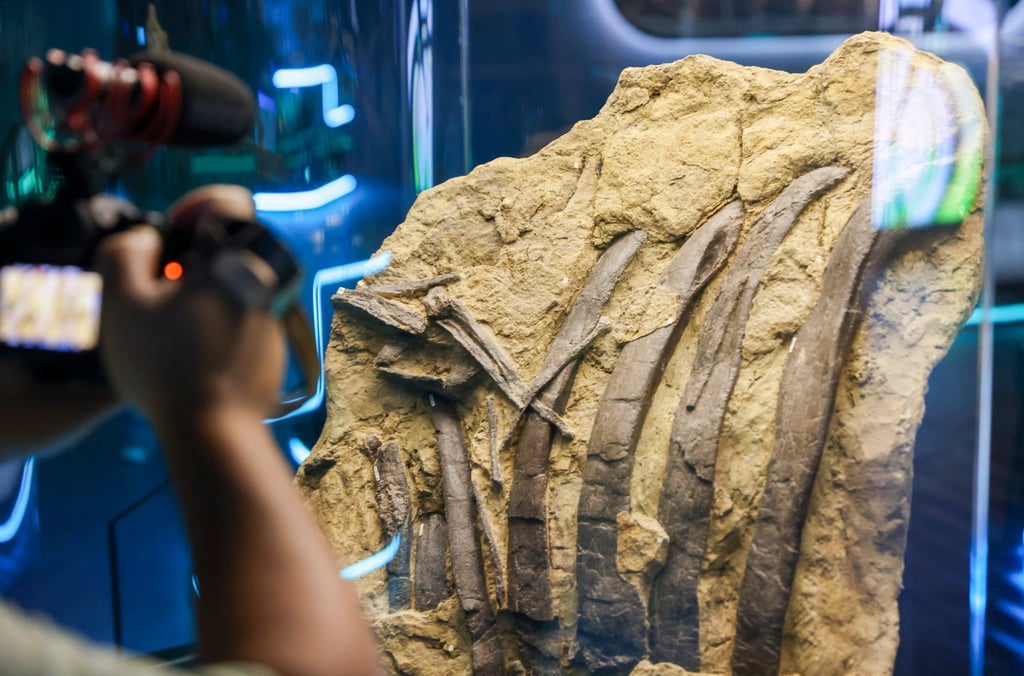
- Visitors can check out the fossils of eight dinosaur species and get a chance to ‘gently touch’ an authentic leg bone belonging to the sauropod family
- Museum also hosting series of related activities, including sleepover event where families can spend a night with the fossils

Hong Kong’s largest dinosaur exhibition, “The Big Eight – Dinosaur Revelation”, officially opened at the Science Museum on Friday, showcasing eight original and reconstructed fossils of the giant reptiles.
The exhibition is among the activities sponsored by the Hong Kong Jockey Club’s donation of HK$630 million (US$80.3 million) to the government to celebrate the 25th anniversary of Hong Kong’s return to Chinese rule. It will run until November 16.
Here is what you need to know about the exhibition.
1. What species are showcased and where were they discovered?
Visitors can check out the fossils of eight dinosaur species, including original skeletons of a Diplodocus, an Allosaurus, a Hesperosaurus and a baby Sauropod, which are all from the Late Jurassic epoch from about 150 million years ago, and were discovered in Wyoming in the United States.
The reconstructed skeleton of a Spinosaurus, from the Cretaceous period about 100 to 93 million years ago and found in Kem Kem Beds in Morocco, is another species being featured at the museum.
The exhibition also showcases the reconstructed skeleton of a Hatzegopteryx and the original skeleton of a Triceratops – both species were of the Late Cretaceous epoch from 66 million years ago, and found in Romania and the United States, respectively.
The original skeleton of a Tyrannosaurus, which was among the last of the dinosaurs, is also one of the displays. It was unearthed in South Dakota in the US and is from the Late Cretaceous epoch from 68 to 66 million years ago.