Advertisement
Hong Kong protests: top court to look into use of ‘joint enterprise’ rule for rioting, unlawful assembly cases
- Issue stems from case last year in which trio were acquitted of rioting after judge ruled offenders would have to ‘assemble together’ at a crime scene
- Under joint enterprise principle, all participants of a riot can be held liable regardless of whether they are physically at scene, so long as they share common purpose
Reading Time:2 minutes
Why you can trust SCMP
4

Hong Kong’s top court will examine the use of a legal principle that allows prosecutors to indict those not physically present at a riot or unlawful assembly with the same charges as actual participants.
The Court of Appeal on Monday granted a request to have the Court of Final Appeal determine on the issue arising from the first riot trial in relation to the 2019 anti-government demonstrations, after accepting it had far-reaching implications for future prosecutions.
The three defendants in the District Court trial last year were acquitted after the presiding judge ruled that the unique group nature of the charges of rioting and taking part in an unlawful assembly required offenders to have “assembled together” at a crime scene.
Advertisement
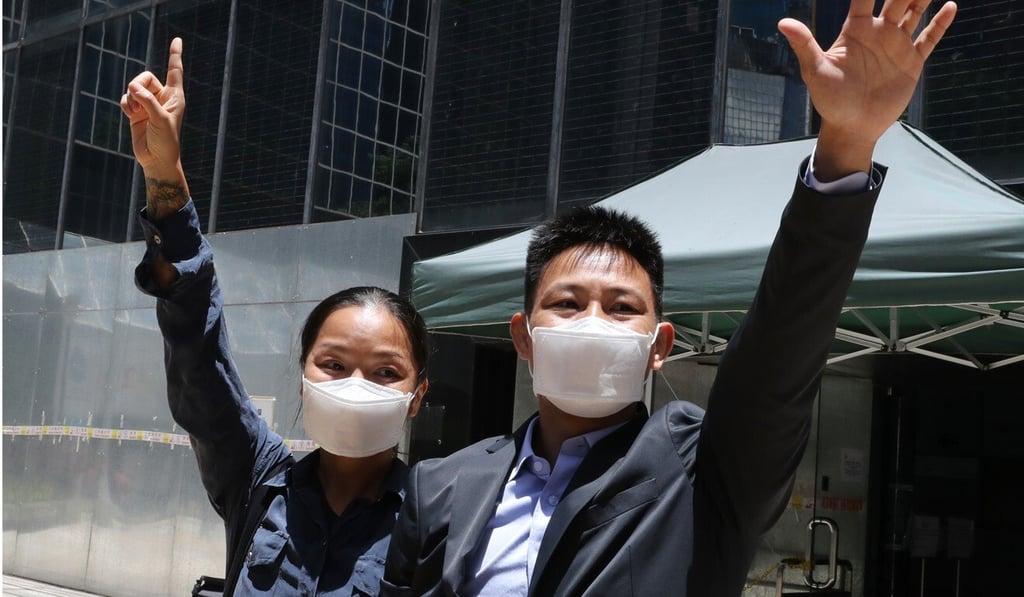
But the judge found insufficient evidence to conclude the trio – student Natalie Lee Yuen-yui, 17, gym owner Tong Wai-hung, 40, and his wife Elaine To, 43 – had assembled with protesters with a common purpose in Sai Wan on the night of July 28, 2019.
Advertisement
Without seeking a reversal of the acquittals, the Department of Justice asked the Court of Appeal to uphold the application of the common law doctrine of joint enterprise, which allows for all participants of a riot or unlawful assembly to be held liable for the same offences regardless of whether they were physically present at the scene, so long as they shared a common purpose.
Advertisement
Select Voice
Choose your listening speed
Get through articles 2x faster
1.25x
250 WPM
Slow
Average
Fast
1.25x