Hong Kong protest slogan implies a government under enemy control, history professor says at city’s first national security law trial
- Lingnan University vice-president argues that ‘Liberate Hong Kong: revolution of our times’ is not politically neutral
- Historian cites use of liberate in ancient Chinese literature and by press after end of second world war to support his argument

A popular protest chant during Hong Kong’s 2019 social unrest was political in nature and aimed at overthrowing an administration “currently under the enemy’s control”, a pro-government historian has said at the first national security law trial.
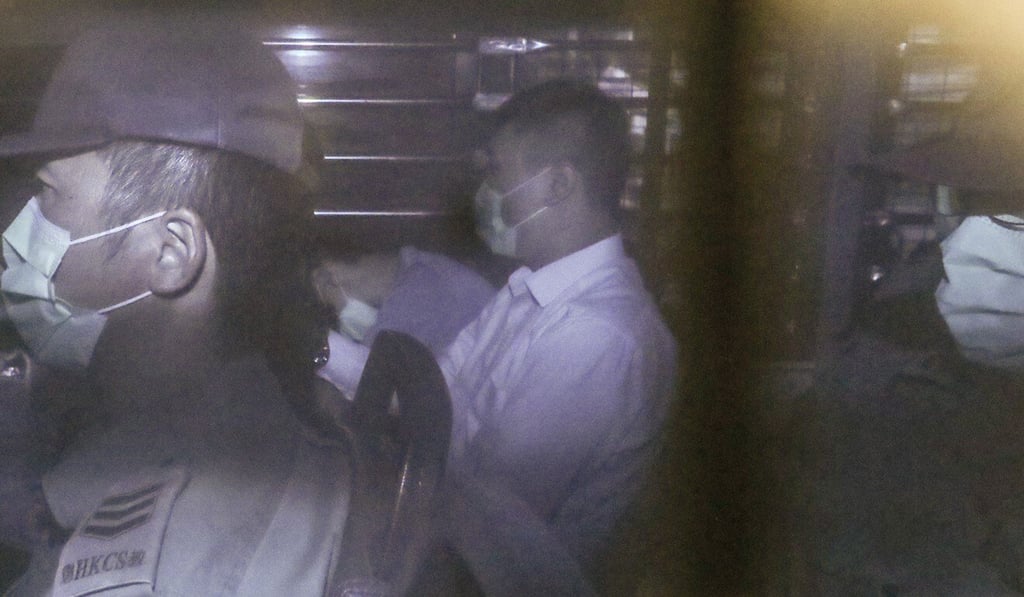
Lingnan University vice-president and history professor Lau Chi-pang testified at the High Court on Friday against defendant Tong Ying-kit, who faces secession and terrorism charges for allegedly driving a motorcycle into three police officers while carrying a flag that called for the city’s liberation on July 1 last year.
Lau, a council member of the semi-official Chinese Association of Hong Kong and Macau Studies, dismissed the notion that the slogan, “Liberate Hong Kong; revolution of our times”, could be politically neutral.
Instead, he said liberate showed that Beijing was an enemy and any speaker believed efforts must be made to reclaim the city from the “illegitimate” regime.
In a written report seen by the Post, Lau cited Chinese historical texts such as Records of the Three Kingdoms and the Book of Jin in arguing the word in the slogan carried the same meaning as when it first appeared in ancient Chinese literature more than 1,000 years ago.
The term’s application remained consistent when the Hong Kong press used it to describe the return to power of the Han Chinese people after the collapse of the Qing Empire in 1911, as well as the end of the Japanese occupation of Hong Kong in 1945.