‘Hong Kong, add oil’ should not be taboo, says Canto-pop legend Jacky Cheung after mainland backlash over anniversary greeting
- Cheung was target of complaints over the border after state broadcaster reportedly shelved clip he recorded for city’s handover anniversary that featured phrase
- Singer asks why certain words and even colours have been deemed unpatriotic simply because they were once used by misguided people

Hong Kong Canto-pop legend Jacky Cheung Hok-yau has defended his use of the phrase “Hong Kong, add oil” in a message he recorded for the state broadcaster after the station reportedly axed his clip because of the slogan’s popularity with anti-government protesters in 2019.
Declaring that he was a proud Chinese citizen who loved his country and the city, Cheung on Sunday argued that the phrase should not be banned just because it was once used by people who “made mistakes”.
In the 21-second message he recorded for CCTV to mark the 25th anniversary of the city’s handover to Chinese rule, Cheung said: “Hong Kong has experienced a lot with ups and downs in the past 25 years. I grew up with this city. I was born and grew up here. I still believe in this city, still hoping that it will become a better one. Add oil, Hong Kong.”
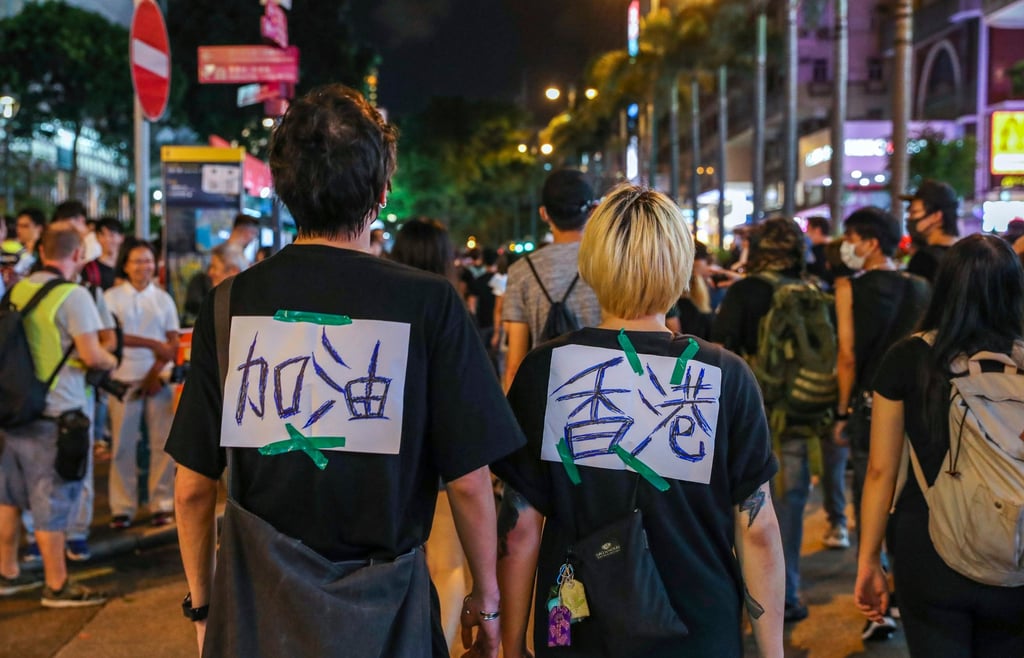
The phrase of encouragement, which roughly translates as “Keep it up”, was widely heard during the social unrest three years ago. Some runners taking part in the Standard Chartered Hong Kong Marathon last year were warned by organisers and police against displaying the phrase on their outfits
CCTV removed the clip, after some mainland Chinese complained over the use of the phrase and the absence of “country” in Cheung’s remarks.
The singer on Sunday stressed he was a patriot and always tried to keep politics separate from his art.
“I have heard of ‘Beijing add oil’, ‘Wuhan add oil’ and ‘Shanghai, add oil’, but I personally cannot understand why ‘Hong Kong, add oil’, or the yellow and black colours, has become the yardstick in determining one’s patriotism or is taboo just because they have been used by some people who made mistakes, or were worn by some criminals who had ulterior motives,” he said.