Scientists find emperor’s tomb after centuries of honour for wrong location
- The mausoleum was an ancient pyramid that had been buried over the centuries
- Emperor Wen is remembered well in the history books, overseeing a period of economic growth during the Han dynasty (206BC-220AD)

For nearly a thousand years, Chinese people believed an ancient emperor was buried in a mountain outside Xian, the city in northwest China that was once the centre of political power across multiple empires.
It turned out the tomb lied several kilometres away in the valley.
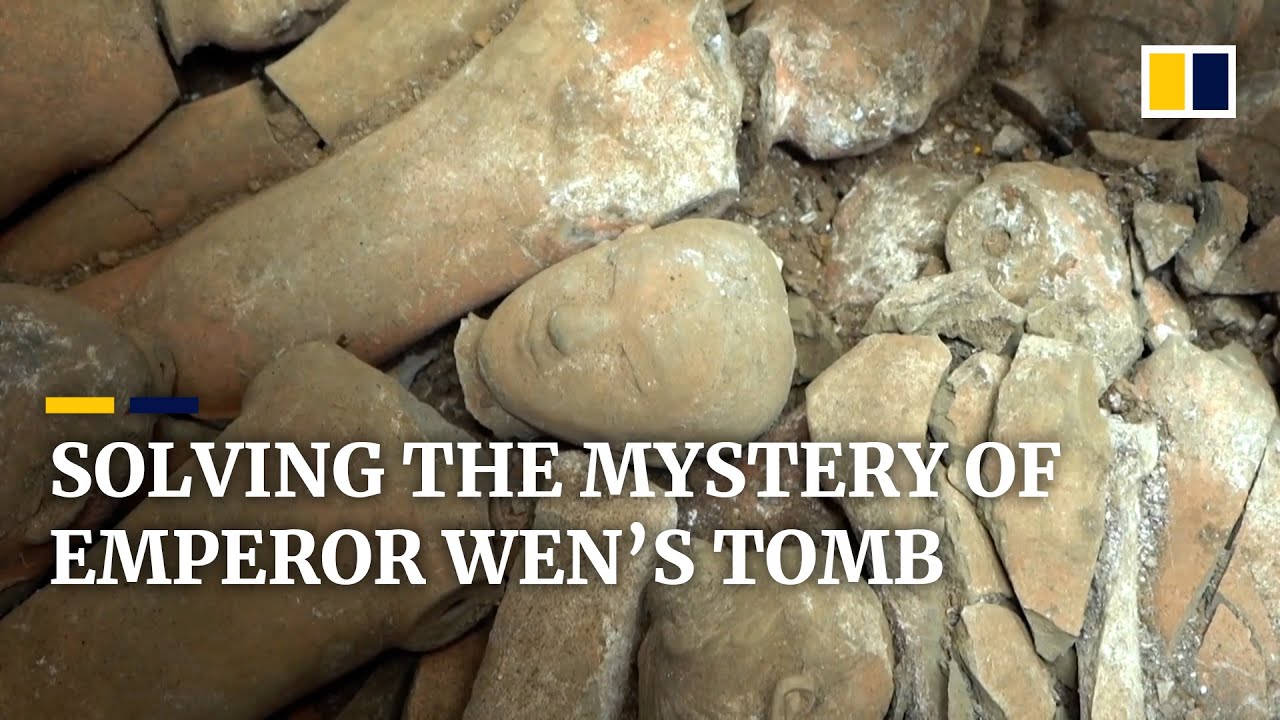
01:33
Emperor’s tomb in northwestern China confirmed to belong to Han dynasty ruler Emperor Wen
The wrong tomb features 10 stone tablets that have been carved over a period of hundreds of years to honour the ancient monarch. Officials from the Qing dynasty (1636-1912) even established a monument to mark Emperor Wen’s Ba Mausoleum, as his final resting place is called.
However, the mound had disappeared over the centuries, so it was difficult to tell it was a tomb before excavation.
While the size and style of the monument was an initial clue, the artefacts inside, including official seals and unique figurines, convinced the team it was Wen’s final resting place.
“After checking ancient literature, we can conclude that the grave cluster in Jiang Village is Emperor Wen’s Ba Mausoleum,” said Ma Yongying, a researcher from Shaanxi Academy of Archaeology.