
-
Advertisement
Asean
OpinionAsia Opinion
Samer Elhajjar 
Niraj Dawar
Samer Elhajjar andNiraj Dawar

Opinion | Fatigue is rewriting the US-China soft power contest, starting in Asean

At a time when no one has bandwidth left, soft power is being won by being the partner that feels usable, steady and low-risk

3-MIN READ3-MIN
Listen
People pick up Labubu toys at a Pop Mart store in Siam Square in Bangkok on May 8, 2025. Photo: AFP

For years, debates about US-China competition have defaulted to the obvious categories: ships, chips, tariffs and security pacts. Soft power was often treated as America’s home turf, the domain of Hollywood, top universities, global brands and a political ideal that still attracts even when it disappoints.

That assumption is getting riskier.

The world has entered a new emotional weather pattern: fatigue. It’s a structural condition shaped by overlapping shocks: pandemic after-effects, inflation and cost-of-living strain, wars, climate anxiety, supply chain fragility and a constant sense of political whiplash.

Advertisement
Fatigue changes what people reward. It lowers tolerance for drama, raises the value of predictability and makes friction the enemy. Soft power is no longer won mainly through admiration but by being the partner that feels usable, steady and low-risk when no one has bandwidth left.

The clearest place to watch this shift is Southeast Asia. When asked which side the Association of Southeast Asian Nations (Asean) should align with if forced to, respondents to last year’s poll by Singapore’s ISEAS-Yusof Ishak Institute showed an almost even split, with the United States narrowly (at 52.3 per cent) edging over China.
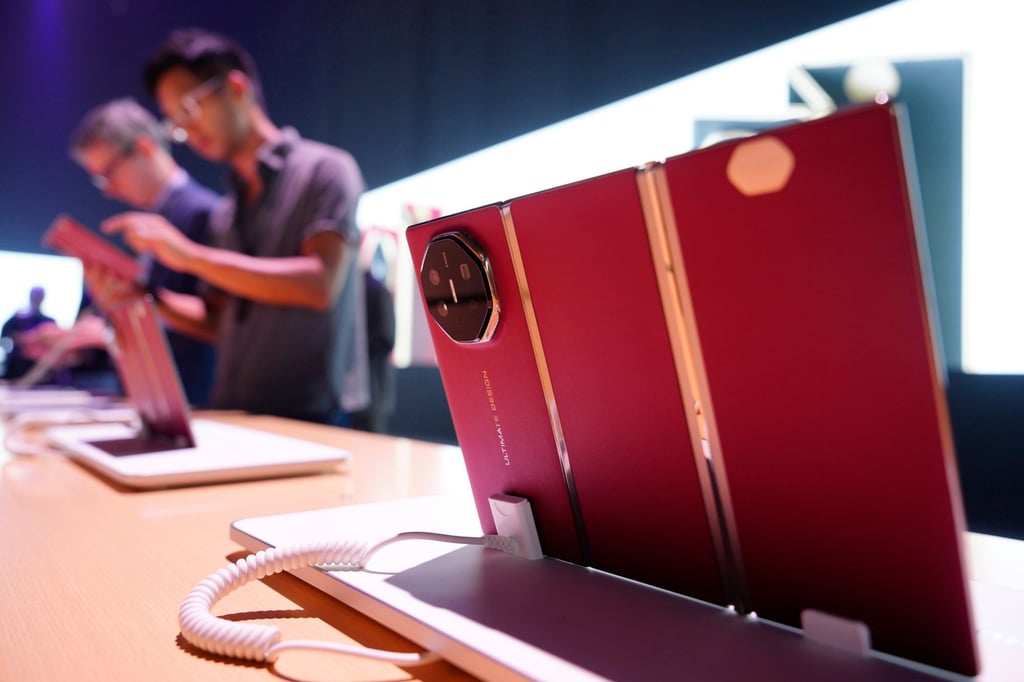
Huawei Technologies launches its Mate XT, the world’s first trifold smartphone, in Kuala Lumpur on February 18, 2025. Photo: AP
The US should have an advantage; historically, it understood fatigue better than anyone. The genius of the Marshall Plan was not its messaging. It was relief people could touch, delivered with consistency people could trust. The same logic powered other American soft power feats from the Berlin Airlift to the Peace Corps. Exhausted societies respond to practical hope.
Advertisement
Select Voice
Select Speed
1.00x