Advertisement

Outside In
With Central Asia rising, John Lee’s visit was well timed
The region’s five countries, inadvertent beneficiaries of Chinese infrastructure investment, then wars and tariffs elsewhere, are finding their feet
3-MIN READ3-MIN
Listen

David Dodwell is CEO of the trade policy and international relations consultancy Strategic Access.
In their 2022 book Sinostan, Raffaello Pantucci and Alexandros Petersen saw Central Asia as China’s “inadvertent empire”. If that is true – and the five-country region embracing Kazakhstan, Uzbekistan, Kyrgyzstan, Turkmenistan and Tajikistan (informally called the C5) certainly sits at the heart of China’s Belt and Road Initiative – then Beijing could not have chosen a less noticed corner of the world atlas.
Unnoticed, perhaps, by almost everyone except Halford Mackinder, who in 1904 described the area as the “heartland” of the “world island”. Mackinder argued that the nation which controlled this heartland could control the world. For over 120 years, Mackinder has been proven profoundly wrong. But perhaps that is about to change.
If so, that would make Chief Executive John Lee Ka-chiu’s recent mission to Kazakhstan and Uzbekistan – Central Asia’s two largest economies – well timed.
I would guess that a year ago, Lee and most members of his mission knew little about the C5. And that can be forgiven. For most of my lifetime, they have been wretchedly poor desert countries sitting in the neglected underbelly of what used to be the Soviet empire. They were tiny, thinly populated Muslim economies whose plentiful natural resources were mostly sold to Russia. Even Kazakhstan, which is almost the size of India, has a population of just 21 million and a gross domestic product just four-fifths of Hong Kong’s.
Only in 1991, with the collapse of the Soviet empire, did things begin to change, initially not for the better. Corruption surged, as did border and resource disputes between the region’s fragmented ethnic groupings. Radical Islam – and the quest for terrorist caliphates – thrived. Large regional wars in Iraq and Afghanistan discouraged investment.
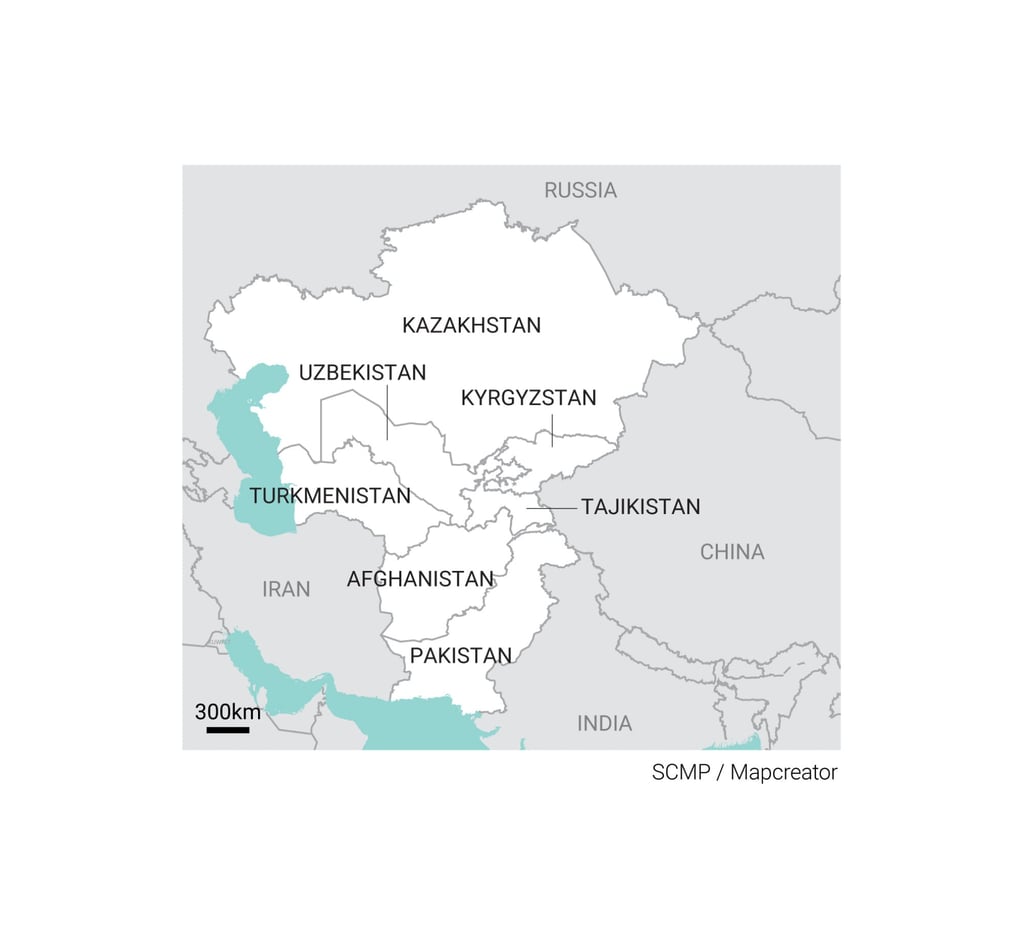
But more recently, change has been for the better, starting with China and heavy Belt and Road Initiative investment. Beijing’s logic was simple: turmoil in Xinjiang, which came to a climax in 2013 with a Uygur car bomb attack in Tiananmen Square, could only in the long term be quelled by economic development and rising living conditions; and prosperity for Xinjiang, on the distant western periphery of the Chinese economy, could only happen if its neighbours also became more prosperous.
Advertisement
Select Voice
Select Speed
1.00x