Advertisement
PostMag
Life.Culture.Discovery.

Hong Kong Palace Museum set to unveil Mughal treasures in collaboration with London’s V&A

More than 100 artefacts, appearing in a new exhibition, chart the artistic legacy of one of South Asia’s most influential imperial dynasties

Reading Time:2 minutes
Why you can trust SCMP
Jewelled jade pendant, court workshops, Mughal dynasty (c. 1610-20). Photo: Victoria and Albert Museum
Hong Kong will host its first large-scale exhibition of Mughal art as the Palace Museum prepares to present “Treasures of the Mughal Court” in collaboration with London’s Victoria and Albert Museum (V&A).

Running from August 6 to February 23, the exhibition focuses on the artistic legacy of one of South Asia’s most influential imperial dynasties, which ruled much of the Indian subcontinent from 1526 to 1857, with a vast domain stretching from Kabul to the southern Deccan sultanates and from Gujarat to Bengal.
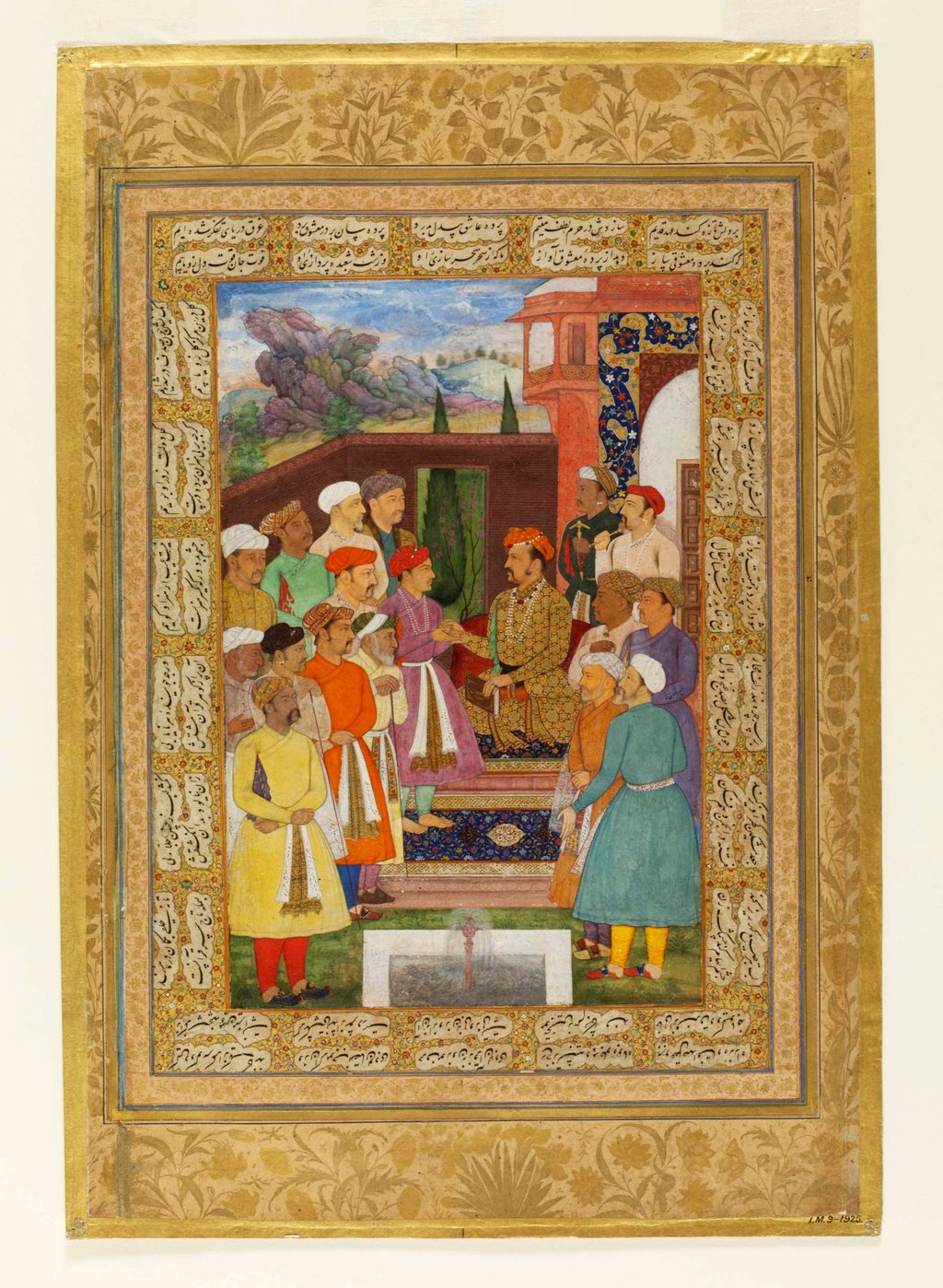
Jahangir in a Garden, by Manohar, a court painter of the Mughal emperor (c. 1610-15). Photo: Victoria and Albert Museum
The Mughal period is often described as a time of relative peace and religious tolerance during which artistic exchanges flourished across South Asia, China, Iran and Europe. Pre-colonial Indian arts, architecture, textiles and jewellery reached new levels of technical and aesthetic sophistication.
Advertisement

The exhibition is organised into three thematic sections, each focused on the reigns of an emperor – Akbar, Jahangir and Shah Jahan – who presided over a century-long flourishing of Mughal arts. More than 100 artefacts are on view, drawn from the archives of the V&A, and supported by loans from Kuwait, Britain, Hong Kong and other international collections.
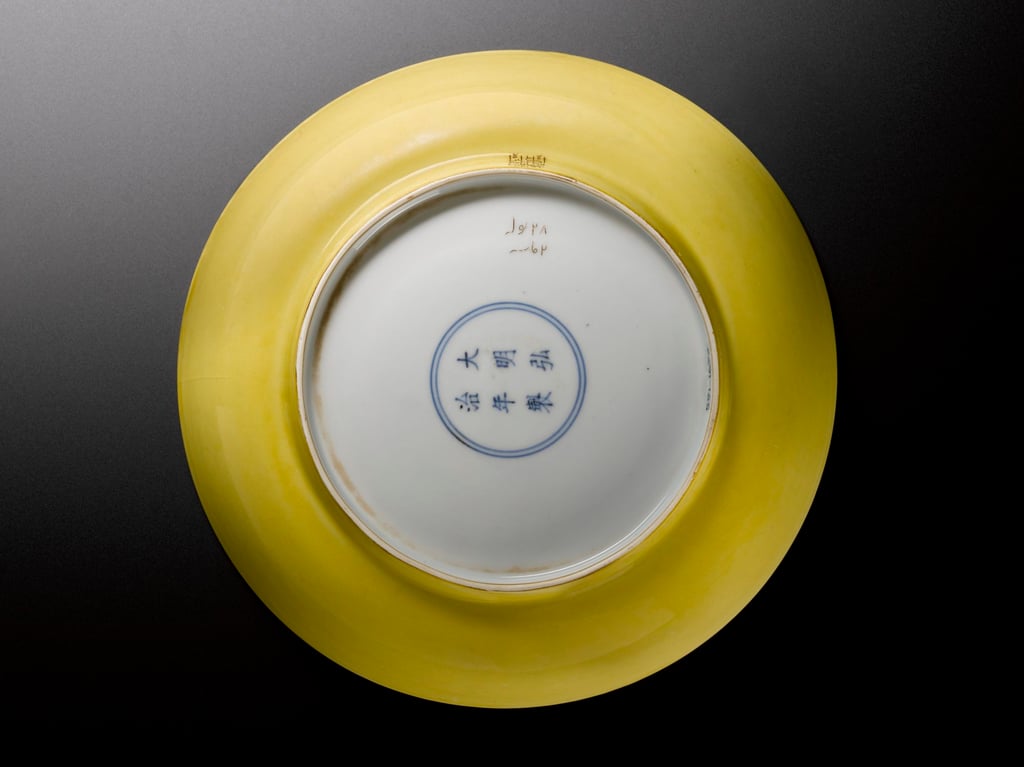
Yellow enamel porcelain dish from Jingdezhen’s imperial kilns. Ming dynasty, Hongzhi period (1488-1505); collected by Jahangir. Photo: Victoria and Albert Museum

Among the highlights is a yellow enamel porcelain dish from Jingdezhen’s imperial kilns. Collected by Jahangir, who ruled from 1605 to 1627, it bears Persian inscriptions attesting to the Mughal court’s high regard for Chinese porcelain as well as the rich cultural linkages between China and India.

Advertisement
Advertisement
Select Voice
Choose your listening speed
Get through articles 2x faster
1.25x
250 WPM
Slow
Average
Fast
1.25x