Greg Girard’s photo exhibition shows five decades of Hong Kong and Tokyo
Photographer Greg Girard’s new exhibition puts two Asian metropolises – Hong Kong and Tokyo – in the frame over five decades

Today, the image is iconic. Enveloped by the blackness of night, a young Chow Yun-Fat holds a burning banknote, eyes aglow and arms clutched towards his chest in a state of ecstasy as he gazes into the growing flame. Behind him, co-star Cherie Chung Chor-hung gives a wide, revelatory grin as neon billboards in the distance are reflected in the harbour.
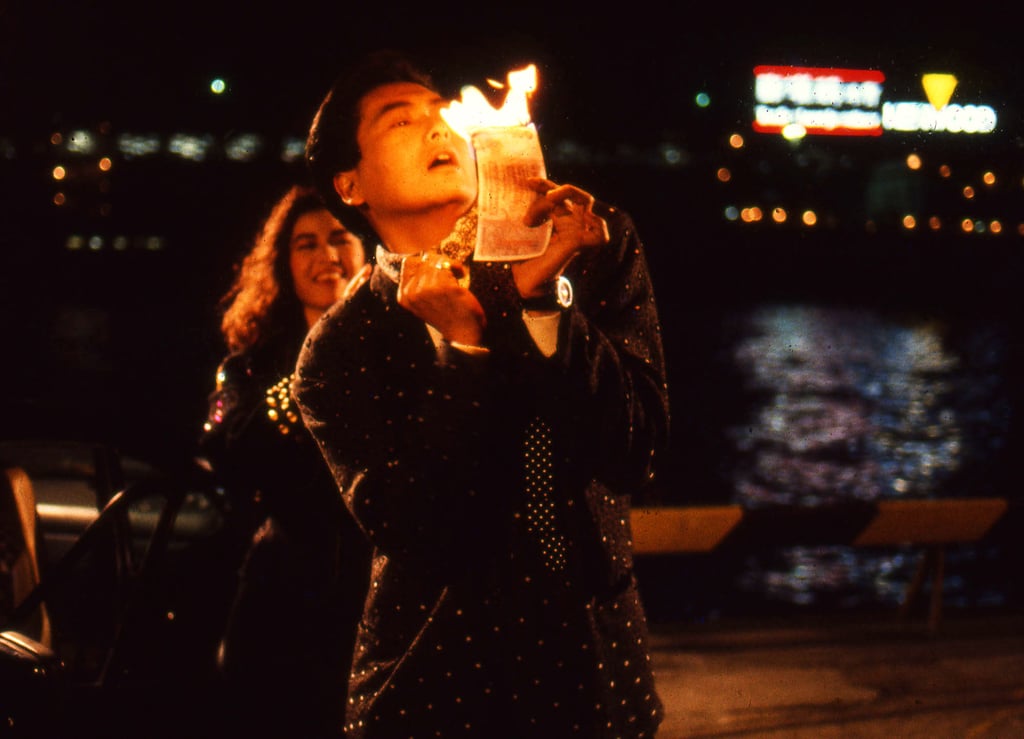
More than a showcase of Chow and Chung’s thespian prowess, the photograph, snapped by Canadian photographer Greg Girard in 1987 on the set of The Eighth Happiness, captures Hong Kong’s “golden era” at its apex in the final years before the Handover in 1997, when the city’s culture, fuelled by a buoyant stock market, was exported all over the world.
“That was an exciting and pivotal time to be here. A lot of people made pictures about Hong Kong with this question mark over it, but I started making pictures here without any documentary agenda, just walking the streets [to capture] what normal life looks like,” Girard tells PostMag. “I always thought it was a fascinating place and it didn’t need to be within the framework of a story.”
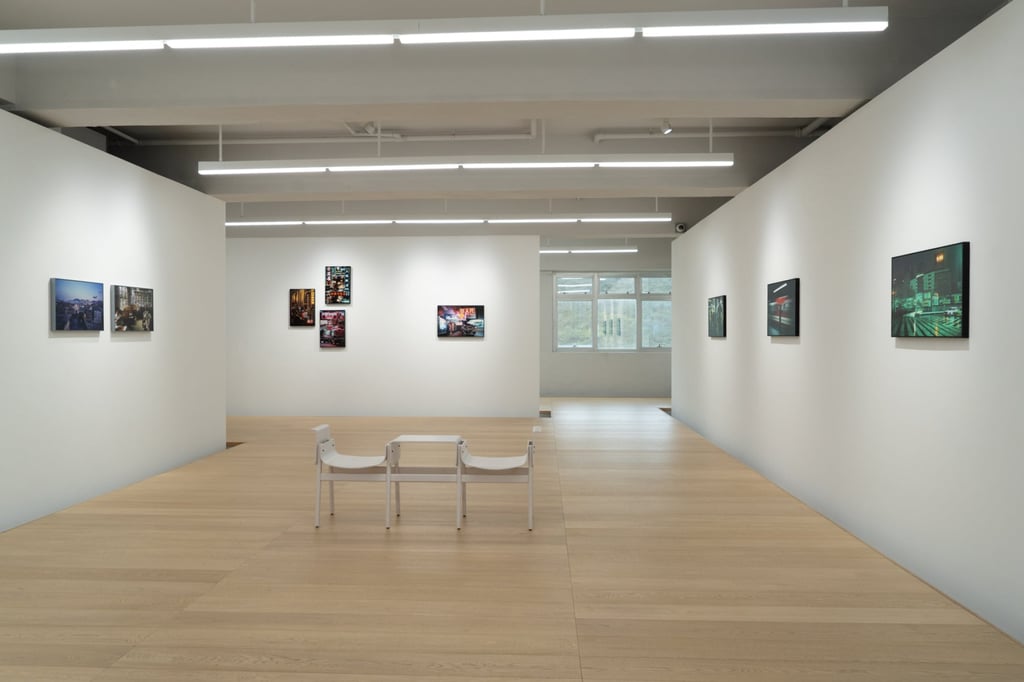
That approach defines the Vancouver-based veteran’s latest solo exhibition at WKM Gallery, running until May 23. Simply titled “HKG-TYO 1974-2023”, the curation bridges two of Girard’s adopted hometowns over a 49-year period, where he began his storied career as a young photographer wandering through the neon-drenched avenues and alleyways of two of East Asia’s most electric metropolises, charting their parallel journeys from 1970s industrialisation to the heady “bubble” years.
A common motif between the two cities is the proliferation of neon signage – an art form that Girard captures in a juxtaposition of vibrancy and melancholy.
“The city I grew up in, Vancouver, was one of North America’s most concentrated neon cities, but by the time I picked up a camera in the early 70s, it was already dying – the city fathers, in their wisdom, felt that neon was too salacious, and gauche, and sort of déclassé, so they outlawed neon, and gradually it started disappearing,” he recalls. By contrast, neon was still so widespread in Hong Kong and Tokyo that it was totally ordinary, yet Girard has a knack for framing his shots in such a way as to render them sublime – with tight, technical compositions that give the illusion of the signs as hovering in space.
A more recent body of work drives home this sense of liminality. Snack Sakura, which Girard began shooting in 2017, was premised on visiting every single sunakku (a type of Japanese neighbourhood bar run most often by middle-aged women) named Sakura, the most common name for such an establishment. Traversing the entire length of the Japanese peninsula, Girard paints a portrait of nostalgia and community both in the alienation of major urban centres as well as in the loneliness of rural towns. Often, they are found in narrow, telephone-line-addled alleys, and at other times they are stand-alone buildings awash in the eerie green glow of a nearby street lamp. Inside, Snack Sakuras are a snapshot of a bygone time, frequented almost exclusively by regulars who reminisce on shinier days while cloaked in the haze of cigarette smoke.