How Taishan learned to absorb the world
Guangdong’s ‘hometown of overseas Chinese’ is where architecture and cuisine created by returning émigrés reveal how culture flows both ways

The records are clear and complete: about 300 years ago, a Huang clan from just across the Tan River got the idea to start their own village here, tucked into one of the river’s curves with Baizu mountain at its back. Hiring a feng shui master from Jiangxi province to lay it out, they built grey brick houses in a tight grid, with dragon-back or phoenix-crest ridges, surrounded by dense bamboo groves. Acres of fruit orchards were planted outside the village and a fish pond dug in front. A few hundred years later, the Guan clan moved in and built their own village nearby. It was typical Guangdong countryside life, in a particularly beautiful and well-ordered corner of Taishan, known as Toisan in Cantonese.
Over the past century, these villages and the broader region to which they belong have been shaped by cultural currents that run across the world and back. Anthropologists consider the people of Chaoshan, another base of emigration from Guangdong, to have an “export culture”, meaning that when residents emigrated, mainly to Southeast Asia, they set up their communities, temples, buildings and societies to mirror their lives back home. By contrast, Taishan had an “import culture”, where returnees brought touches of overseas culture back home with them. They used Western architectural styles, dressed in wool suits, installed Western flush toilets and cast-iron bathtubs, and incorporated English words into the dialect.
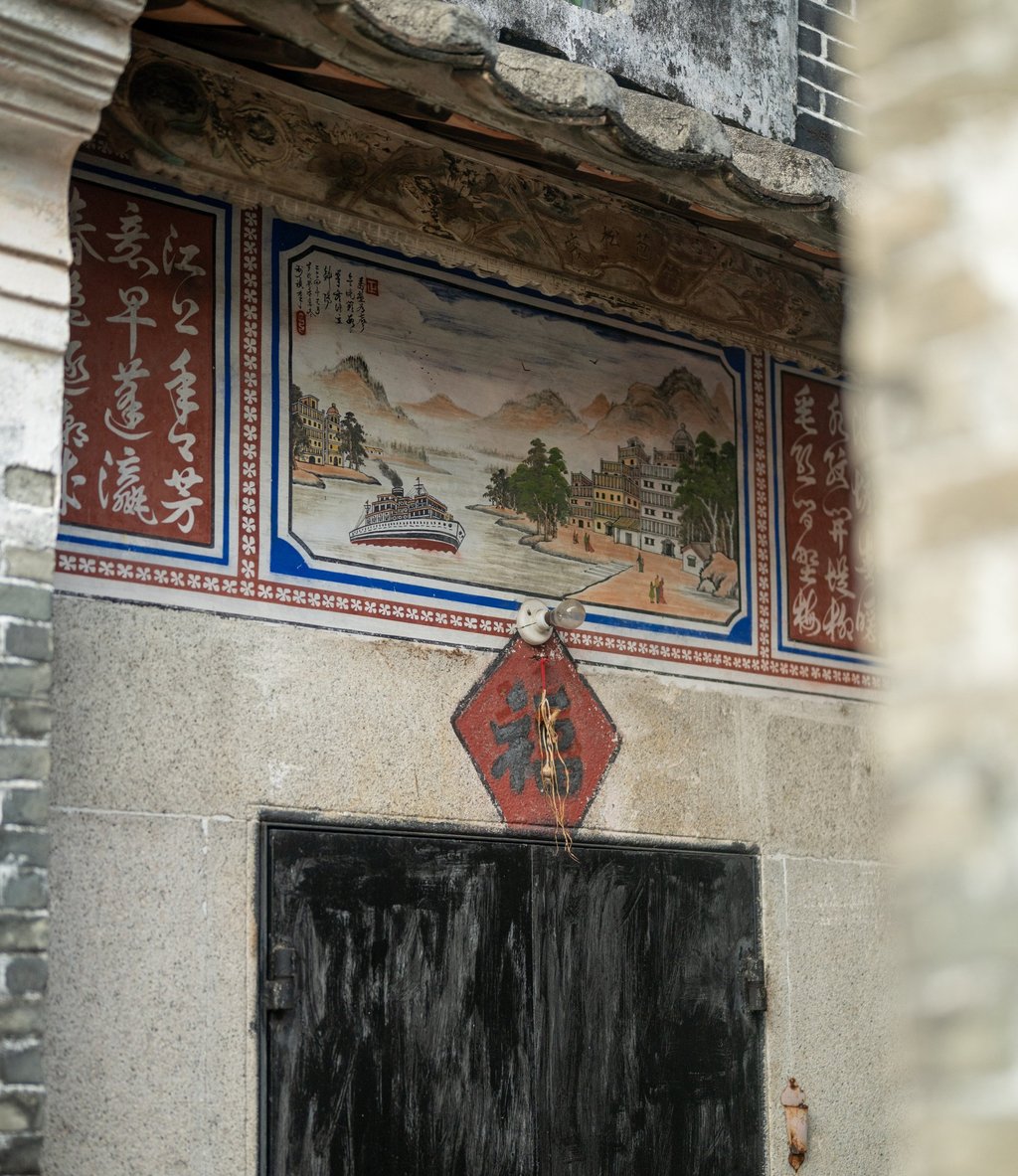
Evidence of this history can still be found in Taishan. On multiple visits over the past year, I found murals above the doors on some of the low-slung brick houses painted with auspicious scenes of birds and deer. But looking closely, I saw that many houses had replaced those traditional paintings with murals of steamships headed either to or from lands of people dressed in suits and long Western dresses. Many of these paintings, touched up in the 2000s, are still vivid, the mode of transport outdated but the story they represent as relevant as ever.
Majianglong is just one corner of Kaiping, itself part of the greater Taishan area. Today, it’s a two-hour drive west of Shenzhen and the region is a major destination for overseas Chinese families chasing their roots. Tour buses crowd the more famous villages and stop at an impressive Overseas Chinese Museum, which is funded primarily by donations.
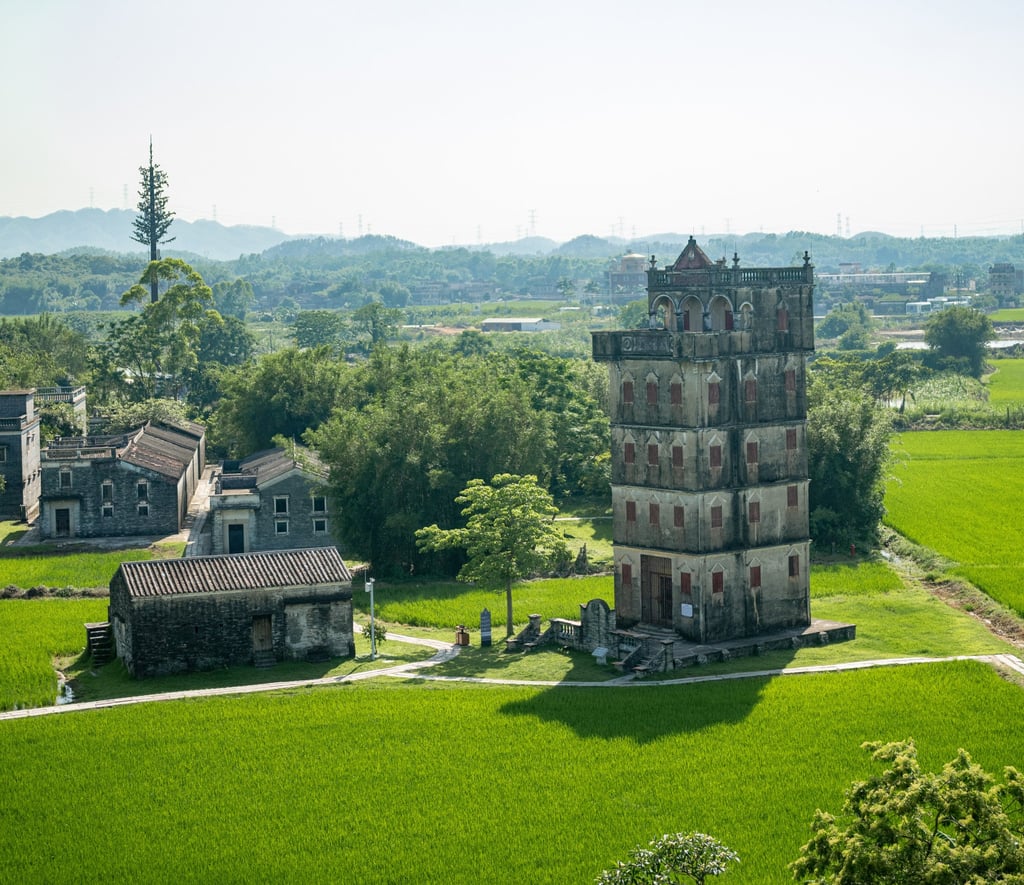
Though there had been migration from coastal Guangdong to Southeast Asia before, the California gold rush in 1849, along with other gold rushes and silver mines in the Americas and Australia, drew Chinese migrants to new shores. By the 1920s and 30s, the impact of the changing migration patterns could be seen in Taishan, as some of the village’s sons returned home. The first thing they did was transform their ancestral hometowns, building villas and watchtowers (known as diaolou) that still stand today.