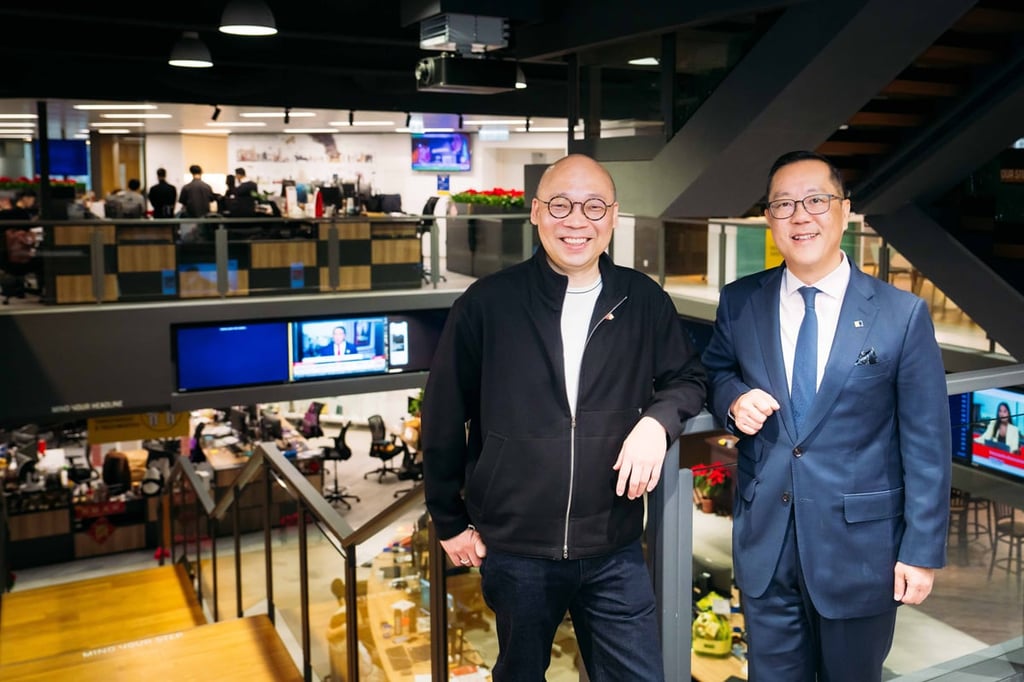
2026 Marketing Predictions from HSBC’s Cheuk Shum
- For HSBC, blending heritage with contemporary culture and data with the human touch isn’t a contradiction – it’s a necessity for growth.
For a 160-year-old bank, HSBC is surprisingly comfortable with the idea that playing it safe may be the riskiest move of all.
As Hong Kong pushes to consolidate its position as a global wealth hub, Cheuk Shum, head of marketing, HSBC Hong Kong, says the challenge for legacy brands in 2026 is not reinvention for its own sake, but relevance. “We have cool customers,” he says. “So I challenge the assumption that traditional clients are conservative.”
Shum outlines a marketing philosophy built on cultural relevance, experimentation and a clear-eyed view of how technology should –and shouldn’t –reshape financial services.

Making heritage feel contemporary
HSBC’s recent 160th anniversary campaign offered a glimpse of that mindset. Rather than leaning into nostalgia, the bank commissioned 18 murals (one in each district of Hong Kong), opened the world’s tallest Wealth Management Centre at ICC and partnered on cultural events such as the Monsters by Monsters: Now and Then exhibition.
“For us, our 160th anniversary is like blending good whisky,” Shum says. “You have some of the older vintage history, but at the same time, you mix it with a new vintage blend to make the brand appealing and stable in today’s times.”
That approach reflects his belief that demographic labels are increasingly unhelpful. “Customers are getting richer, younger,” he says. “And then older customers are getting cooler and more open to new ideas.” Instead of rigidly segmenting by age, HSBC looks for shared passion points –art, culture and sport –that cut across generations.
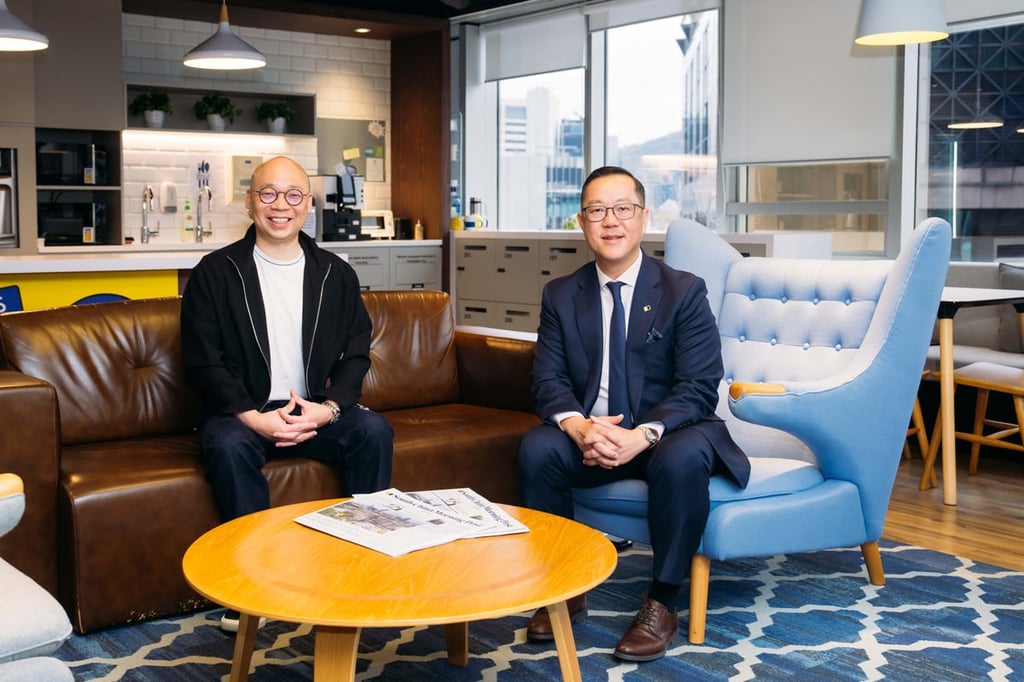
Reintroducing HSBC to the new arrivals
The strategy matters because Hong Kong’s audience is changing fast. More than 160,000 professionals have recently arrived under the Top Talent Pass Scheme –many without the deep emotional attachment to HSBC that has long defined its customer base.
“For customers who didn’t grow up with the brand, reputation alone isn’t enough,” Shum says. “We need to find something unique, differentiated, from a marketing point of view, to market to customers who are not familiar with the brand.”
That starts with fundamentals. “The user experience needs to be rethought,” he says – particularly for mainland Chinese users accustomed to super-app ecosystems. HSBC has been hiring marketers with that background to ensure it communicates in the right language –literally and culturally – across platforms such as WeChat, while ensuring it does not alienate its core Hong Kong audience.
At the same time, HSBC is doubling down on iconic Hong Kong imagery, from its landmark headquarters to its role in the city’s financial life, reinforcing the message that global reach and local roots are not mutually exclusive.
Wealth, trust and the limits of lifestyle
With Hong Kong on track to overtake Switzerland as the world’s leading cross-border wealth centre, competition for affluent clients is intense. Shum argues HSBC’s advantage lies in both its heritage and structure. “When you talk about legacy, when you talk about multigeneration, we understand –because we have served multigeneration families,” he says.
Flagship events such as the Global Investment Summit help reinforce that positioning. “Those events help to elevate the brand,” Shum notes. But he is quick to add a caveat: “At the end of the day, it is the core –the banking product, the solutions and the advice–that would really make the difference.”

AI as co-pilot, not replacement
That pragmatism extends to technology. Shum rejects the idea that banking’s future is fully automated. “It’s not binary,” he says. “It’s going to be a hybrid.”
HSBC is experimenting with AI in chatbot sandboxes and personalised communications, aiming for “hyper-personalisation at scale.” But for complex, high-value decisions, Shum is unequivocal: “The human element for us plays an important role.”
Why playing it safe is unsafe
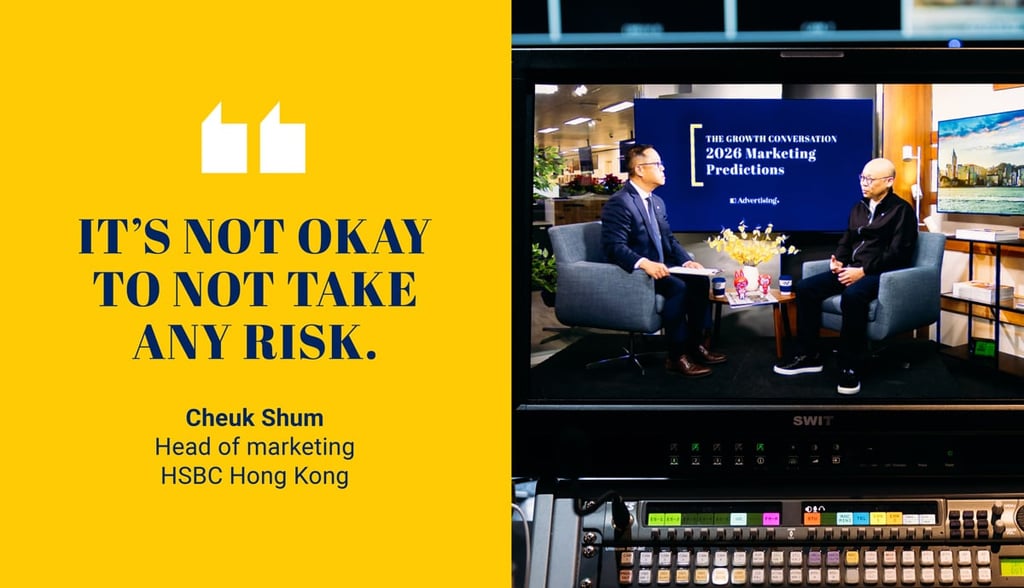
Perhaps the clearest signal of HSBC’s 2026 outlook is its corporate culture. Shum tells his team –and agencies –that safety is not the goal. “They will find it unsafe to pitch me safe ideas,” he says. Experiments are encouraged, and failure is treated as a byproduct of innovation rather than a career risk. “If something doesn’t fail,” Shum adds, “it means that we haven’t tried harder.”
It is an unusual stance for a global bank, but one Shum believes is essential if heritage brands are to stay relevant in a fast-moving market. For HSBC, the bet heading into 2026 is that being heritage-rich yet culturally current, data-driven yet deeply human, is not a contradiction –but a necessity.
As Shum puts it, “It’s not okay to not take any risk.”