Advertisement
Everest deaths: climber numbers manageable but low experience levels cause traffic jams, says top guide Adrian Ballinger
- Adrian Ballinger says huge number of climbers isn’t to blame for traffic jams that have contributed to 11 deaths over the past week
- Lack of experience – from climbers to Sherpas and guides – creates ‘herd mentality’ that increases risk
2-MIN READ2-MIN

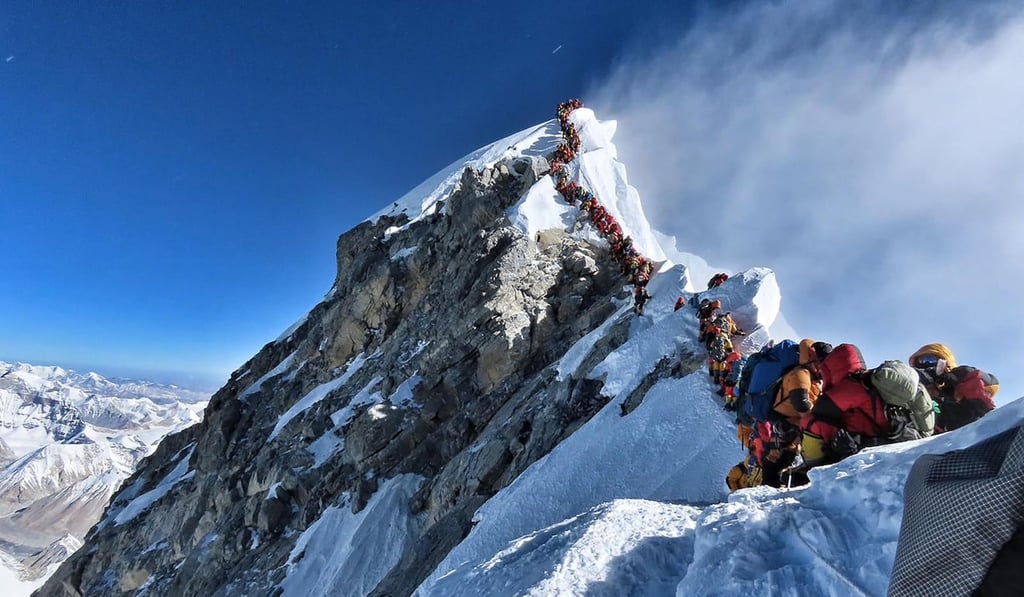
The long snaking line of climbers photographed as they pushed for the summit of Everest caused outrage at the amount of people permitted to climb, but one experienced guide believes the numbers are manageable.
Adrian Ballinger, who has guided for 12 seasons on the world’s highest peak, said it is the lack of experience for all involved that caused the traffic jams that resulted in at least some of the 11 deaths over the last week on Everest.
“The problem on the mountain is not that there are too many people, or too few summit days,” he said. “It’s experience.
Advertisement
“There are clients with no experience. There are Sherpas with too little training so they can’t make a decision about turning a client around.
Advertisement
“Then, there are too few guides above them. At all three levels, there is not enough experience.”
Advertisement
Select Voice
Select Speed
1.00x