
OpinionStatus update on the importance of social media for China’s football fans
New research has revealed some interesting things about China’s growing use of social media and its online love for the world game

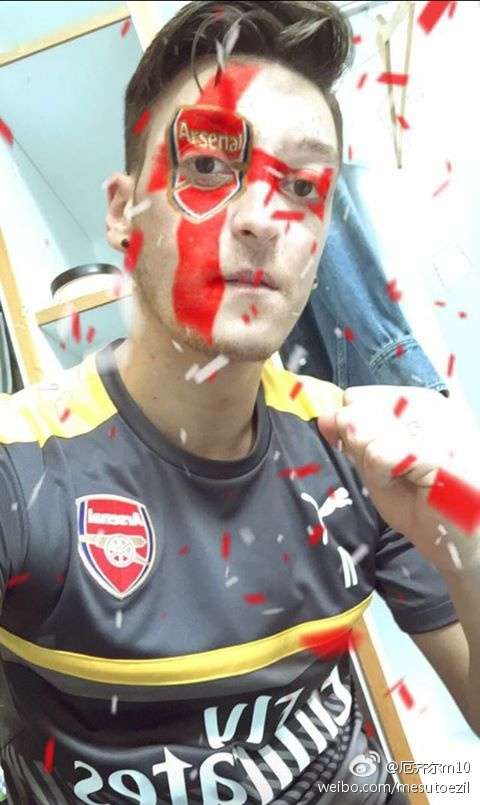
Admittedly, Ozil came second behind Cristiano Ronaldo in Mailman’s research but their findings reveal two important things. The first is that Westerners should not assume anything in China, nor should they project their own interpretations (in this case of physical appeal) upon the Chinese. For football clubs, or indeed organisations in any other industrial sector seeking to understand China, filtering meaning solely through one’s own eyes is inadvisable.
The second thing Mailman’s latest research tells us is about the power of social media in China, particularly when football is involved. After Ozil and Ronaldo, Manchester United’s Anthony Martial and Wayne Rooney are also identified as being among the most influential footballers online. This is hardly surprising given that United is identified in Mailman’s research as being the most influential team online in China.
China has the world’s biggest Internet user-base (nearly 700 million people), with most of them active social media users. Of this number, almost 600 million people access social media using a mobile device. As such, the country is arguably the most dynamic, sophisticated social media environment in the world, an observation accentuated and given further pertinence by the growth of China’s middle class and rising levels of income generally.
Social media is dominated by ‘BATS’: Baidu, Alibaba, Tencent and Sina. Together these have numerous different social media and/or e-commerce platforms, each with hundreds of millions of active users. Among the most important motives for the Chinese in using such platforms are free expression, identity creation and peer attention, with all three likely to hold the key to China’s social media consumption of football clubs and its stars.
One aspect of Chinese society that Westerners do tend to get right is China’s restriction on freedom of speech. It is often difficult for Chinese people to publicly express their opinions, particularly about contentious or divisive issues. In part, this is the result of state policy, although culturally the Chinese are often more restrained in publicly expressing their views than Westerners.