Advertisement
Malaysia faces pressure to ‘innovate’ chip sector as US-China rivalry gives Vietnam a boost
- Malaysia, a key node in the global semiconductor supply chain, supplies an estimated 13 per cent of demand for packaging and testing
- With increasing competition from countries like Vietnam, Malaysia should ‘double down’ on its advantage to stay ahead, say analysts and insiders
6-MIN READ6-MIN
3

Malaysia is finding itself at a semiconductor crossroads, amid a surge in investments globally to set up new chip facilities outside China as companies seek to mitigate the risks – and also cash in on new opportunities – brought about by the ongoing US-China rivalry.
The escalating tit-for-tat between the world’s largest economies has been highly disruptive to global trade, particularly in the semiconductor space where demand has only skyrocketed as the world becomes increasingly reliant on the hi-tech chips to power everything from e-commerce to green technology.
Companies now are required to adhere to strict regulations laid out by the United States under its Chips Act, which prohibits expansion of semiconductor development and manufacturing in China and countries deemed to pose a national security risk.
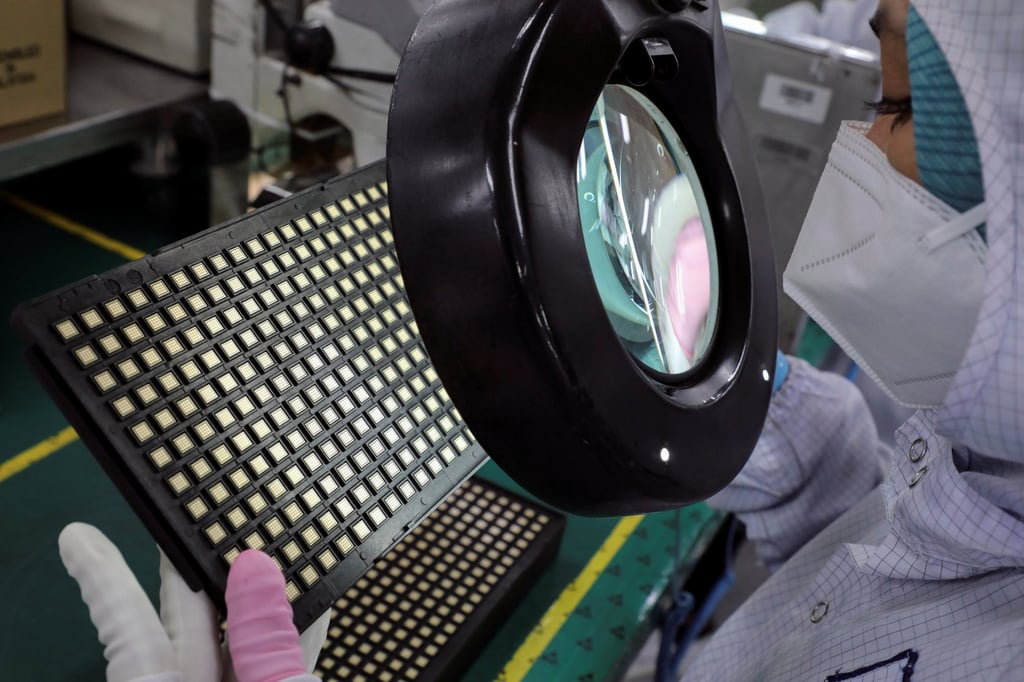
The issue hinges on the accusation by the US that China has used information and communications technology built and developed by Chinese firms to engage in espionage and mass data collection, an allegation that China has denied.
Advertisement
But the die has been cast, and companies – including Chinese firms – are making a beeline to expand their operations beyond China’s shores to make sure they can meet US regulatory compliance.
Arguably the biggest potential beneficiary of this shift would be Southeast Asia, due to its proximity to China and its strategic position in the epicentre of the South China Sea, through which about US$3 trillion worth of ship-borne trade passes annually.
Advertisement
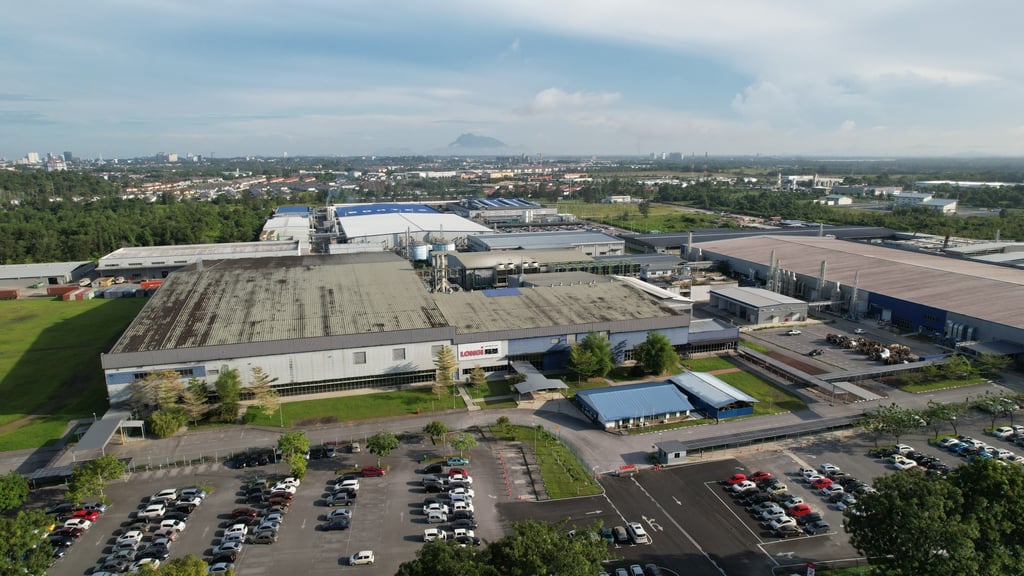
Malaysia is a key link in the global semiconductor supply chain, having built up its local semiconductor industry and ecosystem over the past 50 years to now supply an estimated 13 per cent of demand for packaging and testing.
Advertisement
Select Voice
Select Speed
1.00x