Sino FileJust like his grandfather, Kim Jong-un exploits mistrust between US and China
More than 60 years since the Korean war made enemies of the two countries, Pyongyang continues to dictate the course of the world’s most important bilateral relationship
The United States and China, along with most other nations, agree the Korean peninsula should be rid of its nuclear weaponry.
But the two global superpowers – one the world’s leading free democracy and Pyongyang’s greatest adversary, the other the largest communist power and North Korea’s greatest ally – differ greatly on their approach to the issue.
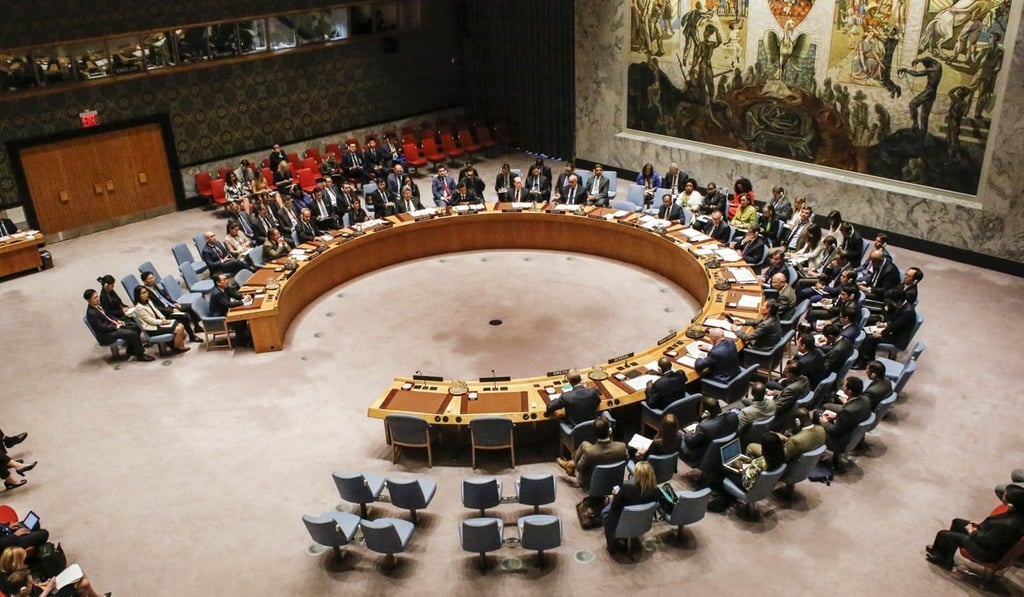
This week’s UN Security Council resolution to impose even harsher sanctions on North Korea in response to the regime’s sixth nuclear test reflected the two nations’ consensus on achieving a common goal as well as the differences in their approaches to dealing with the biggest nuclear threat since the Cuban Missile Crisis in 1962.
UN Security Council meeting gets underway in New York on September 11, to discuss new sanctions on North Korea. Photo: AFP
US President Donald Trump has said several times that China could “easily” help stop North Korea’s nuclear advancement if Beijing agreed to use its economic leverage as North Korea’s top trading partner. However, Beijing has dismissed the argument, saying it is not Beijing but Washington and Pyongyang that should solve their differences.
Advertisement
What Washington wants is an all-out effort to force the reclusive regime to its knees, while Beijing desires mutual compromise to defuse tensions and a return to the negotiation table.
Under the “dual suspension” formula, Beijing has called for the US and South Korea to stop provocative military exercises in exchange for the North freezing its nuclear and missile tests. But the US does not believe such compromises will win corresponding concessions from the Stalinist regime, as the North’s leader Kim Jong-un has a poor record of honouring promises.
Advertisement
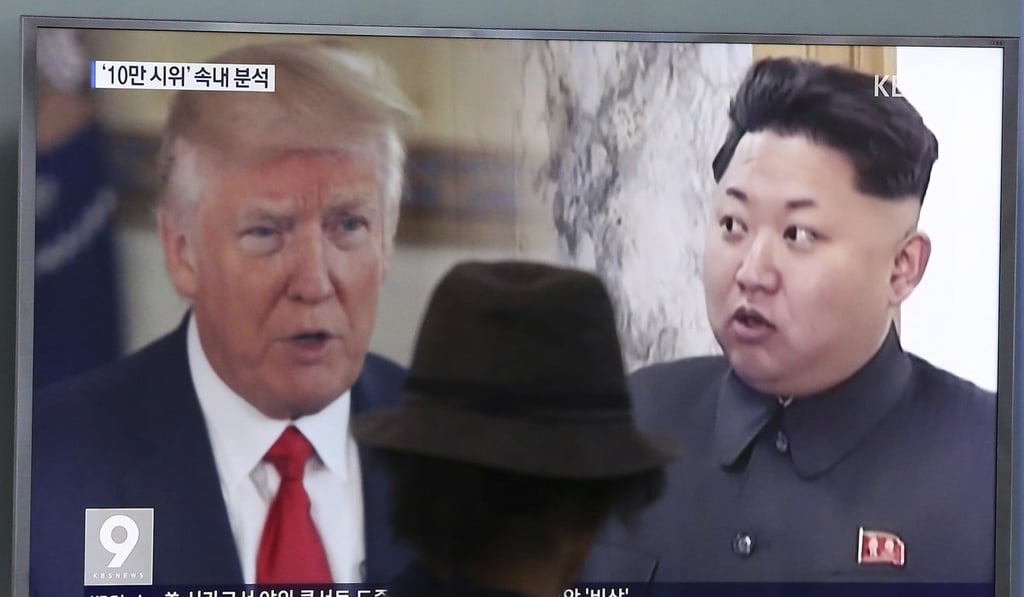
South Korean television shows images of US President Donald Trump and North Korean leader Kim Jong-un as tensions intensify over new tough sanctions on the reclusive nation. Photo: AP
While the latest round of sanctions are considered the most extensive to date, they are still a watered-down version of the initial draft resolution. This was a result of a trade-off between two rival UN groupings, with most nations backing the US on one side, and then Russia and China on the other.