Advertisement

Sino File | The KMT’s election win in Taiwan has nothing to do with Beijing

  • The city and county polls have seen the mainland-friendly Kuomintang resoundingly defeat the independence-leaning Democratic Progressive Party
  • But look closer, and they have more to do with people’s livelihoods than cross-strait relations

Reading Time:3 minutes
Why you can trust SCMP
President Tsai Ing-wen announces her resignation as chairwoman of the Democratic Progressive Party after Taiwan’s elections. Photo: Reuters
Common wisdom might suggest that the resounding victory of the mainland-friendly Kuomintang (KMT) and the crushing defeat of the independence-leaning Democratic Progressive Party (DPP) in last weekend’s Taiwanese elections would improve cross-strait relations.
The KMT took 15 of the 22 city and county seats, up from just six previously, while the DPP’s share fell from 13 to just six – including Kaohsiung and Taichung, two of the most important cities in Taiwan, as well as its long-term strongholds. That might be interpreted as Taiwanese endorsement of KMT’s mainland policy and disapproval of DPP’s.
Beijing favours the KMT, which has sought closer economic relations with the mainland since a thaw between what were once enemies fighting a civil war. Cross-strait ties have taken a dive in the two years since DPP President Tsai Ing-wen came to office.

The result seems to give Beijing a stronger position, but all the evidence suggests it had more to do with people’s livelihoods, not cross-strait relations.

Advertisement

Many analysts attributed the KMT’s success to its tactic of focusing on bread-and-butter issues rather than party politics and ideology.

Analysts also blamed the DPP’s election rout on its failure in domestic reform initiatives, from the island’s pension scheme to labour laws. Even KMT officials have admitted that its mainland-friendly policies and Beijing’s help promoting the party were to blame for its humiliating defeats in the 2014 and 2016 elections.

Advertisement

Most important of all, the polls showed the maturity of the island’s democracy, which might widen rather than narrow the political gap across the strait.
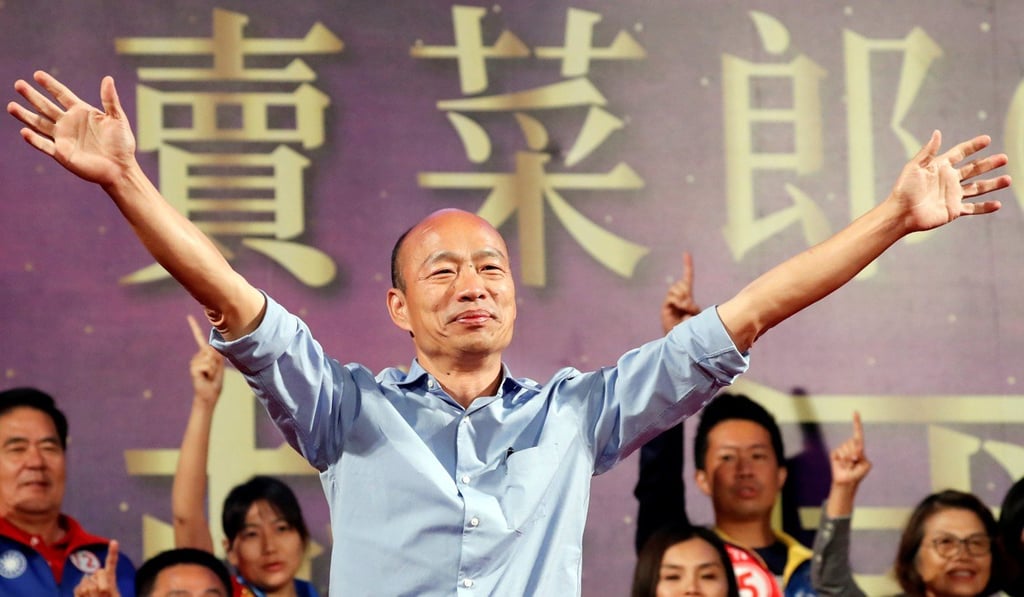
Kuomintang mayor-in-waiting Han Kuo-yu succeeded on his down-to-earth approach and economy-focused platform. Photo: Reuters
Advertisement
Select Voice
Choose your listening speed
Get through articles 2x faster
1.25x
250 WPM
Slow
Average
Fast
1.25x