Sino FileShenzhen’s economy is bigger than Hong Kong’s. But does size matter?
- Hong Kong’s economy grew 3 per cent last year compared with Shenzhen’s 7.6 per cent growth, but it is an inadequate measure of progress
- For the likes of per capita income, and social, cultural and educational development, the former British colony is still on top

Last year, Hong Kong’s economy grew 3 per cent to HK$2.85 trillion (US$363.09 billion), while Shenzhen registered 7.6 per cent growth to 2.42 trillion yuan (US$361.24 billion), or HK$2.87 trillion based on the 2018 official exchange rate from Hong Kong’s Census and Statistics Department.
The development highlighted the success of China’s opening up policy, initiated by the late paramount leader Deng Xiaoping. It also underscored Shenzhen’s success in its economic transition from being Hong Kong’s sweaty, labour-intensive assembly line.
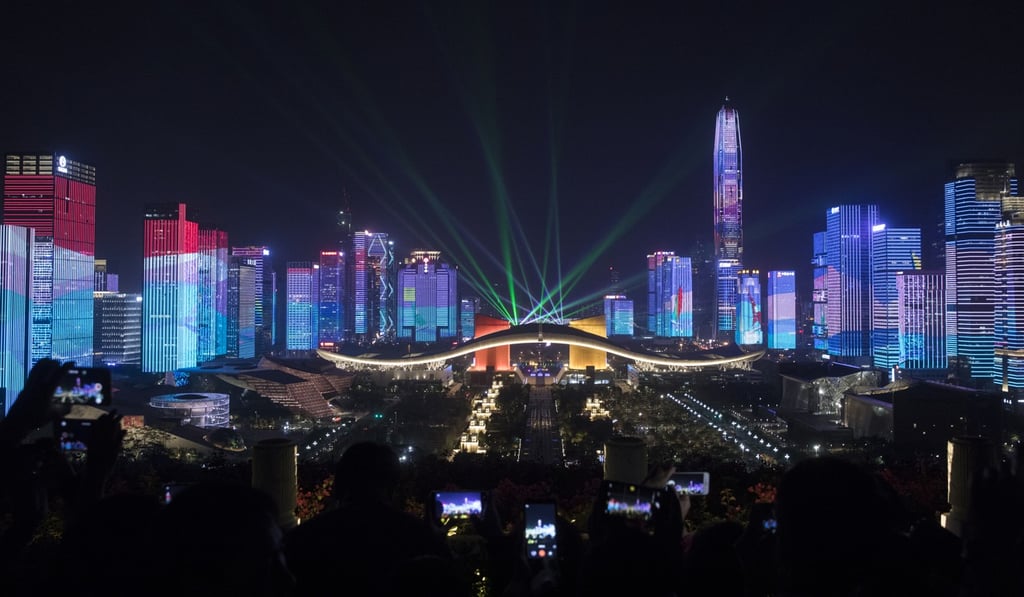
Now known as China’s Silicon Valley, the city is home to several household names in technology and telecommunications, including Huawei Technologies, Tencent Holdings, and drone manufacturer Da-Jiang Innovations (DJI).
Indeed, Shenzhen’s success might provide a powerful wake-up call for Hong Kong and its steadily diminishing share of the nation’s economy. When China began its market reform in the late 1970s, Hong Kong’s economy was about half of the mainland’s, despite it having just 0.5 per cent of the mainland’s population. In 1997, the year of the handover, the new SAR’s economic size was still 20 per cent of China’s total; it is currently only about 3 per cent.
But Shenzhen’s so-called overtaking of Hong Kong simply refers to economic size in terms of gross domestic product (GDP), when what is more meaningful in terms of measuring development levels and personal wealth is per capita income.