
Sino File | Hong Kong protesters, Chinese hawks and US allies: the key players in Taiwan’s election
- The island’s internal politics is heating up, with the pan-green and pan-blue parties scrabbling to present a united front
- On top of this, the trade war, Hong Kong’s protests and Beijing’s increasingly hawkish attitude towards the island may all have an effect

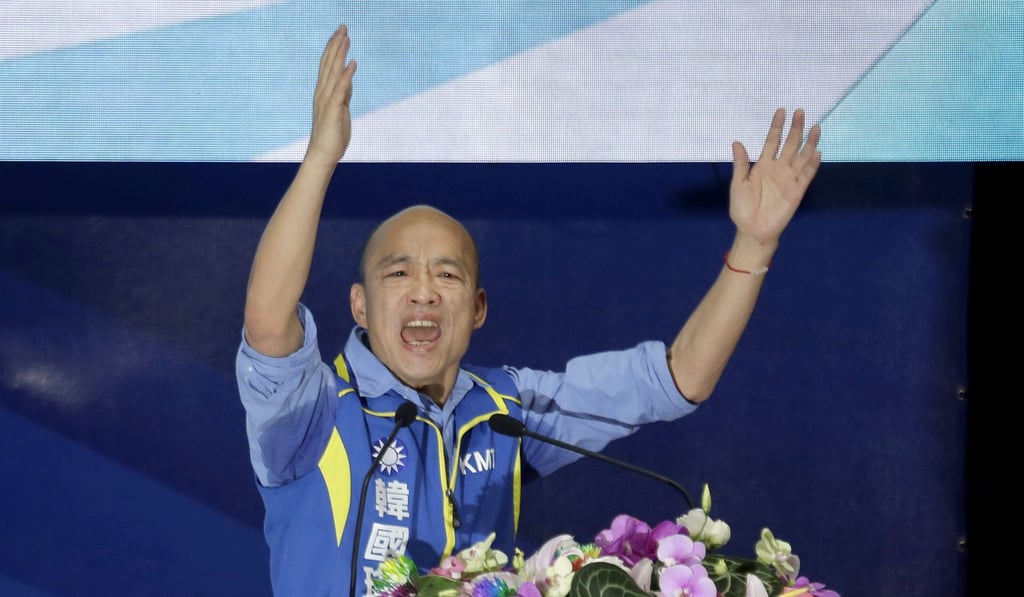
The two-party system has a winner-takes-all rule in elections, as the chance of third-party candidates winning a major election is remote. However, this has not deterred some independent candidates from joining President Tsai Ing-wen of the DPP and the KMT’s Han Kuo-yu, the popular Kaohsiung mayor, in standing in the January 2020 polls – which will also include legislative elections.
Party unity is therefore critical, as evidenced by the 2000 election when the pan-blue camp was divided and represented by two groups of candidates – Lien Chan and Vincent Siew of the KMT, and James Soong and Chang Chau-hsiung as independents – which were defeated by Chen Shui-bian and Annette Lu Hsiu-lien of the DPP. The Chen-Lu pair gained just 39.3 per cent of the total vote, with Soong-Chang getting 36.8 per cent and Lien-Siew, 23.1.
Recently there have been two surprise developments in the election race: former vice-president Annette Lu has vowed to join the running, while Taiwanese billionaire-turned-politician and KMT veteran Terry Gou has dropped out. Both decisions could have some impact on the result.
Gou, who quit the KMT last week, had been expected to run for the presidency after publicly flirting with the idea since losing the party primary to Kaohsiung mayor Han in July. His presidency bid as an independent would have dealt a deadly blow to the island’s embattled opposition party, as it would sap support for Han.