OpinionPhilippines, Vietnam and Thailand: the new frontiers in US-China battle for influence
- US Defence Secretary Mark Esper’s recent trip to Southeast Asia saw him try to reassure existing allies and roll back the growth of Beijing’s clout
- But as the region proves a vital foothold for Washington, it must realise its partners are now sovereign actors with full agency and varied interests

When it comes to establishing a new regional partner, American relations with its former cold war nemesis Vietnam surprisingly hold the most promise. From security and energy to aviation, bilateral ties show encouraging gains, although problems persist.
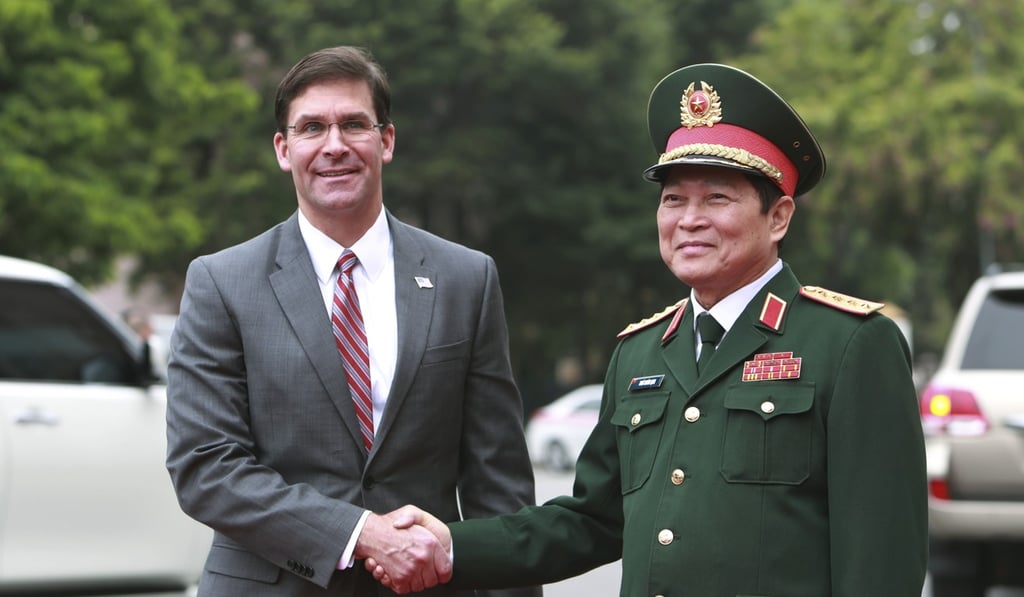
In Hanoi, Esper met Prime Minister Nguyen Xuan Phuc, defence minister Ngo Xuan Lich, and Tran Quoc Vuong, the executive secretary of the Communist Party. This high-level welcome speaks of the tremendous turnaround in relations in recent years, marked by the lifting of the arms embargo in 2016 and the visit of aircraft carrier USS Carl Vinson last year.
In a speech at the Diplomatic Academy of Vietnam, Esper used story written by Greek historian Thucydides – in which Athens, a naval power, used the logic of “might is right” to subjugate the independent island of Melos – as an analogy for China’s actions in the South China Sea. Aside from getting vocal US support against Chinese interference in Vietnam’s oil and gas activities, Hanoi will also receive a second Hamilton-class endurance cutter.
In early November, commerce secretary Wilbur Ross led a trade mission to the Vietnamese capital, which saw several billion-dollar deals struck. These include an offshore oil production-sharing contract between American firm Murphy Oil, South Korean firm SK Innovation and state-owned PetroVietnam. AES Corporation, another US company, signed a deal to build a gas-fired power plant connected to a liquefied natural gas terminal.